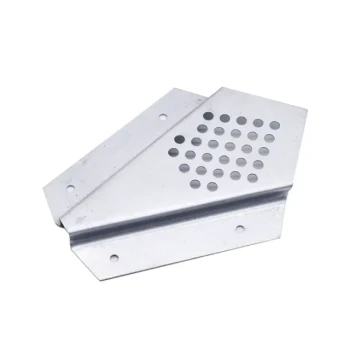
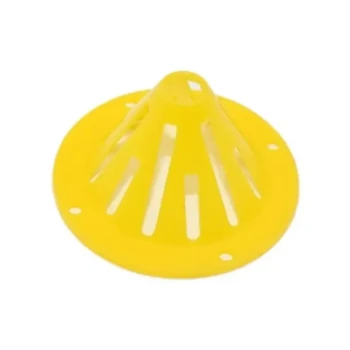
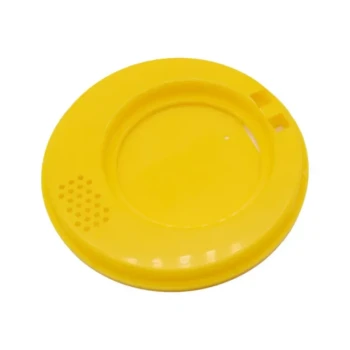
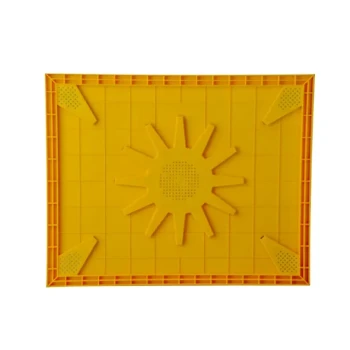
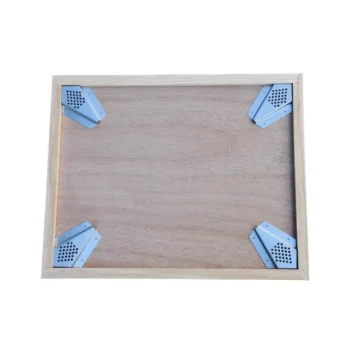
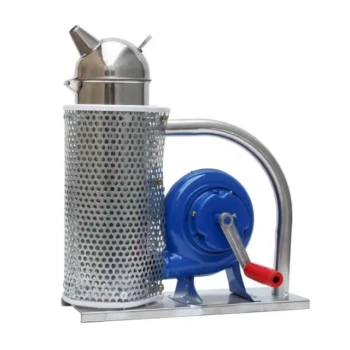
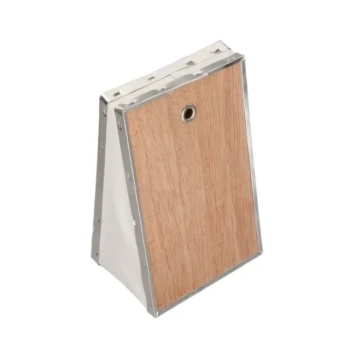
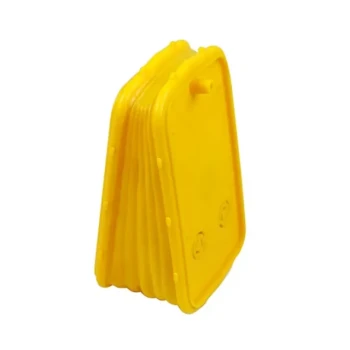
Professional bee escapes and blowers serve the critical function of ensuring honey supers are entirely free of bees before they enter the processing facility. While bee escapes rely on a passive one-way mechanism to gently separate bees over time, blowers utilize high-velocity air for rapid, non-contact removal suited for larger operations.
Core Takeaway The primary role of both tools is to separate the colony from the harvest without harming the bees or contaminating the product. The choice between them dictates the workflow: bee escapes offer a slow, low-stress passive separation, while blowers provide immediate, high-volume clearing for commercial efficiency.
The Objective: Hygiene and Colony Preservation
Ensuring Processing Hygiene
The fundamental role of these tools is to prevent bees from entering the extraction room.
Honey supers must be free of bees to maintain strict hygiene standards during processing. Introducing bees into the extraction facility can contaminate the honey and disrupt the workflow.
Reducing Physical Harm
Manual methods, such as brushing or shaking frames, can be physically harmful to the bees and chaotic for the beekeeper.
Escapes and blowers replace these disruptive techniques. They allow for the removal of honey-containing supers without harming the colony, ensuring the structural integrity of the workforce remains intact.
How Bee Escapes Function
The One-Way Passage Principle
A bee escape is a mechanical device placed between the brood box and the honey supers.
It utilizes a specific design that allows bees to exit the honey super but blocks them from returning. This creates a physical separation based on the bees' natural movement downward toward the brood nest.
Gentle, Passive Removal
The bee escape is a "set and wait" tool.
Because it relies on the bees moving on their own, it is considered a gentle and natural method. It significantly reduces the need for heavy interaction, thereby minimizing colony stress during the harvest.
How Blowers Function
High-Powered Rapid Removal
For commercial operations where time is a critical resource, waiting for a bee escape to work may not be feasible.
High-powered blowers provide a rapid removal method. They are designed to clear a super of bees almost instantly, allowing the beekeeper to harvest many hives in a single session.
Non-Contact Separation
Despite the force involved, professional blowers are designed to be safe for the bees.
They offer a non-contact solution, using air pressure rather than physical brushes to dislodge the bees. This clears the frames effectively while avoiding the crushing or injury associated with manual handling.
Understanding the Trade-offs
Time vs. Efficiency
The choice between these tools often comes down to the scale of the operation and the value of time.
Bee escapes require two trips: one to place the board and another to collect the honey later (often 24 hours). Blowers allow for a single-trip harvest, making them indispensable for large-scale logistics.
Stress vs. Speed
While blowers are efficient, they are louder and more intrusive than passive escapes.
Bee escapes are virtually silent and invisible to the colony's daily rhythm, offering the lowest possible stress profile. Blowers trade some of that tranquility for the speed required in commercial settings.
Making the Right Choice for Your Goal
To select the best tool for your harvest, consider the scale of your apiary and your available time.
- If your primary focus is minimizing colony disturbance: Prioritize bee escapes, as they gently clear supers using the bees' natural movements without the noise or force of air.
- If your primary focus is commercial efficiency and speed: Prioritize high-powered blowers, which allow for the immediate clearing and collection of supers in a single site visit.
Ultimately, the correct tool acts as a safeguard, ensuring the honey remains pure and the colony remains unharmed.
Summary Table:
| Feature | Bee Escapes (Passive) | Bee Blowers (Active) |
|---|---|---|
| Mechanism | One-way mechanical passage | High-velocity air stream |
| Speed | Slow (24+ hours) | Immediate (Seconds per super) |
| Logistics | Requires two trips to the apiary | Single-trip harvest |
| Stress Level | Lowest - silent and natural | Moderate - noisy but non-contact |
| Best For | Gentle, low-stress harvests | High-volume commercial efficiency |
Maximize Your Harvest Efficiency with HONESTBEE
At HONESTBEE, we understand that large-scale honey production requires a perfect balance of speed and colony care. Whether you are a commercial apiary or a global distributor, we provide the professional-grade tools you need to streamline your operations.
Our extensive portfolio includes:
- Advanced Bee Removal Tools: From precision-engineered escapes to high-powered blowers.
- Industrial Machinery: Specialized honey-filling and hive-making machines for high-volume output.
- Comprehensive Supplies: A full spectrum of beekeeping hardware and essential consumables.
Ready to upgrade your harvesting equipment? Contact us today to discuss our wholesale offerings and discover how our expertise can drive your business growth.
References
- Milorad Vojvodić, Dragan Bubalo. Rad na siguran način u pčelarskoj proizvodnji. DOI: 10.31306/s.59.4.6
This article is also based on technical information from HonestBee Knowledge Base .
Related Products
- Professional Cone Style Bee Escape for Efficient Honey Harvesting
- Durable 16 Way Circular Bee Escape for Efficient Honey Harvesting
- Heavy Duty Metal Corner Bee Escape for Reliable Hive Clearing
- Slatted Porter Style Bee Escape for Rapid Hive Clearing
- Professional Durable Two-Piece Plastic Bee Escape
People Also Ask
- What is the primary function of a bee escape? Simplify Your Honey Harvest with Stress-Free Hive Management
- What are some common types of bee escapes and how are they typically mounted? Optimize Your Honey Harvest Efficiency
- What modifications are needed to use a bee escape in a Warre hive? Ensure a Calm & Efficient Honey Harvest
- How long should a bee escape be placed before harvesting honey? The 24-48 Hour Guide to a Stress-Free Harvest
- How can bees be cleared off honey supers in a Langstroth hive? Use a Gentle Bee Escape