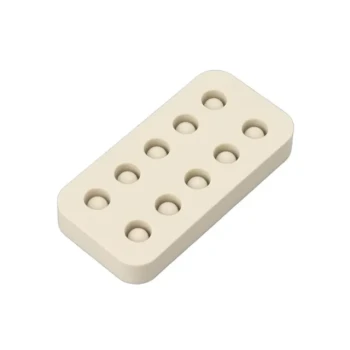
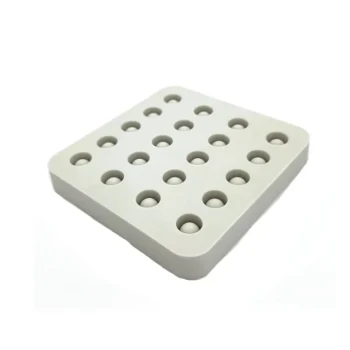
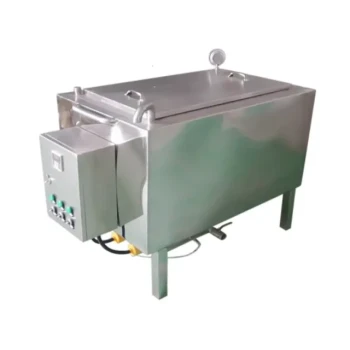
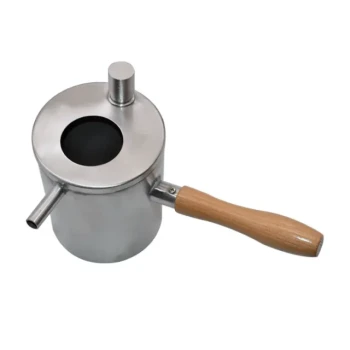
Wax melting containers and forming molds serve as the fundamental hardware for standardizing artificial queen cell production. The melting container transforms solid beeswax into a stable fluid state, preventing material degradation, while the forming mold—typically a 9mm wood or metal rod—is dipped into this liquid to create the physical structure of the cell cup.
By decoupling the melting process from the shaping process, beekeepers achieve a level of uniformity that significantly increases the likelihood of worker bees accepting and rearing the new queens.
The Function of the Wax Melting Container
Achieving the Correct State
The primary role of the container is to convert raw, solid beeswax into a workable liquid. This phase change is essential for the dipping process used to form the cells.
Preventing Material Degradation
High-quality melting units provide a precise heating environment. This controlled heat is critical because beeswax is sensitive to temperature.
Precision prevents oxidation. Overheating the wax can lead to discoloration or chemical changes that may reduce the quality of the final cell cup.
The Function of the Forming Mold
Defining Cell Architecture
The forming mold acts as the negative for the queen cell cup. These tools are typically manufactured as sticks or rods with a specific diameter, most commonly 9mm.
The Dipping Mechanism
To create the cell, the mold is dipped into the molten wax held in the container. The wax adheres to the mold and cools rapidly, solidifying into a cup shape.
Material Options
Molds are generally constructed from wood or metal. These materials are chosen for their durability and their ability to release the wax cup once it has cooled slightly.
The Critical Outcome: Consistency and Efficiency
Standardization of Openings
The interaction between the steady liquid wax and the precise mold ensures that every artificial cell has a consistent opening diameter and depth.
Improving Worker Bee Efficiency
Uniformity is not just an aesthetic metric; it is a biological one. Worker bees are more efficient at repairing and modifying artificial cups that mimic the natural dimensions of a queen cell.
Maximizing Acceptance
When the cell depth and opening are standardized, the colony is more likely to accept the grafted larva. Inconsistent or misshapen cups are frequently rejected or ignored by the nurse bees.
Understanding the Trade-offs
Temperature Sensitivity
While melting containers facilitate production, they introduce the risk of overheating. If the temperature is not regulated, the wax can oxidize, resulting in brittle or chemically altered cups that bees may reject.
Mold Maintenance
The effectiveness of the mold depends on its surface condition. Residue on wood or metal molds can disrupt the uniformity of the cup walls, leading to inconsistent thickness that hinders the bees' ability to work the wax.
Making the Right Choice for Your Operation
For beekeepers aiming to optimize their queen rearing process, the equipment must align with biological requirements.
- If your primary focus is High Acceptance Rates: Prioritize 9mm molds to ensure the cell openings match the natural dimensions preferred by worker bees.
- If your primary focus is Material Quality: Invest in precision melting units that prevent oxidation, ensuring the wax remains pure and chemically attractive to the colony.
Success in queen rearing begins with the precise control of your raw materials.
Summary Table:
| Component | Primary Function | Key Specifications/Features | Impact on Queen Rearing |
|---|---|---|---|
| Melting Container | Liquefies solid beeswax | Temperature-controlled, prevents oxidation | Maintains material purity and chemical attraction |
| Forming Mold | Shapes the cell cup | Typically 9mm (Wood or Metal rods) | Ensures biological uniformity for bee acceptance |
| Dipping Process | Creates physical structure | Rapid cooling/solidification | Standardizes cell depth and opening diameter |
Scale Your Queen Rearing with HONESTBEE Professional Equipment
At HONESTBEE, we understand that precision in queen rearing is the foundation of a productive apiary. As a premier provider for commercial apiaries and distributors, we supply high-performance wax processing tools, specialized hive-making machinery, and honey-filling systems designed to maximize your efficiency.
Whether you are looking for high-capacity honey-themed merchandise or professional-grade beekeeping consumables, our comprehensive wholesale offering has you covered. Contact us today to discover how our equipment can streamline your operations and deliver the consistency your bees demand.
References
- Ajay Sharma, Anju Sharma. Evaluation of priming media and queen cup material on larval graft acceptance and queen emergence in Apis mellifera L.. DOI: 10.22271/j.ento.2020.v8.i4q.7268
This article is also based on technical information from HonestBee Knowledge Base .
Related Products
- 10-Cell Silicone Beeswax Bee Queen Cups Forming Mold
- High-Efficiency 20-Cell Silicone Mold for Beeswax Bee Queen Cup Production
- Colorful Silicone Beeswax Foundation Mold Mould for Beekeeping
- Notebook Style Beeswax Foundation Mould Wax Foundation Mold
- Solar Beeswax Melter Easy Solar Wax Melter for Beeswax
People Also Ask
- How do beeswax queen cell cups function? Optimize Queen Rearing with Biological Mimicry
- What is the biological function of beeswax queen cell cups? Boost Acceptance in Artificial Queen Rearing
- What role do specialized queen rearing tools play in developing mite-resistant honeybee stock? Master Genetic Selection
- What materials are used to make artificial queen cell cups for grafting? Beeswax vs. Plastic Guide
- What roles do specialized queen cell cups play in royal jelly production? Optimize Your Hive's Secretion and Yield