Commercial apiaries need an integrated monitoring-and-treatment system—not a single mite-control product. The essential equipment includes sticky boards or screened bottom boards, mite-counting kits, drone-brood trapping equipment, brood-inspection tools, calibrated treatment applicators, and appropriate protective gear. For Varroa destructor, these tools support accurate population measurement and targeted treatment; for Tropilaelaps mercedesae, close brood inspection, brood interruption, sanitation, and rapid colony-level response are especially important.
The most effective commercial setup combines detection, intervention, and verification. Hardware such as screened floors and drone comb can support control, but neither replaces regular mite counts, correctly timed treatments, or documented follow-up testing.
Why Commercial Mite Management Requires Specialized Equipment
Varroa threatens both adult bees and developing brood
Varroa destructor feeds on developing and adult bees and can contribute to weight loss, wing deformities, colony weakening, and virus transmission. A colony may appear productive while its mite burden is already increasing rapidly.
Commercial operations therefore need tools that identify infestation levels before visible colony decline and allow treatment without unnecessarily exposing bees, honey, or wax to chemical residues.
Tropilaelaps requires closer brood surveillance
Tropilaelaps mercedesae reproduces primarily in capped brood and can cause brood damage, abnormal adult bees, and rapid colony weakening. Because the mites move quickly and spend less time on adult bees than Varroa, adult-bee sampling alone may not provide a complete picture.
Commercial apiaries should use brood uncapping tools, inspection lighting, magnification where useful, and systematic brood-recording procedures. Detection of Tropilaelaps may also require coordinated inspection and reporting under local honeybee-health regulations.
Core Monitoring Equipment
Sticky boards and mite-counting inserts
A sticky board, placed beneath a screened bottom board, collects naturally falling mites and helps estimate infestation trends. The board should be protected from debris and replaced or inspected according to a consistent schedule.
Sticky counts are useful for trend monitoring, but they are not always sufficient for treatment decisions. Counts should be interpreted alongside adult-bee sampling, brood inspection, colony strength, season, and local thresholds.
Alcohol-wash and sugar-roll kits
Commercial apiaries commonly use sampling kits containing:
- A calibrated sample container
- A bee-counting vessel or measuring cup
- A mite-wash jar or screened shaker
- Fine mesh filters or collection trays
- Measuring cylinders or counting grids
- Labels and record sheets
An alcohol wash generally provides a more consistent estimate than a sugar roll, but it sacrifices the sampled bees. A sugar roll is less destructive but can undercount mites, particularly when bees are damp or the procedure is inconsistent.
Brood inspection tools
For both mite species, inspection equipment should include:
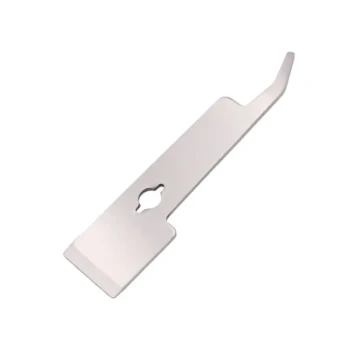
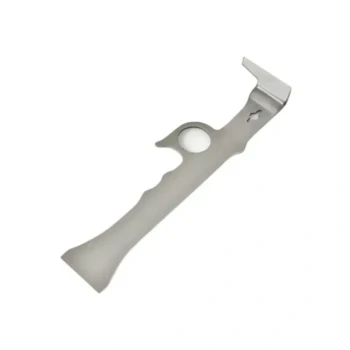
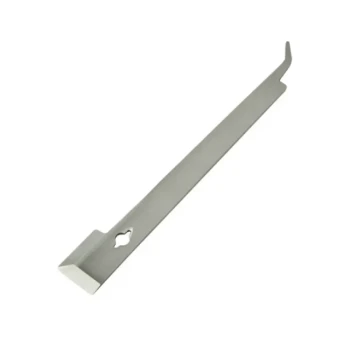
- A sturdy hive tool
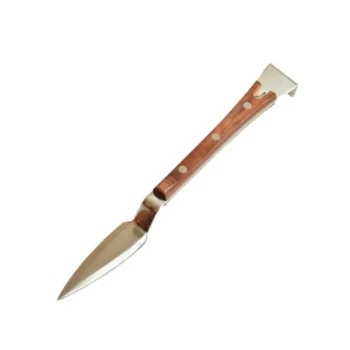
- A sharp uncapping fork or uncapping knife
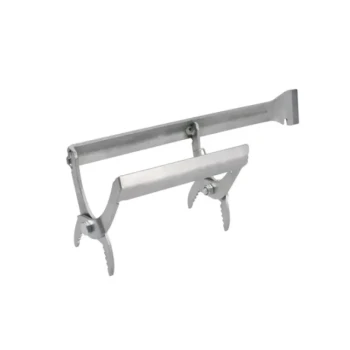
- A brood-frame holder
- An inspection light
- A magnifying glass or portable loupe
- A clean tray for examining removed brood
For Tropilaelaps, operators should examine capped brood for mites, abnormal cappings, perforated cells, dead or discolored pupae, and irregular brood patterns.
Digital records and identification labels
Every sample should be linked to a hive number, apiary location, date, colony strength, treatment history, and result. Barcode labels, mobile inspection forms, or spreadsheet-based records help commercial managers identify reinfestation, treatment failure, and high-risk yards.
Hardware That Supports Mite Control
Screened bottom boards
A screened bottom board permits some fallen mites to drop away from the bee cluster and provides a platform for a sticky insert. It also improves inspection access and may support ventilation when correctly configured.
It should not be treated as a stand-alone Varroa control method. Its main commercial value is monitoring, debris management, and compatibility with other integrated pest-management procedures.
Drone-brood trapping equipment
Varroa preferentially reproduces in drone brood, making specialized drone-comb frames or removable drone foundation useful for trapping mites. Once the drone brood is capped, the frame is removed and managed according to the apiary’s protocol.
This method requires accurate timing and repeated frame rotation. If infested drone brood is left in place, the equipment can increase rather than reduce mite reproduction.
Brood-interruption and comb-management equipment
Tropilaelaps depends heavily on capped brood for reproduction. Commercial operations may therefore require equipment that supports:
- Temporary brood isolation or caging
- Queen-management procedures
- Frame rotation and brood-break scheduling
- Safe brood removal
- Comb replacement and sanitation
These methods are labor-intensive and must be planned around local climate, queen performance, honey flows, and colony development.
Entrance reducers and ventilated components
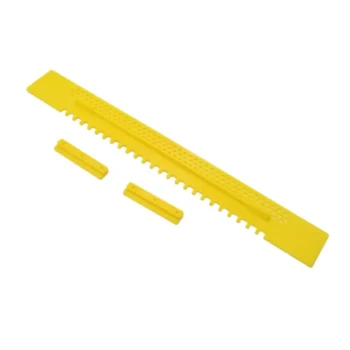
Entrance reducers can help manage colony access, robbing pressure, and some pest risks. Ventilated hive components can improve airflow during certain treatments and environmental conditions.
Neither component directly eliminates Varroa or Tropilaelaps. Their value is supporting stable colony management and ensuring that treatment instructions concerning ventilation can be followed correctly.
Treatment Application Equipment
Calibrated liquid applicators
For liquid treatments, use calibrated droppers, syringes, or metered applicators that deliver repeatable volumes. Consistent dosing is essential because underdosing can reduce efficacy, while overdosing can injure bees, contaminate products, or create regulatory problems.
Applicators should be clearly labeled for their intended treatment and kept separate from food-processing equipment.
Oxalic-acid application tools
Oxalic acid may be applied by methods such as dribbling, spraying, or vaporization, depending on the approved product and local regulations. Equipment can include:
- Precision syringes or dosing bottles
- Fine-spray applicators
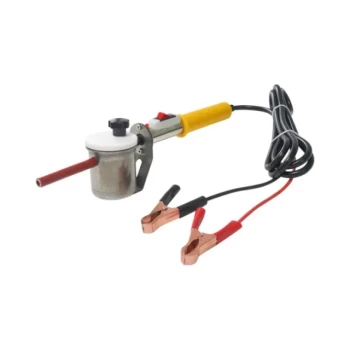
- Approved vaporization or evaporation devices
- Temperature-resistant treatment stands
- Chemical-resistant storage containers
The correct method depends on the product label, colony condition, brood status, and jurisdiction. Oxalic acid is generally most effective against phoretic mites and should not be assumed to control mites protected beneath capped brood.
Formic-acid treatment supports
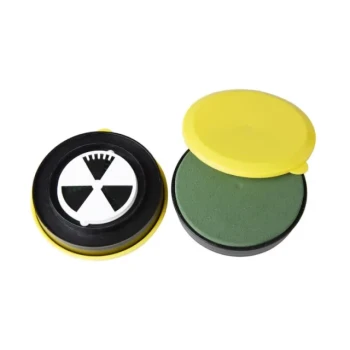
Formic-acid products may require:
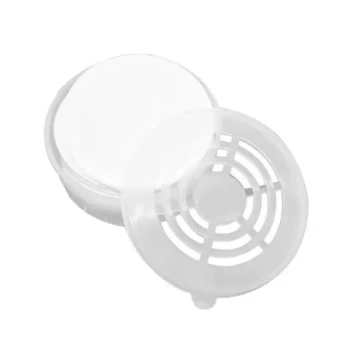
- Approved pads, strips, or dispensers
- Temperature monitoring equipment
- Correctly ventilated hive components
- Protective chemical-handling equipment
- Treatment-date labels
Formic acid can affect brood and queens if used under unsuitable temperature or ventilation conditions. Commercial staff should follow the product label rather than applying a fixed duration or concentration across all climates and hive designs.
Ready-to-use acaricide holders and mounting hardware
Approved strips or dispensers containing active ingredients such as amitraz or fluvalinate may require frame hangers, holder clips, spacing tools, or placement gauges. These accessories help maintain correct contact with bees and prevent improper positioning.
Use only products registered for the target pest, crop, and bee species in the operating region. Rotation of active ingredients should be based on resistance-management guidance, not on arbitrary product substitution.
Treatment verification tools
After treatment, the same apiary should use monitoring equipment to verify whether mite levels declined. A second alcohol wash, sugar roll, sticky-board assessment, or brood examination can reveal poor application, reinfestation, resistance, or inadequate timing.
Treatment is not complete when the product is installed; it is complete when the outcome has been checked and documented.
Protective and Sanitary Equipment
Chemical-resistant personal protective equipment
Commercial crews should have task-appropriate:
- Chemical-resistant gloves
- Protective eyewear or face protection
- Long sleeves and protective clothing
- Respiratory protection when specifically required
- Spill-control materials
- Clearly labeled chemical storage containers
Vaporizing or handling acids requires particular attention to the product safety data sheet and label instructions. Ordinary beekeeping clothing is not automatically adequate chemical protection.
Sanitation and cross-contamination controls
Useful equipment includes clean hive tools, disposable or washable gloves, frame-cleaning supplies, dedicated transport boxes, and waste containers. Tools should be cleaned between colonies or apiaries when disease transmission is a concern.
Separate equipment for suspect colonies helps prevent the movement of mites, brood, contaminated comb, and pathogens through the operation.
Transport and quarantine equipment
Commercial apiaries benefit from screened transport boxes, secure hive straps, sealed waste containers, and clearly marked quarantine areas. New, moved, or suspect colonies should not be mixed into production yards without inspection and an appropriate health-management decision.
Understanding the Trade-offs
Monitoring tools are not treatment tools
Screened floors, sticky boards, and drone comb support control but rarely provide sufficient suppression by themselves. Relying on hardware without measuring mite levels can create false confidence.
The opposite mistake is also common: treating every colony identically without testing. This increases cost, handling stress, chemical exposure, and the risk of resistance.
Chemical treatments can affect product quality and colony health
Improper treatment timing or dosage can leave residues in honey or wax, harm brood and queens, or reduce colony performance. Treatments should be scheduled around honey supers and harvest requirements in strict accordance with the product label.
Do not use unregistered substances, improvised formulations, or treatment schedules copied from another climate or hive system.
Resistance and reinfestation can defeat good equipment
Varroa populations can be reintroduced through robbing, drifting, purchased colonies, and movement between apiaries. A treatment that worked previously may also become less effective where resistance has developed.
Commercial programs should compare pre- and post-treatment counts, rotate approved modes of action when appropriate, and coordinate control across nearby apiaries where possible.
Tropilaelaps management has fewer simple hardware solutions
Tropilaelaps is difficult to manage with adult-bee sampling alone, and control options vary significantly by country. Brood inspection, brood interruption, sanitation, movement controls, and rapid specialist diagnosis may be more important than purchasing another applicator.
Any suspected Tropilaelaps detection should be handled according to local veterinary, apiary-inspection, or plant-and-animal health requirements.
Building a Commercial One-Stop Equipment Program
Essential inventory for every apiary team
A practical baseline includes:
- Screened bottom boards with replaceable sticky inserts
- Alcohol-wash or sugar-roll sampling kits
- Hive tools and brood-inspection equipment
- Drone-brood frames or removable drone comb
- Calibrated liquid applicators
- Approved treatment dispensers or vaporization equipment
- Chemical-resistant PPE
- Sanitation supplies
- Hive labels and digital or paper inspection records
- Secure transport and quarantine equipment
Recommended purchasing standards
Distributors and commercial operators should prioritize calibration, replacement-part availability, chemical compatibility, durability, and ease of cleaning. A low-cost applicator that delivers inconsistent doses can create greater operational risk than a more expensive calibrated tool.
A reliable supplier should also be able to provide product documentation, safety information, compatible consumables, rapid replenishment, and technical support across the full monitoring-to-treatment workflow.
Match equipment to the operating environment
Equipment selection should account for hive design, colony scale, climate, treatment method, honey-flow calendar, labor capacity, and local regulations. A vaporizer, for example, is not a universal substitute for liquid dosing equipment or brood-management tools.
Standardizing equipment across yards simplifies staff training, spare-parts management, inspection records, and quality control.
How to Apply This to Your Apiary or Product Portfolio
The right combination depends on whether the priority is surveillance, treatment capacity, compliance, or supply-chain efficiency.
- If your primary focus is infestation detection: Build around alcohol-wash or sugar-roll kits, sticky boards, brood-inspection tools, hive labels, and standardized digital records.
- If your primary focus is treatment accuracy: Source calibrated droppers, approved acid applicators, vaporization equipment, treatment holders, PPE, and replacement consumables.
- If your primary focus is reducing chemical dependence: Add screened bottom boards, removable drone-brood frames, brood-management equipment, sanitation supplies, and rigorous follow-up monitoring.
- If your primary focus is commercial distribution: Offer a complete, compatible product range with documentation, dependable replenishment, rapid fulfillment, and technical assistance rather than isolated tools.
- If your primary focus is Tropilaelaps preparedness: Emphasize brood-inspection equipment, quarantine and transport supplies, comb-management tools, and protocols for rapid professional confirmation.
A disciplined system that measures mite pressure, applies approved interventions precisely, and verifies results gives commercial apiaries the strongest foundation for protecting colonies and honey production.
Summary Table:
| Category | Essential Equipment | Purpose |
|---|---|---|
| Monitoring | Sticky boards, screened bottom boards, alcohol-wash kits, sugar-roll kits | Detect and quantify mite infestations |
| Brood Inspection | Uncapping tools, brood-frame holders, inspection lights, magnifiers | Identify mite damage and presence in capped brood |
| Treatment Application | Calibrated syringes, oxalic acid vaporizers, formic acid dispensers, acaricide holders | Apply treatments accurately and safely |
| Protective & Sanitary | Chemical-resistant PPE, sanitation supplies, quarantine boxes | Ensure crew safety and prevent cross-contamination |
| Record Keeping | Labels, digital or paper records | Track mite levels, treatments, and outcomes |
Protect your apiary from Varroa and Tropilaelaps with HONESTBEE's complete range of specialized tools. Our wholesale supply covers everything from precise monitoring kits to reliable treatment applicators, backed by rapid delivery and expert support. For distributors and commercial beekeepers, we offer OEM/ODM customization, certified products, and consistent supply to keep your operations running smoothly. Ready to enhance your mite management program? Contact us today for a tailored solution.
Related Products
- Adjustable Formic and Acetic Acid Dispenser for Bee Mite Treatment
- Langstroth Screen Bottom Board for Beekeeping Wholesale
- Professional Dual-End Stainless Steel Hive Tool for Beekeeping
- Multi-Function Plier-Style Frame Grip Hive Tool
- HONESTBEE Classic Pry Bar Hive Tool with High Visibility Finish for Beekeeping
People Also Ask
- How is the process regulation function of a Formic Acid Dispenser implemented? Achieve Safe, Effective Varroa Control
- Why is a specialized formic acid evaporator necessary? Ensure Safe & Effective Varroa Mite Treatment
- What role do Formic Acid Dispensers play in the biochemical control of Varroa mites? Precision Mite Management
- What is the primary function of a specialized evaporation dispenser? Master Formic Acid Varroa Control
- What is the function of specialized application devices for Varroa? Precision Control for Healthier Bee Colonies