To ensure pristine honey clarity, you must immediately implement a two-step physical separation process: mechanical filtration followed by gravity settling. First, pass the extracted honey through a fine mesh or strainer cloth to capture macroscopic wax particles and debris introduced during uncapping. Next, allow the honey to rest in a clean container for 24 to 48 hours, enabling air bubbles and microscopic solids to rise to the top before bottling.
Clarity is defined by the removal of suspended solids and trapped air. While centrifugal extraction is cleaner than manual pressing, the final visual quality depends entirely on a disciplined settling period that allows gravity to finish the work started by the strainer.
The Physical Separation Process
Mechanical Straining
Immediately after the honey exits the extractor, it is laden with "macro" impurities. These primarily consist of wax cappings broken during the uncapping process and other hive debris.
You must run the honey through a fine mesh or strainer cloth. This acts as the primary barrier, physically catching solid contaminants while allowing the liquid honey to pass through.
Gravity Settling
Filtration alone cannot remove micro-bubbles created by the spinning centrifuge. To address this, the strained honey must sit undisturbed in a clean container or settling tank.
During this resting period of one to two days, air bubbles and finer, lighter particles naturally float to the surface. This "scum" layer can then be skimmed off, leaving clear, bubble-free honey at the bottom for bottling.
Multi-Stage Filtration
For commercial-grade clarity, a single pass through a cloth may not be sufficient. Supplementary protocols suggest using a multi-stage filtration system.
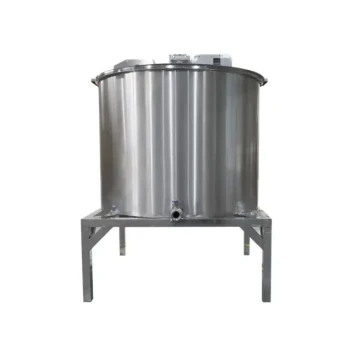
This involves passing honey through progressively finer filters to remove trace impurities. This is often done in conjunction with large-capacity sealed tanks to maintain color consistency and hygiene.
Upstream Factors Affecting Clarity
Selective Comb Sorting
The clarity of your final product is often determined before the centrifuge even spins. You must implement a comb-sorting process rather than processing all frames indiscriminately.
If frames containing excessive pollen are spun with high centrifugal force, the pollen can mix with the honey. This lowers clarity and introduces foreign matter that is difficult to filter out later without industrial equipment.
Optimizing Centrifugal Force
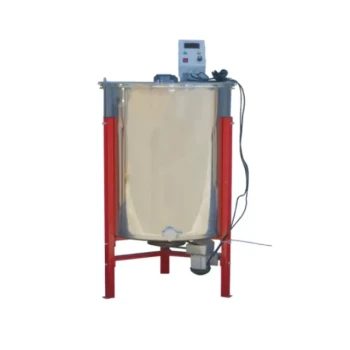
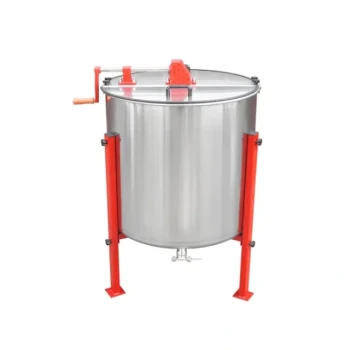
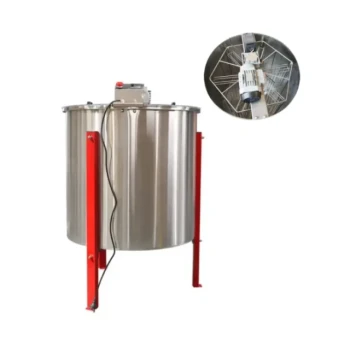
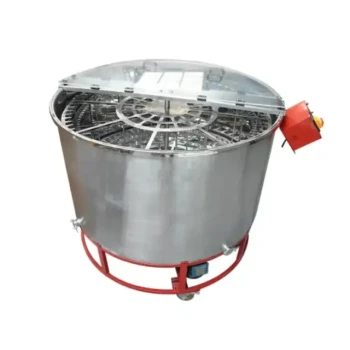
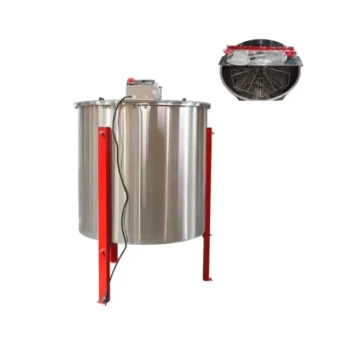
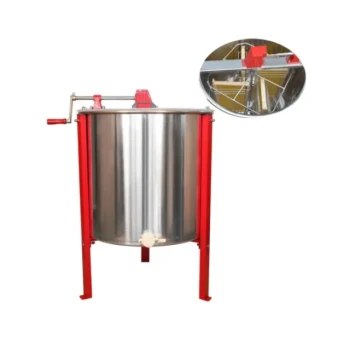
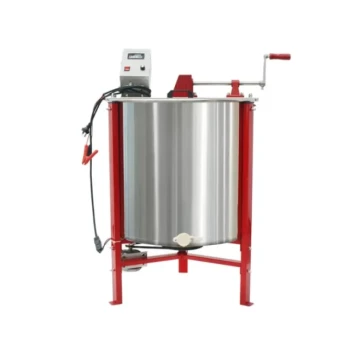
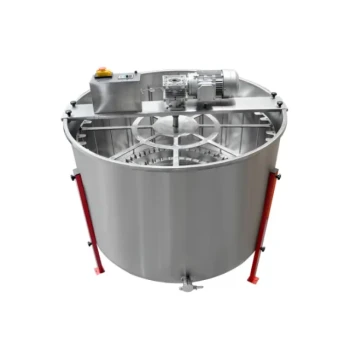
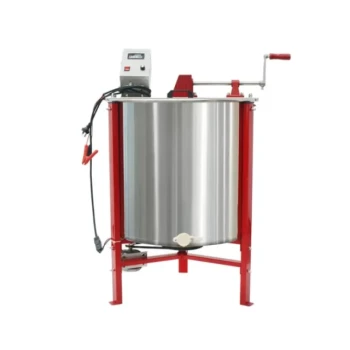
An advanced extractor uses centrifugal force to separate liquid from solid without crushing the comb structure. This is superior to manual squeezing, which introduces significant impurities.
However, over-extraction—spinning too fast or too long—can force non-honey materials (like wax bits or propolis) into the honey. Optimizing the speed ensures you extract mature honey while leaving structural debris behind.
Common Pitfalls to Avoid
Premature Bottling
The most common error is bottling immediately after straining. If you skip the 48-hour settling period, air bubbles remain trapped in the jar.
Over time, these bubbles will rise to the neck of the jar, creating a white foam layer that looks unprofessional and can be mistaken for fermentation or spoilage.
Indiscriminate Processing
Processing uncapped or brood-heavy frames alongside honey frames degrades quality. This introduces excessive moisture and organic debris that standard straining cloths cannot easily remove.
Over-Filtering
While clarity is the goal, there is a trade-off regarding the definition of "pure." Using ultra-fine industrial filters can remove all pollen grains.
While this results in liquid that looks like glass, it may remove the chemical markers that identify the honey's floral source. You must balance visual clarity with the preservation of the honey's natural composition.
Making the Right Choice for Your Goal
To finalize your process, align your filtration method with your end-product goals:
- If your primary focus is Visual Presentation: Utilize a multi-stage filtration system and allow for the full 48-hour settling period to ensure a glass-like, bubble-free appearance.
- If your primary focus is Raw/Natural Integrity: Use a single coarse strainer to remove wax but retain pollen, and accept a slight cloudiness as a marker of minimal processing.
True honey clarity is achieved not by forcing the product, but by allowing time and gravity to purify the extraction.
Summary Table:
| Step | Action | Purpose | Timing |
|---|---|---|---|
| Straining | Fine Mesh/Cloth Filter | Removes wax cappings and hive debris | Immediately after extraction |
| Settling | Gravity Rest Period | Allows air bubbles and micro-solids to rise | 24 - 48 hours |
| Skimming | Surface Removal | Clears the foam layer/scum from the top | Before bottling |
| Optimizing | Controlled Centrifuge | Prevents crushing comb and mixing pollen | During extraction |
Elevate Your Honey Production with HONESTBEE
At HONESTBEE, we understand that clarity and purity are the hallmarks of premium honey. As a dedicated partner to commercial apiaries and distributors, we provide the professional-grade tools you need to achieve excellence.
Our comprehensive wholesale range includes:
- Advanced Centrifugal Extractors designed for optimal force without comb damage.
- Commercial Filling & Hive-Making Machinery to scale your operations.
- Premium Straining & Filtration Systems for glass-like honey clarity.
- Essential Consumables and unique honey-themed cultural merchandise.
Ready to enhance your yield and product quality? Contact our expert team today to discover how our specialized beekeeping hardware and machinery can transform your business.
Related Products
- electric honey extractor honey centrifuge 3 frame honey extractor stainless steel honey frame extractor
- Manual Hand Crank 4 Frame Honey Extractor Centrifuge for Beekeeping
- Professional 4 Frame Self Reversing Electric Honey Extractor for Beekeeping
- Stainless Steel Manual 8 Frame Radial Honey Extractor Machine for Beehives
- Electric 4 Frame Tangential Honey Extractor
People Also Ask
- What are the characteristics of electric honey extractors? Boost Your Apiary Efficiency with Automated Technology
- What are the disadvantages of using an electric honey extractor? Weighing Cost, Power, and Comb Safety
- What are the advantages of an electric honey extractor? Boost Efficiency and Scale Your Honey Production
- What are the technical advantages of electric honey extractors? Maximize Yield and Protect Your Bee Colony
- How does an electric honey extractor affect the quality of honey? Preserve Flavor & Purity with Precision Extraction