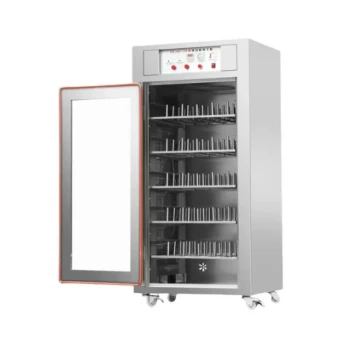
The primary technical advantage of a heat pump dryer is the ability to decouple moisture removal from high thermal stress. By utilizing a thermodynamic cycle that creates a controlled environment, this technology operates strictly within a temperature range of 18°C to 45°C. This allows for precise moisture regulation that satisfies preservation standards without subjecting the honey to temperatures that degrade its quality.
Core Takeaway: Heat pump technology resolves the conflict between shelf-stability and biological integrity. It effectively reduces water content to prevent fermentation while simultaneously maximizing the retention of heat-sensitive enzymes like diastase and delicate volatile flavor compounds.
The Thermodynamics of Gentle Preservation
Controlled Low-Temperature Operation
The definitive feature of this system is its operating range of 18°C to 45°C.
Unlike conventional dryers that may rely on excessive heat to evaporate moisture rapidly, the heat pump maintains a "low-energy environment." This ensures the honey is never exposed to thermal spikes that could alter its chemical composition.
Efficient Moisture Reduction
The system is designed to meet strict preservation requirements.
By managing the air environment, the dryer actively pulls moisture from the honey. This process reduces the water content to safe levels, which is the critical factor in preventing fermentation and spoilage during storage.
Protecting Biological Integrity
Retention of Diastase Enzymes
A critical metric for honey quality is its enzymatic activity.
The heat pump's temperature ceiling of 45°C is specifically advantageous for retaining diastase enzymes. These biological components are highly heat-sensitive and are often destroyed in standard high-temperature processing.
Preserving Volatile Flavor Profiles
Honey derives its unique value from complex flavor substances.
Many of these flavor compounds are volatile, meaning they evaporate easily along with water when heated. By drying at lower temperatures, the heat pump minimizes the loss of these volatile flavor substances, ensuring the final product retains its distinct organoleptic properties.
Understanding the Operational Constraints
Balancing Speed with Quality
It is important to recognize that this method prioritizes quality over raw thermal power.
Because the system operates below 45°C, moisture removal is a gradual process driven by the dry environment rather than boiling. This approach favors the integrity of the product rather than absolute processing speed.
Energy and Environment Management
While described as a "low-energy environment," the system relies on precise control.
The efficiency of the dryer depends on maintaining the closed-loop conditions. Deviating from the 18°C to 45°C range negates the biological benefits the technology is designed to protect.
Making the Right Choice for Your Goal
To determine if this technology aligns with your processing objectives, consider your specific quality targets:
- If your primary focus is Biological Value: The heat pump is essential for maintaining high diastase levels and enzymatic activity by keeping temperatures below 45°C.
- If your primary focus is Sensory Quality: This method is superior for retaining the full spectrum of volatile flavor substances that define premium honey varietals.
- If your primary focus is Shelf Stability: The technology provides the necessary moisture reduction to prevent fermentation while avoiding heat damage.
This technology represents the optimal technical solution for producers who view honey as a living biological product rather than a simple sugar syrup.
Summary Table:
| Technical Feature | Performance Metric | Primary Benefit |
|---|---|---|
| Temperature Range | 18°C to 45°C | Prevents thermal degradation and biological damage |
| Moisture Removal | Controlled Dehumidification | Prevents fermentation while ensuring shelf stability |
| Enzyme Retention | High Diastase Activity | Maintains honey's biological and nutritional value |
| Flavor Preservation | Volatile Compound Retention | Protects original sensory and organoleptic profiles |
Elevate Your Honey Quality with HONESTBEE Solutions
At HONESTBEE, we understand that premium honey is a living biological product. For commercial apiaries and distributors, maintaining the delicate balance between shelf stability and enzymatic integrity is crucial for market success.
We provide a comprehensive wholesale offering of specialized beekeeping machinery, including advanced honey processing equipment designed to protect your harvest's value. Whether you need hive-making precision, honey-filling efficiency, or sophisticated moisture regulation technology, our portfolio covers the full spectrum of industry essentials.
Ready to optimize your production and preserve your honey's biological value?
Contact HONESTBEE Today for Professional Equipment Solutions
References
- Mai Huỳnh Cang, Tai Huan Phan. Physico-chemical Properties and Biological Activity of Honey from Two Districts of Tien Giang Province, Vietnam. DOI: 10.14233/ajchem.2024.31217
This article is also based on technical information from HonestBee Knowledge Base .
Related Products
- 0.5T Capacity Honey Dehumidifier Dryer with Vacuum Heating and Thickening Filtering Machine
- High Quality Honey Dehumidifier Dryer Thickening Machine for Beekeeping
- Economy Small Scale Honey Dryer Dehumidifier Thickening Machine
- Honey Concentrating Vacuum Heating Thickening Machine Dehumidifier for Honey
- Professional Thermostatic Conical Honey Melter
People Also Ask
- What is the primary function of professional dehumidification equipment in honey processing? Stability & Quality
- How to dry up honey? The Safe Guide to Stabilizing Honey and Preventing Fermentation
- What is the process for using a dehumidifier to lower honey's moisture content? Expert Drying Techniques
- How to decrease moisture in honey? Prevent Fermentation and Ensure Long-Term Quality
- How to remove humidity from honey? Protect Your Harvest from Fermentation