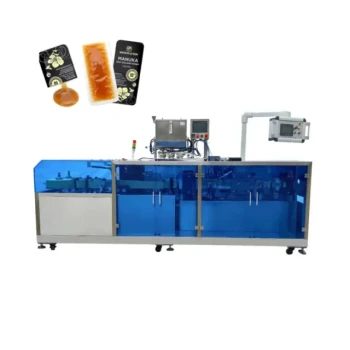
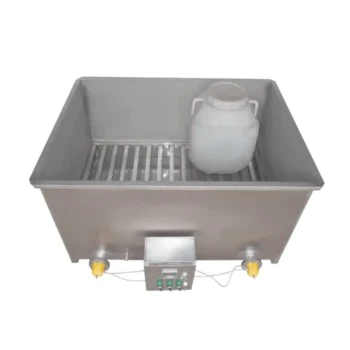
To preserve the nutritional and commercial integrity of honey, industrial machinery must strictly adhere to a "low-temperature, short-time" control specification. Specifically, equipment must be calibrated to ensure thermal treatment never exceeds 65°C, as temperatures beyond this threshold degrade the diastase value below the international standard of 8 units.
Core Takeaway The primary function of temperature control in honey processing is not just liquefaction, but the prevention of chemical degradation. Machinery must maintain a delicate thermal balance that facilitates filtration and filling without triggering the breakdown of enzymes or the formation of Hydroxymethylfurfural (HMF).
The Critical Temperature Threshold
Protecting Enzymatic Activity
The most sensitive component of honey is its enzyme content, specifically diastase.
Your machinery must guarantee that the product temperature remains strictly below 65°C. Exceeding this limit causes the diastase value to drop below 8 units, effectively disqualifying the honey from meeting international quality standards.
Preventing HMF Spikes
Excessive heat exposure directly correlates with the rise of Hydroxymethylfurfural (HMF).
HMF is a chemical indicator of heat damage and aging. Advanced temperature control systems inhibit the secondary formation of HMF during the filling stage, ensuring the final product remains within regulatory limits for freshness.
Avoiding Localized Overheating
It is not enough to control the average temperature of the batch; you must control the temperature at the contact surface.
High-quality machinery utilizes systems designed to prevent "hot spots" or localized overheating. This ensures that no small portion of the honey is scorched or degraded while the rest of the batch is being heated.
Engineering for Preservation
Optimized Fluid Dynamics
Temperature control is closely tied to how the honey moves through the system.
Industrial fillers utilize optimized fluid dynamics to minimize heat stress during liquefaction and packaging. This reduces the mechanical friction that can inadvertently raise temperatures and damage the honey’s structure.
Moisture Management
Temperature fluctuations can lead to unwanted changes in water content.
Your equipment must prevent both the loss of inherent moisture and the absorption of ambient humidity. Maintaining this equilibrium ensures the honey retains the specific physical-chemical indicators measured at the time of raw material receipt.
Integration with Filtration
Heat is often applied to lower viscosity for filtration, but this must be balanced against quality needs.
Machinery should employ multi-stage precision filters to remove beeswax residues and particles while operating within safe thermal ranges. This achieves high transparency and sensory quality without "cooking" the flavor profile.
Understanding the Trade-offs
Viscosity vs. Quality
The fundamental tension in honey processing is between flow rate and heat.
Higher temperatures drastically lower viscosity, allowing for faster filtration and filling speeds (higher throughput). However, this efficiency comes at the direct expense of nutritional value (enzyme loss) and shelf-life (HMF increase).
Precision vs. Cost
Implementing "low-temperature, short-time" capabilities requires more sophisticated engineering.
Machinery capable of uniform, low-heat processing generally carries a higher capital cost than basic heating units. However, this investment is necessary to produce a product that qualifies for high-end consumer markets rather than just bulk industrial use.
Making the Right Choice for Your Goal
To select the correct machinery, you must align the equipment's specifications with your market positioning:
- If your primary focus is the Premium/Raw Market: Select equipment with strict cut-off sensors that prevent the product from ever exceeding 40-45°C to maximize enzyme retention.
- If your primary focus is Standard Commercial Compliance: Ensure the machinery guarantees a hard limit of 65°C and utilizes "short-time" heat exchangers to minimize the duration of thermal exposure.
- If your primary focus is Product Shelf-Life: Prioritize systems with optimized fluid dynamics that specifically claim to inhibit secondary HMF formation during the filling process.
Ultimately, the machinery you choose must act as a guardian of the honey's natural state, prioritizing thermal precision over raw thermal power.
Summary Table:
| Quality Metric | Thermal Threshold | Consequence of Failure |
|---|---|---|
| Diastase Value | Max 65°C | Dropping below 8 units (International Standards) |
| HMF Levels | Minimize duration | Accelerated aging and chemical degradation |
| Texture/Viscosity | Controlled Warming | Scorching, localized overheating, or moisture loss |
| Raw Honey Integrity | 40-45°C | Loss of premium 'raw' market status |
Elevate Your Honey Production with HONESTBEE Precision
Maintaining the delicate thermal balance of honey requires specialized engineering. HONESTBEE provides commercial apiaries and distributors with professional-grade honey-filling machines and processing equipment designed to meet strict "low-temperature, short-time" standards.
Whether you are scaling a commercial operation or supplying the industry, our comprehensive wholesale offering—from specialized hardware to essential consumables—ensures your honey retains its nutritional and commercial integrity. Protect your product's enzymatic value and market appeal today.
Contact HONESTBEE for Expert Equipment Solutions
References
- Wissam Al-Rubaie. The influence of storage conditions and heating on diastase, invertase activity and hydroxymethylfurfural in Iraqi honey. DOI: 10.52113/mjas04/9.2/32
This article is also based on technical information from HonestBee Knowledge Base .
Related Products
- Fully Automatic Honey Filling Packaging Machine for Processing Line
- Precision Durable Efficient HONESTBEE Rotary Honey Filling Machine
- Automatic Honey Filling and Filtering Machine for Beekeeping Bottle Filling
- Economy Small Honey Filling Machine Honey Bottle Filler Packaging Machine
- Double Nozzle Small Honey Filling Machine Honey Sachet Packing Packaging Equipment
People Also Ask
- Why are fully automatic honey filling and packaging lines essential? Boost Your Honey's Market Value and Quality
- What is a fully-automatic honey filler? Streamline Your Production with High-Precision Automation
- How do automated honey filling and packaging machines affect profitability? Boost Margins with HONESTBEE Technology
- How do automated honey filling and packaging machines contribute to the market value of honey products? Maximize Your ROI
- How do industrial-grade automated honey filling and packaging machines mitigate the risk of physical contamination?