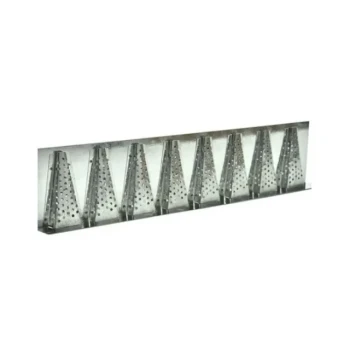
To physically defend a honey bee colony against robbing, beekeepers must mechanically restrict the hive's access points. The most critical adjustment is reducing the main entrance size and closing all upper entrances to create a single, defensible choke point. For weaker colonies, installing robbing screens is highly effective, while ensuring safe airflow through screened inner covers or specialized ekes prevents the hive from overheating during the lockdown.
By minimizing entrances and utilizing specialized screens, you empower guard bees to defend their resources against overwhelming numbers of intruders.
Controlling the Perimeter
The primary objective during a robbing event is to consolidate the colony's defenses. When entrances are too wide or too numerous, the guard bees are spread too thin to effectively repel intruders.
Shrink the Main Entrance
A wide entrance allows robber bees to overwhelm the colony's defenses by sheer force of numbers. You must reduce the size of the hive entrance significantly. This forces all entering bees through a bottleneck, allowing a small number of guard bees to easily identify and repel intruders.
Seal Upper Access Points
Robber bees often investigate the upper seams and holes of a hive where the scent of honey is strongest. You must close all upper entrances immediately. This eliminates "backdoor" access and forces every visitor to confront the guards at the main entrance.
Advanced Defense for Vulnerable Hives
Standard entrance reducers may not be enough for small colonies, nucleus hives, or colonies already under heavy attack. In these cases, specialized equipment is required.
Deploy Robbing Screens
For smaller or weaker colonies, the installation of robbing screens is a critical defensive measure. These devices cover the entrance and use a baffled design to confuse robber bees, who rely on scent and visual cues to find the opening. Resident bees learn the specific path through the screen, while robbers typically cannot figure it out.
Secure Ventilation Solutions
Closing off upper entrances to stop robbing can inadvertently cut off essential airflow. To fix this without compromising security, use screened inner covers. Alternatively, you can install ekes with screened ventilation ports, which allow heat to escape while preventing robbers or predators from entering.
Understanding the Trade-offs
While physical adjustments are effective, they alter the hive's environment. Beekeepers must balance security with the biological needs of the colony.
The Ventilation Risk
The most common pitfall when sealing a hive for defense is overheating. When you close upper entrances, you disrupt the chimney effect that cools the hive. If you do not compensate with the screened ventilation methods mentioned above, the colony may suffer from heat stress or suffocation.
Entrance Congestion
Drastically reducing the entrance size effectively stops robbers, but it also slows down the colony's own foragers. You may notice traffic congestion at the entrance. This is an acceptable temporary trade-off to ensure the survival of the colony during a robbing frenzy.
Making the Right Choice for Your Goal
Select your defensive strategy based on the strength of the colony and the severity of the threat.
- If your primary focus is protecting a strong colony: Simply reduce the lower entrance size and close all upper entrances to consolidate your guard force.
- If your primary focus is saving a weak or small colony: Install a robbing screen immediately to baffle intruders and provide a distinct advantage to the residents.
- If your primary focus is balancing defense with airflow: Pair your entrance restrictions with screened inner covers or ekes to prevent the hive from overheating.
By mechanically restricting access, you turn a chaotic defense into a manageable standoff, ensuring your bees retain their resources.
Summary Table:
| Adjustment Type | Action Required | Benefit | Primary Risk |
|---|---|---|---|
| Main Entrance | Reduce size to 1-2 inches | Creates a defensible bottleneck for guard bees | Traffic congestion for foragers |
| Upper Entrances | Seal all seams and holes | Eliminates "backdoor" access for robbers | Potential for overheating |
| Robbing Screens | Install over the entrance | Baffles intruders while residents navigate path | Initial confusion for resident bees |
| Ventilation | Use screened inner covers/ekes | Maintains airflow during lockdown | Must ensure screens are predator-proof |
Secure Your Apiary with HONESTBEE Professional Equipment
Protecting your colonies from robbing requires more than just technique—it requires precision-built gear. HONESTBEE specializes in supporting commercial apiaries and distributors with a comprehensive wholesale range of beekeeping tools, machinery, and essentials.
Whether you need specialized hardware like hive-making machines to scale your operations, honey-filling equipment for high-volume production, or durable hive components and consumables to defend your bees, we provide the industrial-grade solutions you need to succeed.
Ready to elevate your beekeeping business? Contact us today to explore our wholesale catalog and see how our expertise can drive your growth.
Related Products
- 8-Cone Galvanized Steel Bee Robber Guard
- Langstroth Screen Bottom Board for Beekeeping Wholesale
- 8 Frame and 10 Frame Propolis Trap Collector Screen for Propolis Collection
People Also Ask
- What protective functions do beehive entrance guards provide? Defend Your Hive Against Wasps and Moths
- What is the primary function of protective guards at hive entrances? Block Rodents & Boost Winter Survival Rates
- How do conical metal guards or rubber inner tubes function as pest control tools? Stop Ants with Mechanical Barriers
- What is the function of Hive Entrance Guards? Master Bee Colony Defense Against Small Hive Beetles
- How can hardware mesh be applied to a beehive entrance for winter protection? Secure Your Colony Against Pests