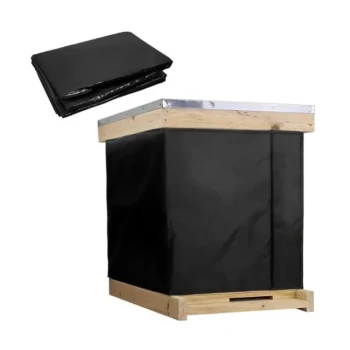
Beehive shading is the primary safeguard against colony collapse in high-temperature arid environments. By acting as a physical barrier against direct solar radiation, shading materials prevent internal hive temperatures from rising uncontrollably. This thermal stabilization is essential for maintaining colony vitality, protecting honey quality, and ensuring the stable productivity required for commercial apiary success.
Shading systems function as a critical "metabolic relief" tool, allowing bee colonies to redirect energy from cooling the hive to nectar collection. For commercial operations, this shift directly translates to higher honey yields and reduced colony loss in extreme climates.
Critical Temperature Control and Colony Survival
Maintaining the Biological Thermal Window
Honeybee colonies must maintain a precise internal nest temperature between 33°C and 36°C for brood development. In arid regions, ambient heat and direct sunlight can quickly push internal temperatures beyond this window, leading to brood mortality and colony collapse.
Preventing Heat-Induced Absconding
Extreme thermal stress is a primary trigger for absconding, a behavior where the entire colony abandons the hive in search of a cooler environment. Professional shading structures stabilize the microclimate, providing the environmental security needed to retain bee populations in desert or tropical lowland regions.
Protecting Honey and Wax Integrity
High internal temperatures do more than harm the bees; they can physically damage the beeswax comb and degrade honey quality. Shading ensures that the honey remains chemically stable and the hive structure remains sound, preserving the value of the final harvest.
Maximizing Commercial Yields through Energy Optimization
Shifting Labor from Cooling to Collection
In unshaded hives, a significant portion of the workforce is diverted to thermoregulation tasks, such as fanning and water collection for evaporative cooling. By reducing the heat load with artificial shading, more worker bees are available for foraging, which significantly increases the capped brood area and total honey production.
Improving Survival in Resource-Scarce Conditions
In arid environments where nectar flows are limited, every unit of energy matters. Shading reduces the metabolic pressure on the colony, allowing bees to focus their limited energy on foraging during brief flowering windows rather than struggling to survive the midday sun.
Enhancing Management Safety
Bees subjected to constant heat stress are often more irritable and aggressive. Shaded hives generally house calmer bees, which facilitates easier management, safer harvesting, and more efficient inspections for commercial beekeepers.
Understanding the Trade-offs and Pitfalls
The Risk of Stagnant Airflow
A common pitfall in shading design is focusing solely on blocking light while neglecting ventilation. If a shading device restricts airflow, it can trap heat and moisture inside the hive, creating a "steaming" effect that is just as lethal as direct sunlight.
UV Degradation of Inferior Materials
Distributors must be wary of low-grade artificial materials that lack UV stabilization. In high-radiation arid zones, non-specialized plastics or fabrics will brittle and fail within a single season, leading to unexpected crop loss and increased replacement costs for the end-user.
Strategic Sourcing and Implementation
Effective apiary management requires a balance between natural vegetation and artificial barriers. While natural shade is ideal, its low density in arid regions necessitates high-performance artificial alternatives that offer rapid deployment and consistent protection across large-scale operations.
Making the Right Choice for Your Market
Our deep professional industry expertise and comprehensive product portfolio allow us to support distributors in providing the exact thermal solutions their clients require.
- If your primary focus is maximizing honey yield in desert regions: Prioritize high-opacity, UV-stabilized shading fabrics that significantly reduce the need for worker bees to perform cooling tasks.
- If your primary focus is long-term colony retention and stability: Invest in elevated shading structures that provide a permanent thermal buffer while allowing for maximum 360-degree airflow.
- If your primary focus is rapid response to seasonal heatwaves: Utilize our ultra-fast delivery services to source modular, easy-to-install artificial covers that can be deployed across an entire apiary in hours.
Selecting the correct professional shading solution is the most effective way to turn a high-risk climate into a high-yield environment.
Summary Table:
| Key Benefit | Impact on Bee Colony | Commercial Value |
|---|---|---|
| Thermal Stability | Maintains internal temp (33°C-36°C) | Prevents brood mortality & colony loss |
| Energy Optimization | Shifts labor from cooling to foraging | Significant increase in honey yield |
| Colony Retention | Reduces heat-induced absconding | Ensures stable, long-term operations |
| Material Integrity | Protects beeswax and honey quality | Preserves the market value of the harvest |
| Management Safety | Promotes calmer bee behavior | Facilitates faster, safer hive inspections |
Scale Your Beekeeping Business with HONESTBEE
Maximize your profit margins and ensure supply reliability with HONESTBEE, your premier one-stop sourcing partner for commercial apiaries and distributors. We provide a comprehensive, full-spectrum portfolio ranging from UV-stabilized shading materials to advanced honey-filling machinery and essential industry consumables.
Why partner with us?
- Deep Industry Expertise: Professional-grade solutions tailored for extreme climates.
- Rapid Fulfillment: Ultra-fast delivery and efficient order processing to meet seasonal demands.
- OEM/ODM Support: Customized tools and machinery to fit your specific market needs.
- Exceptional Service: Dedicated support to help you navigate global supply chains.
Ready to elevate your wholesale offering? Contact us today to request a quote and see how our premium trading services can grow your business.
References
- ELLEN CRISTINA NABIÇA RODRIGUES, Márcio Nannini da Silva Florêncio. APICULTURA COMO ESTRATÉGIA SUSTENTÁVEL NO SEMIÁRIDO BRASILEIRO: CONTRIBUIÇÕES DA LITERATURA E EVIDÊNCIAS BIBLIOMÉTRICAS. DOI: 10.31692/2526-7701.xcointerpdvagro.0182
This article is also based on technical information from HonestBee Knowledge Base .
Related Products
- Professional Insulated Plastic Bee Hives
- Wooden Bee Hive Frames for Beekeeping and Wholesale
- Wholesales Dadant Size Wooden Bee Hives for Beekeeping
- Plastic Bee Frame Beekeeping Hive Frames for Wholesale
- Inner Beehive Cover for Beekeeping Bee Hive Inner Cover
People Also Ask
- What are the advantages of plastic bee hives? Boost Efficiency & Durability for Your Apiary
- Are plastic bee hives any good? Unlock Durability & Efficiency for Your Apiary
- How do plastic bee hives compare to wooden hives in handling? Reduce Strain & Boost Efficiency
- Are plastic bee hives good? Durable, Low-Maintenance Hives for Modern Apiaries
- What are the disadvantages of plastic beehives? Key Operational and Environmental Risks Exposed