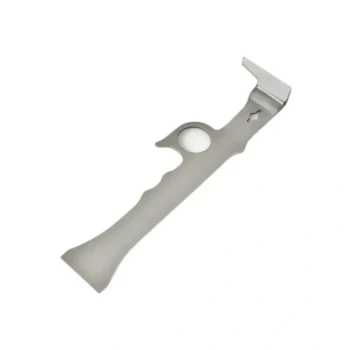
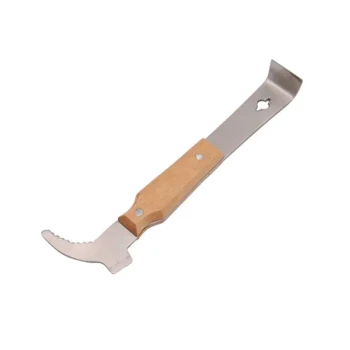
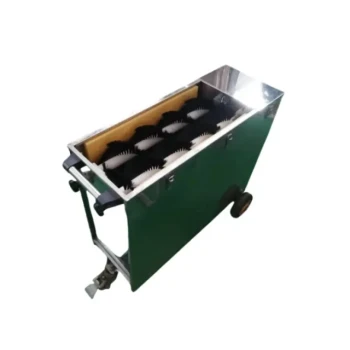
Beekeeping tools and equipment represent a non-invasive investment that decouples economic gain from deforestation. Unlike traditional agricultural improvements, which often necessitate clearing land for crops or grazing, beekeeping operates within the existing forest canopy, utilizing the ecosystem without altering its physical structure.
The core distinction is the incentive structure: traditional farming often profits from removing the forest, whereas beekeeping profits from preserving it, as productivity relies entirely on a healthy, diverse forest habitat.
The Structural Difference: Land Use and Preservation
Eliminating the Need for Clearance
Traditional agricultural projects frequently require the removal of trees to create space for planting rows or pasture. This land conversion is a primary driver of deforestation.
Beekeeping does not require land clearing or tree felling. The apiaries (hive locations) take up minimal ground space and can be integrated into the existing landscape.
Symbiosis Over Extraction
The relationship between honey production and the forest is symbiotic rather than extractive.
The forest provides the necessary nectar and pollen sources. In return, the bees provide pollination, supporting the forest's regeneration and biodiversity.
The Economic Feedback Loop
Aligning Profit with Protection
Because bee productivity depends on a healthy forest habitat, the economic interests of the beekeeper are directly aligned with conservation goals.
Higher forest biodiversity typically leads to better honey yields. This creates a financial motivation for local communities to maintain the forest rather than harvest it for timber or clear it for crops.
Ensuring Long-Term Sustainability
This alignment creates a self-sustaining conservation model.
Communities are incentivized to protect the environment to ensure the continued success and profitability of their beekeeping operations.
The Role of Professional Equipment
Establishing Scientific Habitats
Using professional hive-making machinery and tools is not just about convenience; it is about creating scientifically designed habitats.
Proper equipment ensures that hives are constructed to support colony health and optimize production, rather than relying on rudimentary or makeshift structures that might fail.
Precision Management and Monitoring
Modern tools enable farmers to conduct precise health monitoring and efficient colony management.
This moves beekeeping from a passive activity to an active, managed science. It ensures a continuous supply of pollination services, effectively integrating these pollinators into the broader agricultural and ecological system.
Operational Considerations and Trade-offs
The Requirement for Technical Infrastructure
While beekeeping preserves the land, it requires a higher level of technical infrastructure than simple crop planting.
Success depends on access to professional tools and machinery for hive construction. Without this infrastructure, colony health may suffer, reducing the pollination benefits and economic returns.
Active Management vs. Passive Growth
Beekeeping is not a "set and forget" strategy.
The supplementary data indicates a need for precise health monitoring. This implies that project success requires ongoing management and technical skill, rather than just the availability of land.
Making the Right Choice for Your Goal
To determine if beekeeping tools are the right investment for your specific project, consider your primary objectives:
- If your primary focus is Forest Conservation: Choose beekeeping tools to create an economic engine that financially rewards the preservation of standing trees and biodiversity.
- If your primary focus is Agricultural Productivity: Implement professional beekeeping equipment to secure essential pollination services that enhance the yield of surrounding crop systems.
By equipping communities with the tools to manage bees scientifically, you transform the forest from a resource to be consumed into an asset to be cultivated.
Summary Table:
| Feature | Traditional Agriculture | Beekeeping Projects |
|---|---|---|
| Land Impact | Requires clearing and deforestation | Non-invasive; preserves canopy |
| Ecosystem Role | Extractive/Replacement | Symbiotic/Pollination support |
| Economic Incentive | Profit from land conversion | Profit from forest health |
| Sustainability | Declines with soil exhaustion | Increases with biodiversity |
| Infrastructure | Land and irrigation | Tools and hive-making machinery |
Empower Your Sustainable Beekeeping Venture with HONESTBEE
Transitioning to forest-compatible projects requires more than just a vision; it requires the right technical infrastructure. HONESTBEE caters to commercial apiaries and distributors globally, providing a comprehensive wholesale range of professional beekeeping tools, machinery, and essential consumables.
From precision hive-making machines and honey-filling equipment to specialized hardware and honey-themed merchandise, we supply everything needed to transform beekeeping into a scientific, profitable, and conservation-focused enterprise. Partner with us to provide your target customers with high-quality equipment that ensures colony health and long-term sustainability.
Ready to scale your beekeeping operations?
Contact HONESTBEE today for wholesale inquiries and expert equipment solutions.
References
- Heidi J. Albers, Elizabeth Robinson. The Trees and the Bees: Using Enforcement and Income Projects to Protect Forests and Rural Livelihoods Through Spatial Joint Production. DOI: 10.1017/s1068280500002872
This article is also based on technical information from HonestBee Knowledge Base .
Related Products
- HONESTBEE 15-in-1 Beekeeper Multi-Tool with Hammer and Pliers for Beekeeping
- HONESTBEE Advanced Ergonomic Stainless Steel Hive Tool for Beekeeping
- Stainless Steel Queen Grafting Tool for Beekeeping and Bee Queen Grafting
- HONESTBEE Professional Mini J-Hook Hive Tool for Beekeeping
- Stainless Steel J Hook Hive Tool for Beekeeping
People Also Ask
- What is the recommended method for storing beekeeping tools? Expert Vertical Storage Solutions for Your Apiary
- How does a favorable microclimate interact with beekeeping tools? Boost Overwintering Success and Equipment Longevity
- Why is the treatment of beekeeping tools with high-concentration chemical disinfectants necessary for preventing AFB?
- What role do specialized beekeeping tools play in pest management? Enhance Apiary Health with Precision Tech
- Why design beekeeping tools with ergonomics in mind? Empowering All Beekeepers with Inclusive Equipment