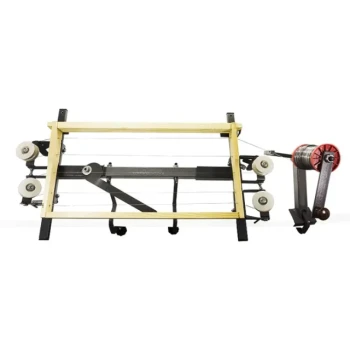
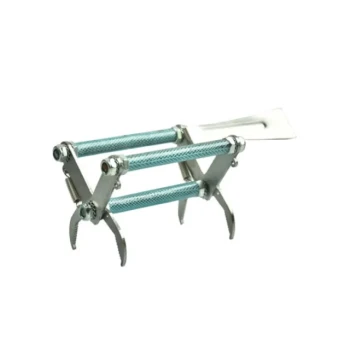
Standardization serves as the fundamental baseline for scientific validity in honeybee research. By utilizing standardized beehives and matching frames, researchers create a controlled environment that allows them to uniformly regulate critical variables—specifically colony strength, larval distribution, and parasite loads. This consistency eliminates data noise caused by hardware variations or micro-climatic fluctuations, ensuring that experimental results reflect actual biological differences rather than inconsistent equipment.
By standardizing the physical environment, researchers effectively isolate genetics as the primary variable, ensuring that observed traits—such as disease resistance or grooming behavior—are authentic rather than artifacts of the hive structure.
Creating a Reliable Scientific Platform
Eliminating Environmental Noise
In any large-scale experiment, variations in hardware can create distinct micro-climates within the hive. Differences in insulation, ventilation, or volume can alter how bees thermoregulate.
Standardized hives remove these variables. This ensures that environmental pressures are uniform across all colonies, providing a reliable platform for parallel comparative experiments between resistant breeding lines and control groups.
Regulating Colony Strength
To measure resistance accurately, the starting point for every colony must be identical. Standardization allows researchers to set a precise baseline, such as establishing colonies with a fixed number of brood frames (typically 4 to 8).
This balance prevents "strength bias," where a larger colony might appear more resistant simply because it has more workers to clean the hive or manage resources.
Operational Mechanisms of Standardization
Facilitating Cross-Colony Transfer
Matching frames are essential for the physical management of experiments. They allow researchers to seamlessly transfer specific brood areas or experimental samples between colonies without disrupting the hive structure.
This is critical when moving larvae into "donor colonies" with specific infestation rates. If the frames did not match perfectly, this precise exposure to parasites would be mechanically impossible.
Controlling the Nursing Environment
Standardized equipment extends to internal management tools like queen excluders. In resistance breeding, these are used to confine the queen to the lower hive sections while allowing workers access to experimental combs above.
This setup ensures experimental larvae receive consistent nursing care without interference from the queen’s pheromones or additional egg-laying, maintaining a uniform developmental environment.
Application in Resistance Breeding
Isolating Varroa Resistance (VSH)
To test for Varroa Sensitive Hygiene (VSH), researchers must ensure all groups face a balanced initial mite population. Standardized frames allow scientists to introduce known quantities of mites to all test colonies simultaneously.
Because the infestation pressure is equalized, any reduction in mite levels can be directly attributed to the bees' hygienic behavior, rather than a lack of initial exposure.
Disease Load Normalization
In studies regarding American Foulbrood (AFB) or European Foulbrood (EFB), the physical consistency of the hive is paramount.
By using a standardized number of frames, observations regarding infection intensity reflect the true genetic resistance of the species. This prevents false positives where a colony survives simply due to overwhelming population size rather than immune response.
Understanding the Trade-offs
Commercial Simulation vs. Natural State
Standardized equipment, such as 10-frame Langstroth boxes, simulates the spatial dynamics and production pressures of commercial beekeeping. This ensures data on traits like Mite Non-Reproduction (MNR) is directly applicable to industrial apiaries.
However, this approach does not simulate a "wild" state. Traditional hives (like pletara) simulate natural tree cavities and are better suited for studying adaptation to natural selection without human management. Researchers must choose between "commercial relevance" (standardized) and "natural mimicry" (traditional) depending on their goals.
Making the Right Choice for Your Goal
When designing a breeding program or experiment, the choice of hardware dictates the validity of your data.
- If your primary focus is Commercial Scalability: Use standard Langstroth configurations to ensure your resistance data (such as MNR) translates directly to industrial production pressures.
- If your primary focus is Genetic Isolation: strict adherence to standardized frame counts is required to rule out colony size as a variable in disease resistance.
- If your primary focus is Natural Selection: Avoid industrial standardization in favor of traditional cavity-mimicking hives to observe non-managed adaptation.
Ultimately, hardware consistency is the rigorous control mechanism that turns beekeeping observations into verifiable scientific data.
Summary Table:
| Feature | Role in Research | Scientific Impact |
|---|---|---|
| Standardized Dimensions | Eliminates micro-climate & volume variation | Isolates genetics as the primary variable |
| Matching Frames | Facilitates seamless brood & sample transfers | Enables precise parasite exposure & monitoring |
| Fixed Frame Counts | Regulates initial colony strength | Prevents "strength bias" in resistance results |
| Queen Excluders | Controls nursing environment | Ensures uniform larval development for testing |
| Langstroth Scaling | Simulates industrial apiary conditions | Ensures data applies to commercial beekeeping |
Scale Your Breeding Success with HONESTBEE Professional Equipment
Precision in research and commercial success starts with high-quality, standardized equipment. HONESTBEE is a leading partner for commercial apiaries and distributors, providing the reliable hardware needed to turn observations into verifiable results.
Our Comprehensive Wholesale Solutions Include:
- Precision Machinery: Advanced hive-making and honey-filling machines for industrial efficiency.
- Standardized Hardware: A full spectrum of beekeeping tools, hives, and frames designed for consistency.
- Industry Consumables: A wide array of essential supplies and honey-themed cultural merchandise.
Whether you are conducting rigorous resistance experiments or scaling up honey production, HONESTBEE delivers the tools to optimize your operations. Contact us today to explore our wholesale offerings and see how our expertise can drive your growth.
References
- Arrigo Moro, Peter Neumann. Host-Parasite Co-Evolution in Real-Time: Changes in Honey Bee Resistance Mechanisms and Mite Reproductive Strategies. DOI: 10.3390/insects12020120
This article is also based on technical information from HonestBee Knowledge Base .
Related Products
- Professional Galvanized Steel Frame Rest for Beehives
- Wooden Bee Hive Frames for Beekeeping and Wholesale
- Assembled Wooden Bee Frames with Plastic Foundation for Durability and Convenience by HONESTBEE
- Plastic Bee Frame Beekeeping Hive Frames for Wholesale
- HONESTBEE Wired and Assembled Wooden Bee Frames Foundation for a Thriving Hive
People Also Ask
- What are the standard dimensions for frame rests in a beehive? Essential Guide for Perfect Bee Space
- How does balancing the number of frames impact hive productivity? Optimize Your Apiary's Biological Output
- What are the main considerations when choosing between wooden and plastic bee hive frames? Optimize Your Apiary's Efficiency
- How do wooden and plastic hive frames compare in terms of durability? Wood vs. Plastic Longevity & Repairability
- What are the main types of beehive frames used in modern beekeeping? Find the Perfect Fit for Your Apiary