Commercial honey machinery is engineered for social honeybees because only these bees reliably create the colony scale, reusable comb, and surplus honey needed for mechanized beekeeping. Species such as Apis mellifera live in perennial colonies containing thousands of workers, store honey and beeswax in structured comb, and can be managed through standardized frames and hive bodies. Solitary bees generally nest individually, produce little or no surplus honey, and do not create reusable storage combs suitable for centrifugal extraction.
The equipment follows the biology: commercial hives and extraction lines are economical because social honeybees combine large colonies, standardized nests, and harvestable surplus stores—conditions that solitary bees generally do not provide.
Why Social Honeybees Fit Commercial Beekeeping
Large colonies create commercial volume
A social honeybee colony may contain tens of thousands of workers during productive periods. This workforce collects nectar at a scale that can support both colony survival and a harvestable surplus.
Solitary bees operate as individual mothers rather than coordinated worker colonies. Each female typically gathers provisions for her own offspring, so there is no large communal honey reserve for a beekeeper to remove.
Reusable comb supports repeated harvesting
Honeybees construct wax comb containing brood cells and honey-storage cells. In managed hives, this comb can remain in place across seasons, allowing bees to refill it and beekeepers to return frames after extraction.
This creates a repeatable production cycle: inspect, remove frames, extract honey, and return the comb. Solitary bees generally do not build large, reusable honey-storage combs, making this cycle impossible or commercially impractical.
Worker castes enable coordinated management
Honeybee colonies have specialized worker roles, including foraging, nursing, comb construction, defense, and hive maintenance. These roles allow the colony to function as a coordinated production system.
Solitary bees lack a permanent worker caste and colony-level labor organization. Their nests are managed by individual females, so conventional hive manipulation does not translate effectively to their biology.
How Equipment Reflects Honeybee Nest Architecture
Hive bodies imitate suitable nesting cavities
Cavity-dwelling honeybees naturally establish nests in enclosed, dark spaces. This makes them adaptable to wooden hive boxes, movable frames, covers, entrances, and other standardized components.
Commercial hive infrastructure therefore provides an artificial cavity that can be opened, inspected, transported, expanded, and protected from weather.
Frames make the colony mechanically accessible
Movable frames separate the colony’s comb into manageable units. Beekeepers can inspect brood, assess food stores, control space, and remove mature honey without dismantling the entire nest.
This modular design is essential for commercial operations, especially migratory pollination and large apiaries that require rapid, repeatable handling.
Standardization supports scale
Precision hive-making machinery produces components with consistent dimensions and fit. Standardized parts reduce assembly errors, simplify replacement, and allow equipment from the same system to work together.
For distributors and professional beekeepers, this supports one-stop sourcing, faster order fulfillment, and more predictable maintenance across large apiaries.
Why Honey Extractors Require Comb and Frames
Centrifugal extraction depends on structured comb
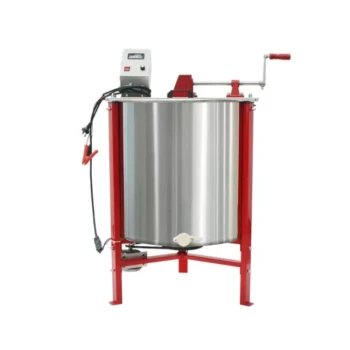
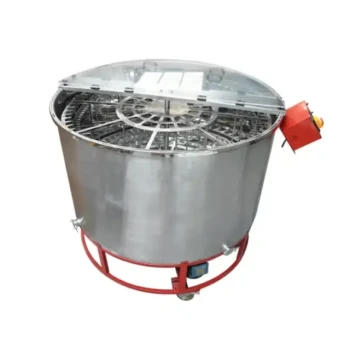
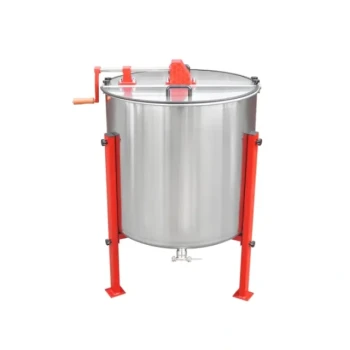
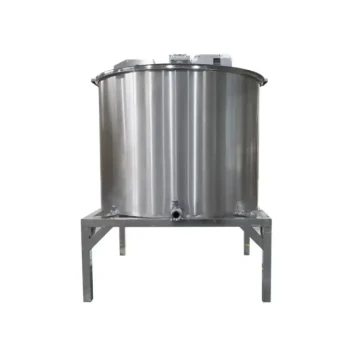
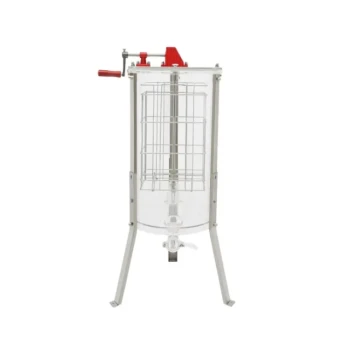
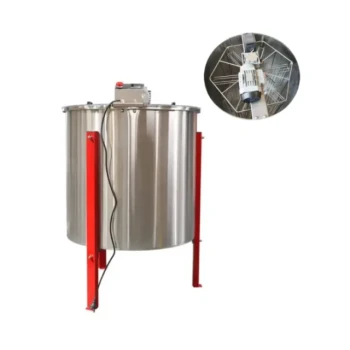
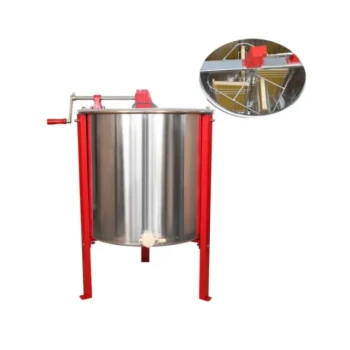
A centrifugal extractor removes honey by spinning filled frames. The force drives honey from the comb while preserving the comb’s basic structure for reuse.
This method is efficient only when honey is stored in sufficiently strong, organized comb that fits standardized frames. Solitary bee nests generally do not provide that physical format.
Extraction protects product quality
Professional extraction equipment controls the handling of honey and reduces unnecessary contact with air, surfaces, and contaminants. It can also help preserve the honey’s texture, aroma, and other quality characteristics.
The machinery is therefore designed around both biological compatibility and food-processing requirements. It must remove honey efficiently while supporting hygiene, consistency, and commercial packaging standards.
Filling lines depend on predictable throughput
Automated filling equipment is economical when incoming honey volumes, viscosity, and batch sizes are reasonably predictable. Commercial honeybee operations can provide the throughput needed to justify pumps, filters, filling heads, containers, and quality-control systems.
A solitary-bee product would usually involve very small quantities and nonstandard nest structures. Smaller-scale or semi-automated equipment would be more appropriate than a high-capacity honey extraction and filling line.
Why Solitary Bees Are Not Simply “Small Honeybees”
Their primary value is pollination, not honey production
Solitary bees—including mason and leafcutter bees—are important pollinators. Their commercial value often comes from pollination services rather than harvestable honey.
Their nesting systems are designed to provision individual offspring, not to accumulate a shared surplus that can be removed without compromising the nest.
Their nests are structurally different
Solitary bees may use holes, tubes, soil cavities, plant stems, or other individual nesting sites. These arrangements do not resemble a honeybee hive filled with large sheets of interconnected storage comb.
Consequently, standard hive bodies, wax foundation, movable frames, and centrifugal extractors do not match their nesting architecture.
They require different management equipment
Solitary-bee management may involve nesting blocks, reeds, tubes, emergence systems, protective shelters, and sanitation tools. The objective is usually to provide suitable nesting and support population health—not to extract honey.
This is a different equipment category rather than a smaller version of commercial honeybee beekeeping hardware.
Important Species-Level Exceptions
Not every social bee fits standard honey equipment
Commercial equipment is optimized mainly for cavity-dwelling honeybees, particularly Apis mellifera. Other honeybee species may build exposed single combs or show behavior that makes them unsuitable for long-term confinement in conventional hives.
Hive infrastructure must therefore account for nesting behavior, comb structure, colony size, and honey yield, not simply whether a species is social.
Stingless bees need specialized handling
Stingless bees are social and can produce honey, but their colonies, storage structures, and honey characteristics differ from those of Apis mellifera. Their honey may have higher water content and be more vulnerable to fermentation.
Small-batch extraction and precise filling systems can be better suited to these products. Equipment should minimize air exposure, maintain hygiene, and provide accurate filling for higher-value, lower-volume batches.
Honey properties affect processing design
Honey viscosity and crystallization behavior vary with floral source and geography. Pumps, valves, filters, heating controls, and filling heads may need to be selected according to the product’s physical characteristics.
A technically suitable supplier should therefore provide more than a catalog item. Product selection should connect bee species, honey characteristics, operating scale, and regional conditions.
Understanding the Trade-offs
Standardization improves efficiency but reduces flexibility
Standardized frames and hive components make inspection, transport, extraction, and replacement efficient. However, they are optimized for particular honeybee species and may be poorly suited to bees with unusual nest designs.
Trying to force a nonstandard species into conventional equipment can reduce colony performance and create unnecessary handling problems.
High-capacity machinery may be uneconomical for small batches
Large automated extraction and filling lines offer speed and labor savings at commercial volumes. For low-yield species or specialty honey, their capital cost, cleaning requirements, and minimum throughput may not be justified.
Small-scale or semi-automated systems can provide better economic and operational fit for niche products.
Mechanical harvesting must not compromise colony health
Honey extraction is only sustainable when the colony retains adequate food reserves and the equipment allows careful inspection. Excessive removal, rough frame handling, poor ventilation, or unsuitable hive dimensions can undermine colony health.
Machinery should support responsible management rather than treat the colony as an interchangeable production unit.
“Commercial” does not mean “universal”
The dominance of honeybee equipment reflects market scale and biological compatibility, not the superior value of honeybees in every context. Solitary bees remain highly valuable for pollination, even though they are not suitable for conventional honey harvesting.
Selecting equipment by species and business model prevents costly mismatches.
Making the Right Choice for Your Goal
The correct equipment strategy depends on whether the operation is producing bulk honey, managing pollination colonies, or commercializing a specialty product.
- If your primary focus is bulk honey production: Use standardized hive bodies, movable frames, comb foundations, centrifugal extractors, and filling systems designed around high-yield cavity-dwelling honeybees.
- If your primary focus is large-scale apiary management: Prioritize interchangeable hive components, precision manufacturing, rapid availability, and supplier support that simplify inspection, transport, replacement, and fulfillment.
- If your primary focus is solitary-bee pollination: Invest in nesting blocks, tubes, shelters, emergence systems, and sanitation equipment rather than honey extraction machinery.
- If your primary focus is specialty or stingless-bee honey: Select smaller-scale extraction and high-precision filling equipment that matches the species’ nest structure, lower volume, moisture level, and fermentation risk.
- If your primary focus is distribution or resale: Build a product portfolio that separates mainstream honeybee hardware from species-specific pollination and specialty-honey equipment, supported by responsive technical service and dependable delivery.
Equipment performs best when it is selected as an extension of bee biology, not as a one-size-fits-all production system.
Summary Table:
| Aspect | Social Honeybees | Solitary Bees |
|---|---|---|
| Colony Size | Large (thousands) | Individual mothers |
| Honey Production | Surplus harvestable | Minimal/no surplus |
| Nest Structure | Reusable combs | Individual nests |
| Hive Compatibility | High (cavity-dwelling) | Low (varied nests) |
| Extraction Efficiency | High (standardized frames) | Impractical |
| Commercial Use | Bulk honey, pollination | Pollination services |
Ready to optimize your beekeeping operation? HONESTBEE is your one-stop wholesale partner for professional beekeeping equipment. From precision hive-making machinery to efficient honey extraction and filling lines, we provide comprehensive solutions tailored to your apiary's size and goals. Our team offers rapid response, dedicated support, and ultra-fast delivery to keep your business buzzing. Whether you're a distributor seeking reliable supply chains or a beekeeper aiming to enhance productivity, we're here to help. Contact us today to learn more about our full-spectrum product portfolio and exclusive trade services!
Related Products
- Stainless Steel Manual 8 Frame Radial Honey Extractor Machine for Beehives
- HONESTBEE 6 Frame Three Use Electric Honey Extractor for Beekeeping
- Commercial Electric 12 Frame Honey Extractor Spinner Motorized Honey Extractor
- 10L Stainless Steel Electric Honey Press Machine
- HONESTBEE 72 Frame Industrial Electric Honey Extractor for Beekeeping
People Also Ask
- What types of beehive frames are compatible with honey extractor machines? Find the Perfect Match for Your Apiary
- Which type of honey extractor is generally more durable? Focus on Material & Build Quality for Longevity
- What are the key features and benefits of a stainless steel honey extractor? Upgrade to Professional Purity
- What are the disadvantages of a manual honey extractor? Overcome Efficiency Bottlenecks in Your Apiary
- What is a manual honey extractor? The Essential Guide to Cost-Effective Beekeeping for Beginners