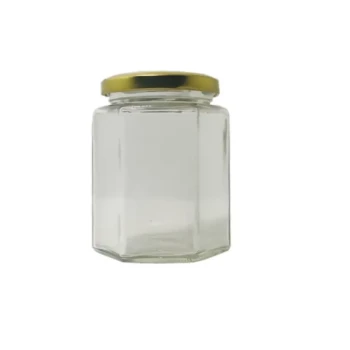
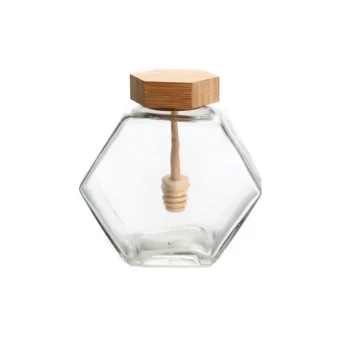
Glass bottles are the industry standard for storing honey samples primarily due to their superior chemical inertness. Unlike plastics or metals, glass does not react with the complex organic acids, enzymes, or bioactive substances found in honey, ensuring that the sample's chemical composition remains unaltered during storage. Furthermore, when combined with light-shielding and temperature control (typically 4°C), glass effectively minimizes moisture fluctuations and photochemical degradation.
The primary goal of using glass is to ensure data integrity. By creating a chemically neutral and hermetically sealed environment, glass ensures that any changes observed during physicochemical analysis are due to the honey's natural evolution, not an artifact of the container.
Preserving Chemical Fidelity
Eliminating Container Reactivity
The most critical requirement for physicochemical characterization is that the container must not influence the sample. Honey is a complex matrix containing organic acids and active enzymes.
Glass provides a chemically inert barrier. It prevents leaching or chemical reactions that could artificially alter pH values or degrade sensitive bioactive compounds.
Isolating Internal Evolution
Researchers often track specific indicators, such as Hydroxymethylfurfural (HMF) levels or acidity.
By using sterile glass, you ensure that measured changes in these metrics are caused solely by the internal physical and chemical evolution of the honey. This isolation is vital for valid scientific conclusions.
Controlling the Physical Environment
Managing Hygroscopicity
Honey is highly hygroscopic, meaning it readily absorbs moisture from the surrounding air.
Glass offers impermeable sealing capabilities. This airtight barrier prevents moisture ingress, which is critical because excess moisture can trigger unwanted fermentation, rendering the sample useless for analysis.
Retaining Volatile Components
The sensory profile of honey relies on volatile organic compounds.
Glass containers prevent the loss of these volatile components. This ensures that the sensory characteristics analyzed in the lab remain representative of the honey at the time of collection.
Shielding from External Degradation
Combating Photochemical Damage
Many of honey's key enzymes, such as diastase, and its antioxidant components are highly sensitive to light.
Brown (amber) glass bottles are frequently used to block harmful light wavelengths. This prevents photochemical degradation reactions that would otherwise skew the results of enzymatic activity tests.
Facilitating Sterilization and Sampling
Practical handling is also a major factor in characterization.
Heat-resistant, wide-mouth glass bottles allow for high-temperature dry heat sterilization before use. This eliminates external microbial interference. Additionally, the wide mouth makes it easier to sample high-viscosity honey without introducing contamination.
Understanding the Trade-offs
Fragility and Handling Risks
While chemically superior, glass poses a safety risk due to breakage.
Great care must be taken during transport from the field to the laboratory. A broken sample is a lost data point that cannot be recovered.
Thermal Shock Sensitivity
Standard glass can shatter if subjected to rapid temperature changes.
If samples are moved directly from high-temperature sterilization to cold storage (4°C), or vice-versa, borosilicate or treated glass must be used to prevent structural failure.
Making the Right Choice for Your Goal
To ensure your physicochemical characterization yields valid results, choose your glassware based on the specific parameters you intend to test.
- If your primary focus is Enzyme Activity (e.g., Diastase): Prioritize brown (amber) glass stored at 4°C to prevent light-induced denaturation and thermal degradation.
- If your primary focus is Microbial Stability: Select heat-resistant, wide-mouth bottles that can be dry-heat sterilized to ensure the flora analyzed is native to the honey.
- If your primary focus is General Chemical Profiling (pH, HMF): Ensure the glass has a high-quality airtight seal to prevent moisture fluctuations that could skew concentration metrics.
Ultiimately, the container is the first line of defense in analytical chemistry; using glass ensures the sample you test in the lab is the same sample you collected in the field.
Summary Table:
| Feature | Benefit for Honey Characterization | Why it Matters |
|---|---|---|
| Chemical Inertness | Prevents leaching and container reactions | Maintains original pH and bioactive profile |
| Impermeability | Airtight seal against moisture ingress | Prevents fermentation and moisture fluctuations |
| Light Shielding | Amber glass blocks UV/visible light | Protects light-sensitive enzymes like diastase |
| Sterilizability | Supports high-temperature dry heat | Eliminates microbial contamination for flora analysis |
| Volatility Retention | Traps volatile organic compounds | Ensures accurate sensory and aroma profiling |
Elevate Your Honey Quality with HONESTBEE
At HONESTBEE, we understand that maintaining honey integrity is vital for both scientific analysis and commercial success. Whether you are a commercial apiary or a global distributor, our comprehensive wholesale solutions provide the tools you need to excel. From specialized hive-making and honey-filling machinery to professional-grade beekeeping equipment and essential industry consumables, we deliver reliability at every stage of production.
Ready to scale your honey production or distribution?
Contact Us Today to explore how our specialized hardware and honey-themed merchandise can add value to your business.
References
- Aida A. Abd El‐Wahed, Nermeen Yosri. Sidr Honeys Physical and Chemical Characterization, a Comprehensive Approach through LC-MS/MS, NMR, and GC-MS Analysis. DOI: 10.3390/separations10070372
This article is also based on technical information from HonestBee Knowledge Base .
Related Products
- Classic Glass Honey Jar with Metal Lug Cap for Beehive Storage
- Hexagonal Glass Honey Jars with Metal Lug Caps Elegant Versatile Packaging
- Hexagonal Glass Honey Jar with Wooden Lid Integrated Dipper Elegant Functional Storage
- Classic Drum Shaped Glass Honey Jar with Airtight Lid
- Classic Round Glass Honey Jar with Lid
People Also Ask
- What are the benefits of glass jars regarding strength and safety for storing honey? Ensure Purity and Long-Term Quality
- What are the advantages of using glass jars for honey storage? Ensure Purity and Premium Appeal for Your Product
- What are the benefits of using high-transparency Glass Jars for honey? Elevate Purity and Premium Branding
- What is the aesthetic appeal of using glass jars for honey? Elevate Your Brand with Premium Packaging
- Which container is best for storing honey? Preserve Purity & Flavor with the Right Choice