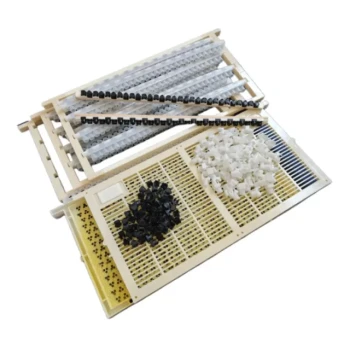
High-intensity lighting and a stable grafting base are essential because they simultaneously solve the problems of visibility and mechanical precision required to handle microscopic organisms. By illuminating the deep recesses of honeycomb cells and anchoring the operator's movements, these tools significantly reduce the time required for the operation. This acceleration is critical, as it minimizes the larvae's exposure to dangerous temperature fluctuations outside the hive.
Manual grafting relies on speed and precision to ensure larval survival. Lighting and stability are not merely ergonomic aids; they are biological safeguards that minimize the time larvae spend in non-optimal environments.
The Mechanics of Precision Grafting
Visualizing the Microscopic Target
The primary challenge in grafting is identifying the target. Larvae are minute, and the royal jelly layer they rest on is often translucent.
These targets are located deep within the hexagonal honeycomb cells, creating natural shadows that obscure vision.
High-intensity lighting pierces these shadows, providing the operator with a clear, high-contrast visual environment to distinguish the larva from its surroundings.
Stabilizing Hand Movements
The manual transfer of larvae requires fine motor skills similar to microsurgery.
A stable grafting base eliminates environmental vibration and provides a solid anchor for the operator’s hands.
This support system ensures that the grafting tool enters the cell at the correct angle, preventing accidental injury to the delicate larvae during extraction.
The Critical Link Between Speed and Viability
Reducing Operation Time
The combination of clear vision and mechanical stability removes friction from the workflow.
When the operator does not have to strain to see or correct for hand tremors, the grafting cycle becomes fluid and fast.
This efficiency significantly shortens the overall duration of the grafting session.
Minimizing Temperature Stress
Speed is the single most important factor in maintaining larval viability.
Honey bee larvae are extremely sensitive to temperature changes and can perish quickly when removed from the hive's regulated climate.
By accelerating the process, high-intensity lighting and stable bases reduce the window of time larvae are exposed to non-optimal ambient temperatures.
Understanding Potential Pitfalls
Heat Generation from Lighting
While high intensity is necessary for visibility, it introduces a risk of thermal damage.
Incandescent or halogen sources can generate significant radiant heat, which may dehydrate the royal jelly or overheat the larvae.
Operators must ensure that the light source provides lumens (brightness) without raising the temperature at the comb surface.
Rigidity vs. Ergonomics
A base that is perfectly stable can sometimes be ergonomically rigid.
If the base does not allow for slight angle adjustments, the operator may experience fatigue, which paradoxically leads to more hand tremors over time.
The ideal setup balances absolute stability with the ergonomic needs of the human operator.
Optimizing Your Grafting Environment
To ensure high acceptance rates and healthy queen development, prioritize the following in your workflow:
- If your primary focus is larval survival: Prioritize a setup that minimizes the total time the frame is outside the colony to prevent chilling or drying.
- If your primary focus is grafting accuracy: utilize cool-running, high-intensity LEDs to illuminate the cell bottom without adding heat stress.
The goal is to create an environment where precision becomes automatic, protecting the biological integrity of the larvae.
Summary Table:
| Factor | Key Benefit | Impact on Larval Viability |
|---|---|---|
| High-Intensity Lighting | Eliminates shadows in deep cells | Ensures precise identification and avoids larval injury |
| Stable Grafting Base | Anchors hand movements | Reduces mechanical tremors and speeds up the cycle |
| Operational Speed | Shortens hive-out time | Minimizes exposure to lethal temperature fluctuations |
| Cool LED Sources | High visibility without heat | Prevents dehydration of royal jelly and thermal stress |
Maximize Your Queen Rearing Efficiency with HONESTBEE
At HONESTBEE, we understand that for commercial apiaries and distributors, precision translates directly to profit. Our comprehensive wholesale catalog provides the high-performance beekeeping tools and machinery needed to master complex operations like larval grafting. From specialized hive-making and honey-filling machines to essential consumables, we empower your business with the equipment required for large-scale success.
Ready to elevate your apiary's productivity? Contact our experts today to discover how our tailored equipment solutions can streamline your operations and grow your business.
References
- Kayke Almeida Gloria, Letícia Liandra de Souza Barbos. BEEKEEPING IN THE LEGAL AMAZON: ROYAL JELLY PRODUCTION IN ARAGUAÍNA-TO. DOI: 10.22533/at.ed.813432421037
This article is also based on technical information from HonestBee Knowledge Base .
Related Products
- Stainless Steel Queen Grafting Tool for Beekeeping and Bee Queen Grafting
- Stainless Steel Beekeeping Queen Grafting Tool for Honey Bee Rearing
- Plastic Chinese Queen Grafting Tool for Bee Queen Rearing
- Retractable Chinese Queen Rearing Grafting Tools Equipment
- Black 2 Pack Beekeeper Queen Grafting Tool for Bee Queen Larva Transferring Needle
People Also Ask
- What are the benefits of using a queen grafting tool for queen rearing? Master Precision for Superior Bee Genetics
- What is grafting in queen rearing? Take Control of Your Apiary's Genetics
- What are the steps involved in using a queen grafting tool? A Guide to Successful Queen Rearing
- What is the step-by-step process for using a queen grafting tool? Master Larva Transfer for Better Queen Rearing
- What is the primary function of a queen grafting tool? Master Precise Larval Transfer for High Queen Acceptance