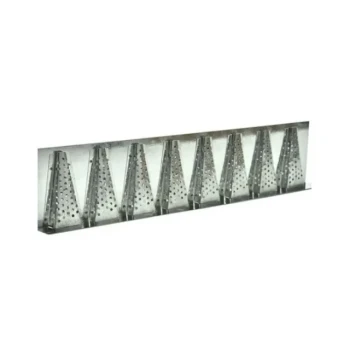
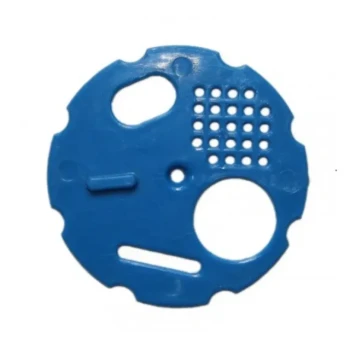
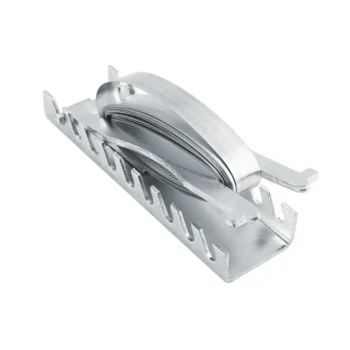
Hive entrance gates equipped with screens serve a critical experimental function: they physically prevent foraging bees from leaving the colony while maintaining essential airflow. This specific mechanism allows researchers to isolate variables by temporarily halting flight activity without suffocating the hive or altering its internal humidity.
The use of screened gates proves that rapid weight loss at dawn is driven by the mass departure of foragers, rather than environmental factors like evaporation. By pausing flight but allowing ventilation, researchers can confirm the cause of colony weight fluctuations.
Isolating the Mechanics of Weight Loss
To understand colony dynamics, researchers must distinguish between biological activity and environmental physics.
The Dawn Phenomenon
In active colonies, weight drops significantly and rapidly shortly after dawn.
Researchers hypothesize this is due to a large number of forager bees leaving the hive to collect resources. However, without intervention, it is difficult to prove this weight loss isn't caused by other factors.
The Function of the Screen
A solid barrier would stop the bees, but it would also stop air exchange.
The screen is the solution. It creates an artificial restriction on the bees' movement but does not obstruct the flow of air. This ensures that the colony's respiration and evaporation rates remain relatively normal during the experiment.
Confirming the Cause
When the screened gate is applied at dawn, the expected weight loss is delayed.
This delay confirms that the initial weight reduction is indeed primarily driven by the physical exit of the bees. Once the gate is opened and the bees depart, the weight drops, validating the correlation between forager activity and colony mass.
The Importance of Standardization
Using precise tools like screened gates is part of a broader requirement for controlled research environments.
Standardizing Variables
Experiments often use specialized setups, such as nucleus colony hives, to house small, standardized populations (e.g., 600 workers).
In these semi-natural environments, every variable—from diet to air quality—must be controlled. The screened gate is a tool for standardized handling, ensuring that movement is controlled just as precisely as dietary interventions or pesticide exposure.
Avoiding False Data
If a researcher used a solid gate instead of a screen, the internal temperature or humidity might spike.
This could lead to "noise" in the data, where weight changes might be attributed to metabolic stress or water loss rather than the variable being tested. The screen minimizes these secondary effects.
Understanding the Trade-offs
While effective, restricting hive entrances requires careful management to ensure data integrity.
Disruption of Natural Rhythms
Artificial restriction effectively pauses the colony's natural foraging workflow.
While necessary for measurement, this is an intervention that alters immediate behavior. It allows for observation of specific events (like dawn departures) but temporarily disrupts the continuous flow of resources into the hive.
The Necessity of Airflow
The distinction between a "gate" and a "screened gate" is non-negotiable in metabolic research.
Blocking airflow completely would likely invalidate the experiment by creating a hypoxic or hypercapnic (high CO2) environment. The screen is a compromise that favors containment without suffocation.
Ensuring Data Integrity in Colony Research
When designing or interpreting honeybee weight experiments, the method of restriction defines the quality of the data.
- If your primary focus is Isolating Forager Impact: Use screened gates to halt traffic while maintaining environmental consistency, confirming that weight changes are movement-based.
- If your primary focus is Metabolic Baseline: Ensure the screens allow sufficient airflow so that the confinement itself does not artificially spike colony respiration rates.
By selectively restricting movement while permitting respiration, researchers transform a chaotic biological event into a measurable, verifiable data point.
Summary Table:
| Feature | Function in Experiments | Benefit to Data Quality |
|---|---|---|
| Physical Barrier | Prevents foragers from exiting the hive | Isolates biological mass departure as a variable |
| Mesh/Screen | Facilitates continuous airflow and respiration | Prevents heat/humidity spikes that cause 'noise' |
| Variable Control | Delays weight loss at dawn intentionally | Confirms weight drops are caused by bees, not evaporation |
| Standardization | Enables uniform handling of nucleus colonies | Ensures replicable results across different study groups |
Elevate Your Research and Operations with HONESTBEE
Precision is the backbone of successful commercial beekeeping and research. At HONESTBEE, we understand that whether you are conducting rigorous colony experiments or managing a large-scale commercial apiary, the quality of your equipment determines the quality of your results.
As a premier global supplier, we cater specifically to commercial apiaries and distributors, providing a comprehensive wholesale range of:
- Advanced Machinery: High-efficiency honey-filling and specialized hive-making machines.
- Precision Hardware: Durable beekeeping tools and screened components for traffic management.
- Industry Consumables: A full spectrum of essential supplies for hive maintenance and honey production.
- Cultural Merchandise: Unique honey-themed products to expand your retail portfolio.
Ready to scale your operation with professional-grade equipment? Contact HONESTBEE today to discuss our wholesale offerings and discover how our integrated solutions can streamline your beekeeping business.
References
- William G. Meikle, Andrew B. Barron. Using within-day hive weight changes to measure environmental effects on honey bee colonies. DOI: 10.1371/journal.pone.0197589
This article is also based on technical information from HonestBee Knowledge Base .
Related Products
- 8-Cone Galvanized Steel Bee Robber Guard
- Multi-Functional Sliding Hive Entrance for Beekeeping
- Steel Round Disc Entrance Reducer for Flexzion Bee Hive Nuc Box Gate
- Professional Reversible Beehive Hive Entrance
- Multi-Functional Rotary Hive Entrance Disc for Beekeeping
People Also Ask
- What protective functions do beehive entrance guards provide? Defend Your Hive Against Wasps and Moths
- What is the primary function of protective guards at hive entrances? Block Rodents & Boost Winter Survival Rates
- How do conical metal guards or rubber inner tubes function as pest control tools? Stop Ants with Mechanical Barriers
- What is the function of Hive Entrance Guards? Master Bee Colony Defense Against Small Hive Beetles
- How can hardware mesh be applied to a beehive entrance for winter protection? Secure Your Colony Against Pests