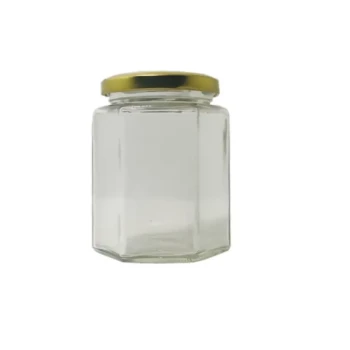
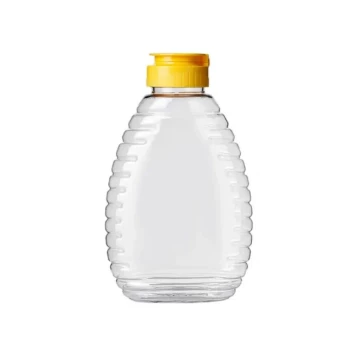
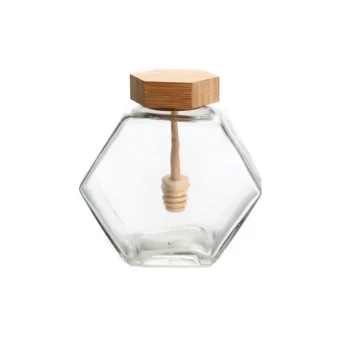
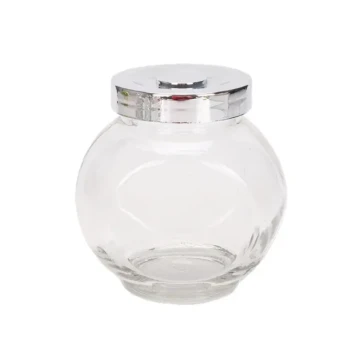
Industrial-grade polypropylene and high-transparency glass containers are utilized for honey storage primarily because they create a superior airtight environment when paired with precision screw caps. This specific configuration isolates the honey from external air and moisture to prevent spoilage, while the high transparency enables critical real-time visual monitoring of the product's quality and stability.
Core Takeaway: The combination of these specific materials and precision screw caps serves two essential functions: it establishes a hermetic seal to halt fermentation and oxidation, and provides optical clarity for non-invasive quality control.
The Physiology of Preservation
The primary reason for selecting these specific containers is to counteract honey's natural tendency to degrade when exposed to the environment.
Combatting Moisture Absorption
Honey is naturally hygroscopic, meaning it actively attracts and holds water molecules from the surrounding air.
If honey absorbs too much environmental moisture, its water content rises, creating an environment where yeast can thrive.
Industrial-grade polypropylene and glass containers with screw caps provide a robust barrier that prevents this moisture ingress, thereby preventing premature fermentation.
Preventing Oxidative Degradation
Exposure to oxygen is the enemy of honey's flavor profile and visual appeal.
When oxygen breaches the container, it accelerates the browning process and degrades the delicate aromatic compounds that give honey its distinct flavor.
The precision screw caps used on these vessels ensure a tight seal, effectively isolating the honey from external air and significantly slowing down oxidation.
The Necessity of Transparency
Beyond storage, these containers are selected for their utility in the observation and monitoring phase of honey production and storage.
Real-Time Visual Monitoring
High-transparency materials allow producers to monitor the honey's condition without disturbing the contents.
Operators can instantly observe color changes, which often indicate oxidation or heat damage.
Detecting Physical Changes
Transparency is crucial for identifying layering or separation within the honey.
It also allows for the early detection of crystallization patterns, ensuring that the consistency remains within desired specifications throughout the observation period.
Understanding the Trade-offs: Glass vs. Polypropylene
While both materials offer the necessary transparency and sealing capabilities, they serve different operational needs.
The Superior Inertia of Glass
Glass is chemically inert and non-reactive.
It will not react with the acidic substances or aromatic compounds in honey, ensuring the original flavor is perfectly preserved.
Because of this superior barrier against oxygen and odors, glass is the standard for high-end and gift-grade packaging where long-term quality is paramount.
The Logistical Efficiency of Polypropylene (PP)
Industrial-grade PP is selected for its mechanical properties rather than absolute chemical inertness.
Its excellent impact resistance and lightweight nature significantly reduce transportation costs and breakage losses during logistics.
It provides a reliable, hygienic seal suitable for large-scale commercial bottling where efficiency is a priority.
Making the Right Choice for Your Goal
When selecting between these two industry standards, your decision should rest on your primary operational constraints.
- If your primary focus is Logistics and Efficiency: Choose industrial-grade polypropylene to minimize transport weight and eliminate breakage losses during large-scale distribution.
- If your primary focus is Premium Quality and Flavor: Choose high-transparency glass to ensure absolute chemical inertness and premium presentation for high-value markets.
Ultimately, the correct choice balances the rigorous need for an airtight seal with the practical requirements of your distribution chain.
Summary Table:
| Feature | Glass Containers | Industrial PP Containers |
|---|---|---|
| Material Properties | Chemically inert, non-reactive | Impact-resistant, lightweight |
| Best Use Case | Premium/Gift-grade honey | Large-scale commercial logistics |
| Preservation | Maximum aroma & flavor protection | Reliable moisture & air barrier |
| Key Benefit | High clarity, zero chemical leaching | Reduced breakage & shipping costs |
| Seal Type | Precision screw cap (Hermetic) | Precision screw cap (Hermetic) |
Elevate Your Honey Production with HONESTBEE
Maximize your apiary's efficiency and product quality with HONESTBEE. As a premier partner for commercial apiaries and distributors, we provide a full spectrum of professional solutions tailored to your needs.
Our value to your business:
- Comprehensive Equipment: From hive-making machinery to precision honey-filling systems.
- Premium Hardware: A wide array of durable beekeeping tools and essential industry consumables.
- Market Expansion: Unique honey-themed cultural merchandise to enhance your brand appeal.
Whether you are scaling your distribution or refining your boutique honey line, HONESTBEE delivers the wholesale tools and machinery required for excellence.
Contact us today to optimize your honey supply chain!
References
- Ramón Alejandro Martínez, Amada Beatriz Pucciarelli ROMÁN. Influence of temperature and packaging type on quality parameters and antimicrobial properties during Yateí honey storage. DOI: 10.1590/1678-457x.17717
This article is also based on technical information from HonestBee Knowledge Base .
Related Products
- Hexagonal Glass Honey Jars with Metal Lug Caps Elegant Versatile Packaging
- Classic Glass Honey Jar with Metal Lug Cap for Beehive Storage
- Squeezable No-Drip Beehive-Shaped Honey Jars with Flip-Top Cap
- Hexagonal Glass Honey Jar with Wooden Lid Integrated Dipper Elegant Functional Storage
- Classic Drum Shaped Glass Honey Jar with Airtight Lid
People Also Ask
- What is the aesthetic appeal of using glass jars for honey? Elevate Your Brand with Premium Packaging
- What are the logistical challenges associated with using glass jars for honey packaging? Navigating Weight & Fragility
- What are the advantages of glass containers for honey? Elevate Quality and Market Value with Premium Packaging
- What are the technical advantages of using glass jars for honey? Master Commercial Packaging for Premium Purity
- What are the advantages of using glass jars for honey packaging? Preserve Purity & Elevate Your Brand