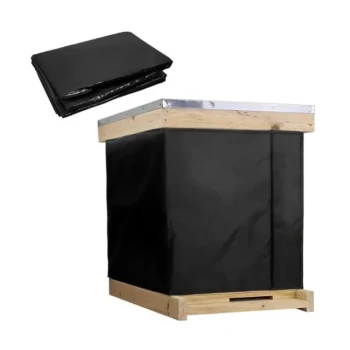
Light-shielded temperature-controlled boxes are critical for stabilizing artificial honeybee swarms and ensuring precise chemical treatment. By maintaining a specific environment—typically dark and around 15°C—these boxes compel the bees to remain calm and clustered. This induced state is necessary to force the uniform ingestion of treatment solutions, such as lithium chloride, before the bees are released into the uncontrolled environment of an outdoor apiary.
The Core Insight: Field trials fail when variables are uncontrolled. By isolating the swarm in a cool, dark box, you effectively pause their natural foraging instincts, channeling their biological focus entirely toward consuming the provided treatment solution to maximize mite-killing efficiency.
The Science of Swarm Stabilization
Creating the Ideal Physiological State
To manage a large artificial swarm (approximately 20,000 bees plus a queen), you must suppress their natural urge to fly or disperse.
Maintaing the box at approximately 15°C places the bees in a state of reduced activity without inducing hibernation or freezing injury.
Simultaneously, blocking all light mimics the conditions of a secure cavity, signaling to the colony that it is time to cluster rather than forage.
Maximizing Treatment Efficacy
The primary scientific necessity for these boxes in field trials is to ensure the effectiveness of treatments like lithium chloride.
When the bees are clustered in this controlled environment, they are more likely to feed from the provided solution uniformly.
This ensures that the entire population receives the necessary dosage, maximizing the mite-killing efficiency once the colony is deployed in the field.
Facilitating Transport and Transition
Reducing Stress During Transit
Beyond chemical treatment, these boxes serve as dedicated transport vessels for mixed-age worker bees (often in 1.5kg quantities).
The boxes are engineered with specific ventilation to prevent overheating while maintaining the light-blocking features.
This combination minimizes stress during transit, preventing the colony from overheating or becoming agitated before arrival at the field site.
Ensuring Successful Apiary Establishment
The time spent in the box serves as a critical "reset" period for the artificial swarm.
By encouraging the bees to form a tight cluster overnight, the box prepares them for a successful transfer into new hives with foundations the following day.
This stabilization allows the colony to commence nest-building activities immediately upon release, rather than wasting energy on reorientation or absconding.
Understanding the Trade-offs
The Risk of Environmental Failure
While these boxes are necessary for control, they introduce a single point of failure regarding temperature regulation.
If the temperature rises significantly above 15°C within the confined space, the metabolic heat of 20,000 bees can quickly lead to overheating and colony collapse.
Logistics vs. Accuracy
Using these boxes adds a layer of logistical complexity compared to direct field installation.
However, skipping this step sacrifices data integrity; without the controlled ingestion phase, treatment delivery becomes variable, rendering field trial results unreliable.
Making the Right Choice for Your Goal
To ensure your field trial yields valid data, apply these principles based on your specific objectives:
- If your primary focus is Treatment Efficacy: Prioritize temperature stability (15°C) to ensure bees consume the entire treatment solution before release.
- If your primary focus is Colony Survival: Ensure the boxes have adequate ventilation to manage metabolic heat during the transport phase.
- If your primary focus is Quick Establishment: Utilize the dark, confined period to force clustering, which accelerates nest building once the bees are moved to the apiary.
Control the environment first, and you control the reliability of your data.
Summary Table:
| Feature | Specification/Requirement | Benefit for Field Trials |
|---|---|---|
| Temperature | Approximately 15°C | Reduces activity, prevents overheating, and encourages clustering. |
| Lighting | Full Light-Shielding (Darkness) | Suppresses foraging instincts and mimics a secure hive cavity. |
| Treatment | Uniform Ingestion Phase | Ensures all bees consume treatment solutions (e.g., lithium chloride). |
| Transport | High Ventilation Design | Minimizes stress and metabolic heat buildup for 1.5kg+ worker swarms. |
| Establishment | Overnight Reset Period | Promotes immediate nest-building and prevents absconding upon release. |
Maximize Your Apiary Productivity with HONESTBEE
Precise control in the field starts with the right equipment. HONESTBEE specializes in supporting commercial apiaries and distributors with a comprehensive range of professional-grade beekeeping tools and machinery. Whether you need specialized hardware like honey-filling machines, hive-making equipment, or essential industry consumables, we provide the wholesale solutions you need to scale your operations.
Ready to elevate your beekeeping efficiency? Partner with a supplier that understands the science of the swarm. Contact HONESTBEE today to discuss our wholesale offerings and discover how our global expertise can benefit your business.
References
- Bettina Ziegelmann, Peter Rosenkranz. Lithium chloride effectively kills the honey bee parasite Varroa destructor by a systemic mode of action. DOI: 10.1038/s41598-017-19137-5
This article is also based on technical information from HonestBee Knowledge Base .
Related Products
- Automatic Heat Preservation 6 Frame Pro Nuc Box for Honey Bee Queen Mating
- Langstroth Honey Bee Box Hive Boxes for Different Depths
- Twin Queen Styrofoam Honey Bee Nucs Mating and Breeding Box
- HONESTBEE Collapsible Tiered Bee Swarm Catcher for Beekeeping
- Metal Bee Hive Stand Bee Box Stand for Beekeeping
People Also Ask
- What are the options for adding frames to a nuc after taking two frames from the parent colony?
- How are nuc boxes used in queen rearing? The Essential Tool for Reliable Queen Mating
- What steps are involved in transferring frames from the nuc box to the hive? A Guide for a Smooth, Low-Stress Colony Move
- What is the process for managing a new bee colony started in a nuc box? Expert Tips for Hive Success
- How long can bees be kept in a nuc box? Expert Timeline for Hive Transfer