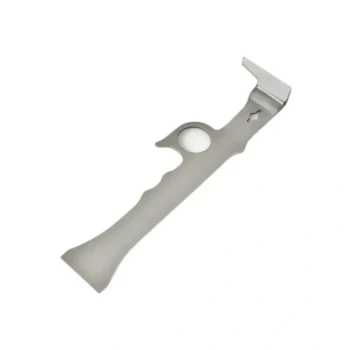
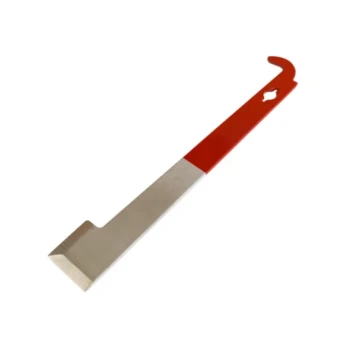
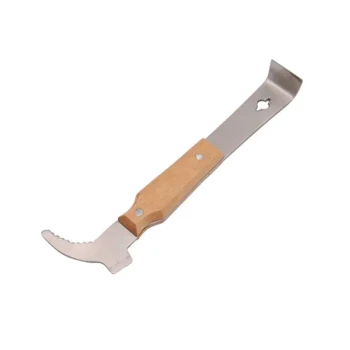
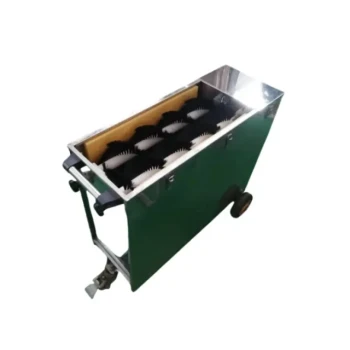
Locally manufactured, low-cost beekeeping tools are essential for restoration projects because they significantly lower the initial investment barrier for rural households, making participation financially viable. These tools are designed to be easily acquired and maintained in remote areas, facilitating widespread beekeeping activities that enhance vegetation diversity through pollination and simultaneously improve rural livelihoods.
Core Takeaway The recommendation for low-cost tools is strategic: it prioritizes accessibility over precision to ensure community-wide adoption. By aligning immediate economic benefits with long-term ecological goals, these tools make ecosystem restoration a sustainable, community-driven effort rather than just a top-down technical intervention.
The Strategy of Accessibility
Lowering the Investment Barrier
In the context of degraded agro-ecosystems, the communities involved often face significant resource constraints. High-cost, professional equipment can act as a gatekeeper, preventing the very people needed for restoration from participating.
Low-cost tools remove this financial hurdle. By utilizing locally available materials and manufacturing, the initial capital required to start beekeeping is drastically reduced, allowing a larger demographic to participate in restoration efforts.
Ease of Maintenance in Remote Areas
Agro-ecosystem restoration often takes place in remote or isolated regions. Reliance on imported or specialized "professional" machinery creates a supply chain vulnerability.
Locally manufactured tools ensure that maintenance and replacement can be handled within the community. This self-sufficiency is critical for the long-term continuity of the project; if a tool breaks, it can be fixed locally without waiting for expensive spare parts.
Ecological and Economic Synergy
Driving Vegetation Diversity
The primary ecological goal of introducing beekeeping is to secure pollination services.
By equipping households with accessible tools, the project increases the density of pollinators across the landscape. This activity promotes the reproduction of diverse plant species, which is the foundational step in recovering a degraded ecosystem.
Dual Goal Achievement
Restoration projects rarely succeed if they ignore the economic reality of the local population.
These tools facilitate a "dual goal" approach: ecosystem recovery and livelihood improvement. When locals can afford the tools to produce honey, they have a vested interest in maintaining the health of the local flora that supports their bees, creating a self-reinforcing cycle of protection.
Understanding the Trade-offs
Precision vs. Accessibility
While low-cost tools are superior for driving broad adoption, they lack the technical sophistication of professional beekeeping systems.
Professional toolsets often include specialized monitoring equipment and hive-making machinery that allow for scientific health monitoring and precise colony management. Low-cost alternatives generally rely on traditional knowledge and manual inspection, which may be less precise in detecting early signs of disease or stress.
Invasive Species Management
High-efficiency professional systems are often designed to strictly control specific bee populations, such as the Western honeybee (Apis mellifera), to prevent them from outcompeting native solitary bees.
Simpler, locally made tools may offer less control over swarm management and bee escapes. Without the advanced hardware to strictly contain and manage colonies, there is a potential risk of feral populations forming, which requires careful management to avoid disrupting local pollination systems.
Making the Right Choice for Your Goal
To determine if this approach fits your specific project, consider your primary objectives:
- If your primary focus is Community-Led Restoration: Prioritize locally manufactured, low-cost tools. The lower barrier to entry ensures high participation rates, which is critical for covering large areas of degraded land with pollination services.
- If your primary focus is High-Yield Commercial Production: Consider professional beekeeping machinery. The increased cost is justified by the need for scientific colony management, precise harvesting, and strict control over bee genetics and health.
The most effective restoration strategy treats beekeeping not just as an agricultural activity, but as a bridge between economic stability and ecological resilience.
Summary Table:
| Feature | Low-Cost Local Tools | Professional Equipment |
|---|---|---|
| Primary Goal | Accessibility & Community Adoption | High-Yield & Scientific Precision |
| Investment | Low (Utilizes local materials) | High (Specialized machinery) |
| Maintenance | Local repair & self-sufficiency | Requires specialized spare parts |
| Impact | Broad pollination for restoration | Targeted colony management |
| Best For | Degraded landscape recovery | Commercial apiaries & distributors |
Scale Your Impact with HONESTBEE
Whether you are spearheading a community-led restoration project or scaling a commercial operation, HONESTBEE provides the full spectrum of solutions to meet your needs. From specialized hive-making and honey-filling machines for large-scale production to essential consumables for sustainable beekeeping, we empower commercial apiaries and distributors worldwide.
Ready to enhance your beekeeping operations or support restoration at scale? Contact us today to explore our comprehensive wholesale offering and see how our hardware and industry expertise can drive your success.
References
- Muneer Ahmad Sofi, S.S. Pathania. Traditional beekeeping for the restoration of degraded Agro ecosystem under Himalayan conditions of Jammu and Kashmir. DOI: 10.15740/has/ijfci/8.1/78-85
This article is also based on technical information from HonestBee Knowledge Base .
Related Products
- Stainless Steel J Hook Hive Tool for Beekeeping
- HONESTBEE Professional Mini J-Hook Hive Tool for Beekeeping
- HONESTBEE Classic Pry Bar Hive Tool with High Visibility Finish for Beekeeping
- HONESTBEE 15-in-1 Beekeeper Multi-Tool with Hammer and Pliers for Beekeeping
- HONESTBEE Advanced Ergonomic Stainless Steel Hive Tool for Beekeeping
People Also Ask
- What specific challenges do beekeeping hive tools address during hive maintenance? Essential Solutions for Apiaries
- What are the features of a J-hook hive tool? Effortlessly Lift Frames with Superior Leverage
- What is a J-hook hive tool and why is it favored by some beekeepers? Master Gentle Frame Handling
- What is the purpose of the J-hook hive tool? Effortlessly Lift Frames with Superior Leverage
- How is a J-hook hive tool designed and what is its primary use? Master Effortless Hive Inspections