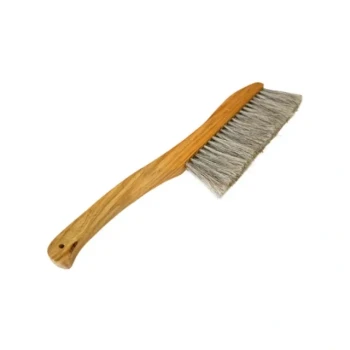
Natural fiber brushes are the industry standard for handling Varroa destructor mites primarily due to their exceptional softness and tactile sensitivity. These physical properties allow researchers to pick up and maneuver individual mites without inflicting mechanical injury or physical crushing. By protecting the mite's delicate appendages during transfer, these brushes ensure the specimen maintains full vitality for experimental inoculation.
The core utility of the natural fiber brush is the preservation of biological integrity. By eliminating the risk of physical trauma during handling, researchers maximize the survival rate of the mites and ensure the authenticity of subsequent data.
Preserving Vitality During Transfer
The Necessity of Softness
Varroa mites are physically delicate organisms that are easily damaged by rigid tools. Natural fiber brushes possess an inherent flexibility that synthetic alternatives often lack. This softness acts as a buffer, absorbing the force of contact rather than transferring it to the mite's exoskeleton.
Preventing Mechanical Injury
The primary risk during the collection process is mechanical injury, such as crushing the body or snapping appendages. Utilizing a fine brush (often size 0000) allows for the precision required to move mites from collection filter paper without incident. This gentle contact force is critical for maintaining the mite in a living, undamaged state.
Increasing Inoculation Success
For experiments involving the inoculation of honeybee brood cells, the mite must be active and healthy. A mite damaged during the transfer process is less likely to successfully parasitize the host. Consequently, the use of soft brushes directly correlates to higher success rates in experimental colonization.
Ensuring Experimental Validity
Clearing Sensory Obstructions
Mites collected using methods like the "powdered sugar shake" often retain residual dust on their bodies. This residue can clog the mite's sensory organs, which disrupts their natural navigation and sensing abilities. Natural fiber brushes are effective tools for gently sweeping away these powders.
Maintaining Behavioral Authenticity
In behavioral experiments, data is only as good as the subject's ability to act naturally. If a mite’s sensory input is blocked by debris, the experimental results will be skewed. By using a brush—sometimes aided by moisture—to clean the mite, researchers ensure that the behavioral data collected reflects true biological responses.
Operational Trade-offs and Considerations
The Requirement for Manual Dexterity
While natural fiber brushes reduce the risk of injury, they do not automate the process. The safety of the mite still relies heavily on the steady hand and tactile sensitivity of the operator. Even with a soft tool, a lack of manual precision can result in accidental pressure that compromises the specimen.
Time and Efficiency Factors
Using a fine-point brush to move or clean mites individually is a labor-intensive process. It requires significant time compared to bulk transfer methods. However, this trade-off is accepted because the priority is the quality of the living specimen rather than the speed of processing.
Making the Right Choice for Your Research
To ensure your experimental design yields valid data, select your handling protocols based on your specific end goals.
- If your primary focus is Colony Inoculation: Prioritize the softness of the brush to prevent mechanical trauma, ensuring the mite is vigorous enough to parasitize the brood cell immediately.
- If your primary focus is Behavioral Analysis: Utilize the brush to meticulously clean residual collection powders, ensuring the mite's sensory organs are unobstructed for authentic reaction testing.
The natural fiber brush is not just a handling tool; it is a safeguard for the biological viability that underpins accurate parasitology research.
Summary Table:
| Feature | Benefit for Mite Handling | Research Impact |
|---|---|---|
| Exceptional Softness | Prevents mechanical crushing and exoskeleton damage | Higher survival rates post-transfer |
| Tactile Sensitivity | Allows precise movement of individual specimens | Minimizes physical trauma during inoculation |
| Debris Removal | Gently sweeps away residual powders (e.g., sugar) | Restores sensory function for behavioral data |
| Fine Point (Size 0000) | Facilitates delicate maneuvering in brood cells | Increases parasitization success rates |
Elevate Your Apiary Operations with HONESTBEE
At HONESTBEE, we understand that precision is the backbone of successful beekeeping and scientific research. Whether you are managing a commercial apiary or supplying the industry as a distributor, our comprehensive wholesale range is designed to meet your highest standards.
We provide everything from specialized beekeeping tools like high-precision natural fiber brushes to advanced honey-filling and hive-making machinery. Our mission is to support your growth by supplying high-quality consumables and innovative hardware that ensure biological integrity and operational efficiency.
Ready to scale your business with professional-grade equipment?
Contact HONESTBEE today to explore our wholesale solutions and discover how our expertise can benefit your apiary or distribution network.
References
- Travis L. Dynes, Berry J. Brosi. Assessing virulence of Varroa destructor mites from different honey bee management regimes. DOI: 10.1007/s13592-019-00716-6
This article is also based on technical information from HonestBee Knowledge Base .
Related Products
- Wooden Bee Brush with Triple Row Artificial Fiber for Beekeeping
- Plastic Handle Single Row Artificial Fiber Bee Brush
- Double Row Artificial Fiber Bee Brush for Beekeeping
- Wooden Bee Brush with Double-Row Horsehair Bristles
- Classic Wooden Bee Brush with Double-Row Boar Bristles
People Also Ask
- What is the specific function of a bee brush? Ensure Pure Harvests and Colony Welfare During Honey Extraction
- What are the key characteristics of the bristles on a bee brush? Master Gentle and Efficient Bee Removal
- What is the purpose of using a bee brush during the inspection of hive components? Safe & Precise Hive Management
- What problem does a bee brush solve? Protect Your Colony with Gentle Precision Tools
- Why is a bee brush necessary when extracting honeybee hive frames that contain larvae? Protect Your Brood and Colony