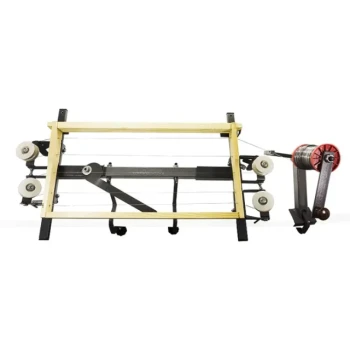
Precision is the cornerstone of reliable biological data. Positioning templates and red marking points are essential tools used to strictly define the test area within honeybee brood. By physically marking the first and last cells of pupae killed during a pin-test, researchers eliminate ambiguity, preventing the accidental omission or double-counting of cells during the recording process.
By standardizing the visual field, these tools ensure that data regarding the 'Solidness' trait is consistent, accurate, and comparable across different colonies and multi-year studies.
The Mechanics of Precision
Defining the Test Area
Honeybee brood patterns can be incredibly dense and visually repetitive. Positioning templates provide a rigid framework to isolate a specific region of interest.
This isolation is critical for narrowing down the counting field. It transforms a chaotic biological pattern into a manageable, quantifiable dataset.
Preventing Counting Errors
The red marking points serve as physical anchors within the test area. Specifically, researchers mark the first and last cells of the pupae that have been killed during a pin-test.
This technique creates a clear start and end point for the researcher. It ensures that the counting process remains linear and that no individual cell is missed or counted twice.
The Value of Standardization
Ensuring Comparability
Biological research often spans multiple years and involves various honeybee colonies. Without a standardized method for defining the test area, data becomes subjective.
Using templates and marking points guarantees that the method of collection remains identical regardless of when or where the data is taken. This consistency allows for valid comparisons between different datasets.
Eliminating Subjectivity
In the absence of physical markers, a researcher relies on visual estimation. This introduces a high margin of error due to fatigue or shifting visual focus.
Physical markers remove the reliance on the researcher’s memory or momentary focus. The data reflects the physical reality of the brood, not the observer's perception.
Risks of Non-Standardized Methods
The Cost of Approximation
Attempting to record the 'Solidness' trait without these tools creates significant vulnerabilities in the data.
Without a defined boundary, the edge cases—cells on the periphery of the test zone—are often inconsistently included or excluded. This fluctuation renders precise statistical analysis difficult, if not impossible.
Data Drift Over Time
If protocols are not strictly followed using these physical aids, data collection methods can "drift" over the course of a multi-year study.
What was considered a "standard area" in year one might visually shift by year three. Using templates ensures that the spatial definition of the test remains absolute.
Ensuring Data Integrity in Field Research
To maintain the highest standards of scientific rigor in your brood studies, consider the following approach:
- If your primary focus is immediate accuracy: Use marking points to physically anchor your count, eliminating the risk of visual slipping or double-counting.
- If your primary focus is longitudinal comparison: Adhere strictly to positioning templates to ensure that data collected across different years is statistically comparable.
Validating scientific conclusions requires rigorous adherence to these physical boundaries to ensure every data point is undeniable.
Summary Table:
| Tool | Primary Function | Scientific Benefit |
|---|---|---|
| Positioning Templates | Isolate specific regions of interest | Standardizes test areas for longitudinal studies |
| Red Marking Points | Anchor the first and last killed pupae | Prevents double-counting or accidental omission |
| Physical Markers | Eliminate visual estimation | Reduces researcher fatigue and subjective bias |
| Defined Boundaries | Establish rigid counting fields | Ensures data integrity and statistical validity |
Elevate Your Apiary Operations with HONESTBEE
Precision in research leads to excellence in production. At HONESTBEE, we understand the technical demands of commercial beekeeping. We cater to commercial apiaries and distributors by providing a comprehensive wholesale range of high-performance beekeeping tools, specialized machinery, and essential consumables.
Whether you are scaling up with our honey-filling and hive-making machines or stocking up on professional-grade hardware and honey-themed cultural merchandise, we deliver the quality you need to succeed.
Ready to upgrade your equipment? Contact us today to explore our wholesale solutions and discover how HONESTBEE can streamline your beekeeping business.
References
- Matthieu Guichard, Benjamin Dainat. Exploring Two Honey Bee Traits for Improving Resistance Against Varroa destructor: Development and Genetic Evaluation. DOI: 10.3390/insects12030216
This article is also based on technical information from HonestBee Knowledge Base .
Related Products
- Assembled Wooden Bee Frames with Plastic Foundation for Durability and Convenience by HONESTBEE
- HONESTBEE Professional Mini J-Hook Hive Tool for Beekeeping
- HONESTBEE Adjustable Voltage Wire Embedder with Digital Display
- HONESTBEE 15-in-1 Beekeeper Multi-Tool with Hammer and Pliers for Beekeeping
- Plastic Beekeeping Honey Bee Larvae Grafting Tools for Queen Rearing and Chinese Grafting
People Also Ask
- When should frames with new foundation be given to colonies? Master Timing for a Thriving Hive
- How do you re-wax bee frames? A Simple Guide to Faster Comb Building
- What types of bee frames can be cleaned and returned to service? A Guide to Safe Apiary Refurbishment
- Can beekeepers switch between wooden and plastic frames? Optimize Your Hive's Performance
- Do you have to wire bee frames? Essential Guide to Frame Strength & Honey Harvesting