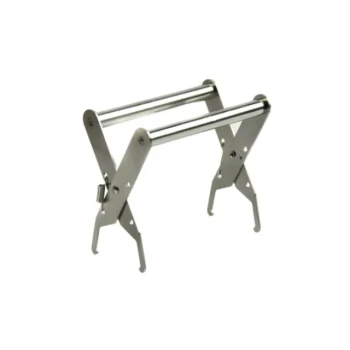
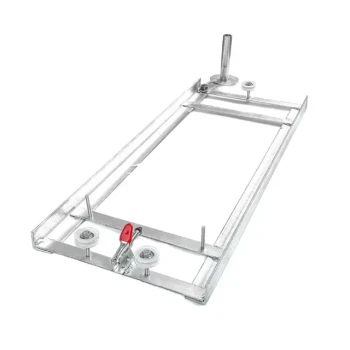
Structural modifications are strictly necessary to create the precise physical geometry required for a stable lever mechanism. Without reserving space at the bottom or installing specific support bars, you cannot establish the fixed fulcrum point needed to lift the hive evenly, making accurate, non-invasive measurement impossible.
Core Takeaway: The physical alteration of the stand is the prerequisite for keeping the weighing lever perfectly parallel to the hive. This alignment prevents weight distribution errors and allows for a smooth, single-person operation that does not trigger a stress response in the colony.
The Mechanics of Precision
Establishing a Stable Fulcrum
To weigh a hive without moving it, you must apply force against a solid, consistent point. Structural modifications, such as reserving space or adding support bars, create a dedicated zone for your weighing tool.
This space acts as a reliable fulcrum. Without it, there is no stable interface for the lever, rendering the weighing process erratic and unsafe.
Ensuring Parallel Alignment
Accuracy in this method depends entirely on geometry. The modifications ensure that the lifting lever remains perfectly parallel to the beehive bottom during the operation.
If the stand prevents this parallel alignment, you introduce lifting angle deviations. These deviations cause uneven weight distribution, leading to significantly skewed data.
The Biological Benefit
Eliminating Colony Stress
The primary goal of non-invasive weighing is to monitor health without disrupting the bees. Standard weighing methods often involve tilting, shaking, or relocating the hive.
By modifying the stand to accept a lever tool, you enable a smooth, vertical lift. This avoids the sudden movements that trigger stress-induced reactions and defensive behavior from the colony.
Enabling Single-Person Operation
Structural preparation removes the physical burden of manually lifting the hive box. The modified stand supports the tool mechanics, allowing a single beekeeper to gather data effortlessly.
Understanding the Implementation Trade-offs
Upfront Effort for Long-Term Gain
The primary drawback is the initial labor required to retrofit existing stands or build new ones with these specifications. It requires planning and physical alteration of your apiary infrastructure.
However, attempting to use lever-based weighing without these modifications risks damage to the hive bodies and yields unreliable data due to poor leverage angles.
Making the Right Choice for Your Goal
To determine if these modifications are worth the effort for your apiary, consider your primary objectives:
- If your primary focus is Data Accuracy: You must modify the stand to ensure the lever remains parallel, eliminating lifting angle deviations that corrupt weight readings.
- If your primary focus is Colony Welfare: You should implement these changes to enable smooth, motion-free lifting that avoids provoking stress responses in the bees.
Structural precision in the stand is the foundation of non-invasive hive management.
Summary Table:
| Feature | Importance of Modification | Benefit to Beekeeper |
|---|---|---|
| Stable Fulcrum | Provides a fixed point for lever mechanics | Ensures consistent and repeatable data |
| Parallel Alignment | Keeps lifting force vertical and balanced | Eliminates weight distribution errors |
| Stress Reduction | Enables smooth movement without tilting | Prevents defensive behavior and colony stress |
| Operational Ease | Adapts stand for mechanical assistance | Facilitates efficient single-person hive weighing |
Optimize Your Apiary with HONESTBEE Precision Tools
Are you ready to transition to non-invasive hive management? At HONESTBEE, we understand that commercial success in beekeeping relies on both data accuracy and colony health. As a leading partner for commercial apiaries and distributors, we provide the full spectrum of beekeeping machinery and specialized hardware designed to integrate seamlessly into modern operations.
Whether you need hive-making machines to build custom modified stands or professional-grade equipment to scale your production, our comprehensive wholesale offering has you covered. Let us help you streamline your workflow and enhance your yield through superior engineering.
Elevate your beekeeping efficiency today—Contact our experts at HONESTBEE to discuss your wholesale requirements.
References
- John B. McMullan. Weighing beehives: a simple lever method. DOI: 10.1080/0005772x.2000.11099463
This article is also based on technical information from HonestBee Knowledge Base .
Related Products
- Metal Hive Feet Bee Hive Stand for Ant Protection
- Metal Bee Hive Stand Bee Box Stand for Beekeeping
- Plastic Bee Hive Stand for Beekeeping
- Professional Ant-Proof Beehive Stand with Integrated Moat for Beekeeping
- Wooden Bee Hive Frames for Beekeeping and Wholesale
People Also Ask
- What are the benefits of elevating a bee hive with a stand or base? Protect Your Colony and Your Back
- How does a beehive stand protect against predators and pests? Essential Strategies for Colony Security
- How should the height of a beehive stand be determined? Find Your Ergonomic Sweet Spot
- What to stand a beehive on? The Best Foundation for a Healthy, Manageable Apiary
- How do beehive stands and ground installation methods affect beekeeping productivity in extreme climates? Maximize Yields