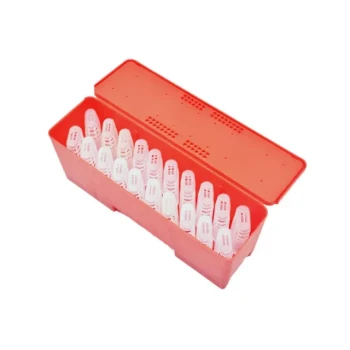
Ventilated plastic containers are strictly necessary to manage moisture and temperature immediately following harvest. Freshly collected pollen inherently contains moisture; without adequate airflow during the collection phase, this moisture accumulates within the container, accelerating mold growth and degradation that renders the sample useless for accurate laboratory identification.
Core Insight: The primary enemy of pollen sample quality is the combination of trapped moisture and heat. Ventilation provides a critical physical control mechanism, allowing the sample to "breathe" in the field and preventing the immediate chemical breakdown that occurs in sealed environments.
The Mechanics of Preservation in the Field
Combating Moisture Accumulation
Fresh pollen is a biological material that retains significant water content when first collected by the bee.
If placed immediately into a non-ventilated environment, this internal moisture transpires and pools within the container. Ventilation holes facilitate necessary airflow, wicking away this excess humidity before it can compromise the sample structure.
Preventing Thermal Degradation
Field conditions often involve exposure to ambient heat or direct sunlight.
A solid, unventilated plastic container can act as a greenhouse, trapping heat and spiking the internal temperature. Ventilation mitigates this "oven effect," keeping the sample closer to ambient temperature and preserving volatile components.
Safeguarding Data Integrity
Ensuring Accurate Identification
The ultimate goal of collection is laboratory analysis, often involving microscopic identification or chemical profiling.
Mold growth, driven by damp conditions, obscures the physical characteristics of pollen grains. By using ventilated containers, you ensure the biological material arrives at the lab in a state that reflects its original composition, rather than a degraded byproduct.
Preventing Pre-Analysis Decay
Sample degradation begins the moment the pollen is removed from the hive.
Ventilation acts as a pre-preservation step. It bridges the gap between the active collection in the apiary and the controlled environment of a laboratory, holding degradation at bay during this vulnerable window.
Understanding the Trade-offs and Limitations
Collection vs. Long-Term Storage
It is vital to distinguish between the collection phase and the storage phase.
While ventilation is critical while the sample is fresh and in the field to prevent rot, it is not suitable for long-term storage. Once the sample is ready for transport or freezing, it should ideally be transferred to sealed, cold-chain environments (like sealed bags with ice packs) to isolate atmospheric moisture and inhibit microbial activity permanently.
Contamination Risks
While ventilation manages moisture, it technically lowers the barrier against external environmental contaminants compared to a hermetically sealed container.
However, in the context of pollen collection, the risk of rapid spoilage from internal moisture vastly outweighs the risk of minor airborne particulate contamination.
Making the Right Choice for Your Goal
To maximize the quality of your apicultural data, apply these specific handling protocols:
- If your primary focus is field collection: Prioritize ventilated plastic containers to prevent immediate mold growth and heat damage caused by trapped moisture.
- If your primary focus is long-term preservation: Transfer samples to sealed, sterile bags within a cold chain (-8°C to -40°C) immediately after the field phase to lock in genetic and chemical integrity.
- If your primary focus is preventing cross-contamination: Ensure all containers, ventilated or otherwise, are industrial-grade sterile to guarantee that detected microbes originate from the sample, not the tool.
Success in the laboratory is determined by the environmental controls you establish the moment the sample leaves the hive.
Summary Table:
| Feature | Purpose in Pollen Collection | Impact on Sample Quality |
|---|---|---|
| Moisture Management | Facilitates airflow and transpiration | Prevents rapid mold growth and degradation |
| Thermal Regulation | Mitigates the "greenhouse effect" | Preserves volatile components and chemical profile |
| Biological Stability | Bridges gap between hive and lab | Ensures grains remain identifiable for analysis |
| Physical Integrity | Wicks away excess humidity | Maintains structural shape for microscopic profiling |
Maximize Your Apiary Productivity with HONESTBEE
At HONESTBEE, we understand that data integrity and hive health are the cornerstones of a successful commercial operation. Whether you are a large-scale commercial apiary or a specialist distributor, we provide the industrial-grade beekeeping tools and machinery you need to thrive.
From high-precision honey-filling machines and hive-making equipment to essential consumables and specialized hardware, our comprehensive wholesale portfolio is designed to enhance your efficiency and yield. Let us help you safeguard your harvest and scale your business with professional-grade solutions tailored to the modern beekeeper.
Ready to upgrade your equipment? Contact us today to discuss our full spectrum of wholesale offerings and discover how HONESTBEE can deliver value to your business.
References
- M.T. Mailula, Robert S. Nofemela. Botanical Origin of Pollen Collected by <i>Apis mellifera scutellata</i> Lepeletier (Hymenoptera: Apidae) in a Suburb of Pretoria, South Africa. DOI: 10.4001/003.025.0417
This article is also based on technical information from HonestBee Knowledge Base .
Related Products
- Removable Plastic Pollen Trap With Ventilated Tray for Bees Pollen Collector
- Plastic Transporting Bee Packages and Nuc Boxes for Beekeeping
- 30 cm Plastic Entrance Hole Bee Pollen Trap and Collector
- Plastic Bee Pollen Trap Strips Comb Catcher Collector
- Professional Insulated Plastic Bee Hives
People Also Ask
- What are the design principles and advantages of pollen traps in the collection of bee pollen? Boost Your Apiary Yield
- What is the function of professional pollen traps in evaluating honey plants? Quantifying Pollination and Crop Potential
- What functions do pollen traps serve for bee bread production? Optimize Your Raw Material Collection
- What maintenance and pest prevention measures should be taken for pollen traps? Protect Your Hive and Harvest Quality
- How does the use of pollen traps in honeybee hives enhance crop fertilization? Boost Your Yield Through Induced Activity