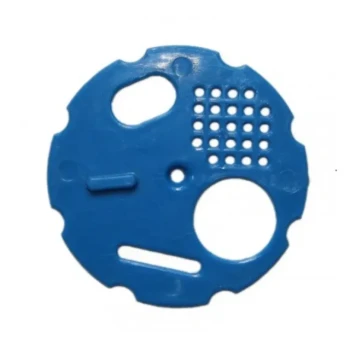
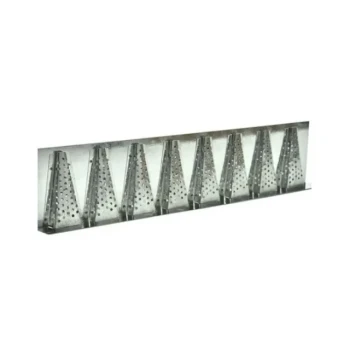
Commercial apiaries deploy vision and infrared sensors to generate precise, quantitative data on bee flight activity by counting the frequency of bees entering and exiting the hive. This technology allows operators to assess worker foraging efficiency, identify early signs of pest infestation or pesticide exposure, and scientifically evaluate the honey production potential of different geographic locations.
Core Insight:
While traditional beekeeping relies on manual inspections, entrance sensors transform colony management into a data-driven science. By quantifying traffic patterns, large-scale operations can predict health collapses and optimize resource allocation without physically disturbing the hive.
Optimizing Production Through Data
In large-scale operations managing thousands of colonies, individual hive inspections are labor-intensive and impractical. Entrance sensors bridge this gap by providing continuous performance metrics.
Measuring Foraging Intensity
The primary function of these sensors is to count the number of bees leaving and returning to the colony.
High-precision sensors provide a direct correlation between flight activity and workforce efficiency. By analyzing this data, apiary managers can instantly identify which colonies are actively foraging and which are underperforming.
Evaluating Location Potential
Not all apiary sites offer equal resources.
Commercial operators use sensor data to scientifically evaluate the honey production potential of specific locations. If flight activity is low despite favorable weather, it indicates a lack of nectar or pollen resources in the surrounding ecosystem, prompting a relocation of the hives.
Proactive Health and Hazard Management
Beyond production metrics, entrance detection systems serve as an early warning system for colony collapse and environmental hazards.
Detecting Pest and Disease Infestations
Healthy colonies exhibit predictable flight patterns. Deviations from these patterns often signal internal stress.
When sensors detect a decline in activity or irregular traffic, it allows apiaries to predict potential pest or disease infestations. This enables targeted intervention before the issue spreads to adjacent hives.
Monitoring Environmental Pesticide Poisoning
Foraging bees are the first line of contact with the external environment.
Sudden, drastic drops in the number of returning bees are a primary indicator of environmental pesticide poisoning. Sensors provide immediate data on these "loss events," allowing beekeepers to move colonies away from contaminated agricultural areas to prevent total colony loss.
Understanding the Trade-offs
While vision and infrared sensors offer significant advantages, they introduce new layers of complexity to apiary management.
Data Overload vs. Actionable Intelligence
Collecting data is different from understanding it.
These sensors generate massive datasets that require proper analysis software and expertise to interpret. Without an integrated system to visualize flight patterns, the raw data can become overwhelming rather than helpful.
Hardware Maintenance in Field Conditions
Deploying electronics in outdoor environments presents durability challenges.
Sensors must remain operational despite exposure to weather, propolis (bee glue), and dust. While they reduce the need for manual colony inspections, they introduce a requirement for technical maintenance to ensure the sensors remain calibrated and clean.
Making the Right Choice for Your Goal
To maximize the value of hive entrance sensors, align their deployment with your specific operational objectives.
- If your primary focus is optimizing honey yield: Prioritize sensors to test new apiary locations, ensuring you only commit large numbers of hives to areas with proven high-flight activity.
- If your primary focus is risk mitigation: Configure your system to trigger alerts for sudden drops in return traffic, which allows for immediate response to pesticide exposure or predation events.
By converting biological activity into hard data, entrance sensors allow commercial apiaries to manage biological risks with industrial precision.
Summary Table:
| Feature | Commercial Benefit | Insight Provided |
|---|---|---|
| Foraging Metrics | Optimizes honey production | Quantitative data on worker efficiency and workforce strength. |
| Site Evaluation | Resource allocation | Scientific assessment of nectar/pollen availability in specific locations. |
| Health Alerts | Early disease detection | Identification of irregular traffic patterns signaling pest or disease stress. |
| Hazard Monitoring | Pesticide risk mitigation | Immediate alerts for sudden flight drops to prevent total colony loss. |
Maximize Your Apiary Productivity with HONESTBEE
Transition from manual inspections to data-driven precision. At HONESTBEE, we understand the complex needs of commercial apiaries and distributors. We provide a comprehensive wholesale offering that includes the full spectrum of beekeeping tools, high-capacity machinery, and essential consumables designed for industrial-scale success.
From advanced hive-making and honey-filling machines to specialized hardware, our portfolio empowers you to scale your operations and improve hive health monitoring. Partner with us to gain access to the equipment and expertise needed to manage biological risks with industrial precision.
Ready to elevate your beekeeping business? Contact us today to explore our wholesale solutions!
References
- Lucie Kaňovská. The Use of Products with a Monitoring System for Remote Bee Detection in Beekeeping in Czechia. DOI: 10.7160/aol.2024.160106
This article is also based on technical information from HonestBee Knowledge Base .
Related Products
- Steel Round Disc Entrance Reducer for Flexzion Bee Hive Nuc Box Gate
- Beehive Entrance Reducer Guardian Metal Hive Entrance for Bees
- Professional Hive Front Entrance Bee Feeder
- Professional Reversible Beehive Hive Entrance
- Multi-Functional Rotary Hive Entrance Disc for Beekeeping
People Also Ask
- What is the purpose of an entrance reducer for a beehive? Strengthen Colony Defense and Prevent Robbery
- Why are entrance reducers used to counter hornet infestations? Protect Your Hive with Strategic Choke Points
- Why is it critical to maintain a smaller entrance for a newly established bee hive? Boost Colony Growth and Security
- What is the function of an entrance reducer on a beehive? Strengthen Colony Defense and Climate Control
- Under what conditions should a beekeeper adjust the size of a beehive entrance? Seasonal & Defense Management Tips