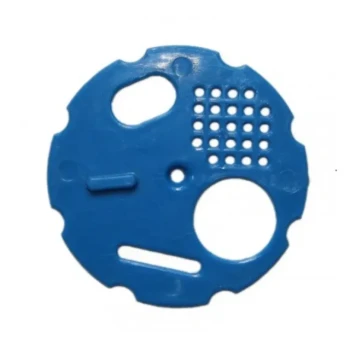
An entrance reducer physically restricts the hive's opening, limiting the volume of air that can flow in and out. While useful for retaining heat or defense, this restriction becomes dangerous during unexpectedly warm weather because the bees cannot physically move the reducer to increase ventilation. Consequently, heat traps inside the hive, potentially raising internal temperatures to disastrous levels.
The core issue is a lack of adjustable ventilation: an entrance reducer creates a fixed bottleneck that bees cannot alter. When external temperatures rise, this static barrier prevents the necessary air circulation required to cool the colony, leading to rapid overheating.
The Mechanics of Airflow Restriction
The Ventilation Bottleneck
An entrance reducer significantly decreases the size of the hive's "doorway." While this is intentional, it drastically reduces the total surface area available for air exchange.
Without a wide opening, the colony cannot effectively cycle out hot, stale air and pull in cooler, fresh air.
The Inability to Self-Regulate
Bees are adept at climate control, often fanning their wings to circulate air. However, their ability to regulate temperature relies on having an exhaust port.
Because the bees are not strong enough to move the reducer themselves, they are at the mercy of the hardware installed by the beekeeper. If the opening is too small for the current temperature, their biological cooling methods fail.
The Danger of Warm Winter Days
The "False Spring" Risk
The primary reference highlights that overheating is particularly risky during unusually warm winter days. Beekeepers often install reducers in late autumn to keep the hive warm and conserve the colony's energy.
However, if a sudden warm front hits while the hive is configured for deep winter, the insulation and reduced entrance work against the bees.
Rapid Thermal Gain
In winter, a hive is often sealed tight to prevent drafts. When the sun hits the hive on a warm day, solar gain combined with the heat generated by the bee cluster can spike internal temperatures.
With the reducer in place, this excess heat has nowhere to go, turning the hive into a solar oven.
Understanding the Trade-offs
Defense vs. Ventilation
As noted in the supplementary references, entrance reducers are essential for defending a growing colony from intruders. A smaller entrance makes it easier for guard bees to protect their resources.
However, this security comes at the cost of breathability. Prioritizing defense (a small opening) always reduces the hive's ability to shed heat.
The Risk of Static Management
The most common pitfall is the "set and forget" approach. An entrance reducer is a static tool applied to a dynamic environment.
Failing to monitor weather fluctuations while a reducer is installed turns a protective measure into a potential hazard.
Making the Right Choice for Your Colony
To prevent overheating without compromising security, you must align your management strategy with current conditions.
- If your primary focus is winter protection: Monitor weather forecasts closely for unseasonable warm spells and be prepared to temporarily remove the reducer or switch to a larger opening setting.
- If your primary focus is colony defense: Observe the entrance for congestion; if bees are "bearding" (hanging out) at the front, the hive is likely too hot, and the reducer should be adjusted immediately.
Beekeeping requires balancing the need for security against the critical need for ventilation.
Summary Table:
| Factor | Impact of Entrance Reducer | Potential Risk |
|---|---|---|
| Airflow | Limits volume of air exchange | Carbon dioxide and heat buildup |
| Temperature | Traps solar and metabolic heat | Rapid thermal gain (Solar Oven effect) |
| Self-Regulation | Fixes the size of the 'exhaust port' | Bees' fanning becomes ineffective |
| Defense | Decreases entry surface area | Positive: Easier for guard bees to defend |
Scaling Your Beekeeping Operations with HONESTBEE
Maintaining the delicate balance of hive climate requires the right tools and equipment. At HONESTBEE, we specialize in supporting commercial apiaries and professional distributors with a complete range of high-quality beekeeping solutions.
Whether you need precision hive-making machinery, automated honey-filling systems, or a steady supply of essential consumables and hardware, we provide the wholesale expertise to keep your business thriving. Our mission is to empower professionals with durable equipment and unique honey-themed cultural merchandise that stands out in the market.
Ready to optimize your wholesale supply chain?
Contact HONESTBEE Today to discover how our comprehensive portfolio can enhance your productivity and protect your colonies.
Related Products
- Steel Round Disc Entrance Reducer for Flexzion Bee Hive Nuc Box Gate
- Beehive Entrance Reducer Guardian Metal Hive Entrance for Bees
- Professional Hive Front Entrance Bee Feeder
- HONESTBEE Entrance Bee Feeder Efficient Hive Front Liquid Feeding Solution for Beekeeping
- HONESTBEE Entrance Bee Feeder Professional Hive Nutrition Solution for Beekeeping
People Also Ask
- What is the purpose of an entrance reducer for a beehive? Strengthen Colony Defense and Prevent Robbery
- Why are entrance reducers used to counter hornet infestations? Protect Your Hive with Strategic Choke Points
- Why is it critical to maintain a smaller entrance for a newly established bee hive? Boost Colony Growth and Security
- What is the function of an entrance reducer on a beehive? Strengthen Colony Defense and Climate Control
- Under what conditions should a beekeeper adjust the size of a beehive entrance? Seasonal & Defense Management Tips