Marking a queen bee is a strategic management tool designed to streamline hive inspections and provide critical data on colony health. By applying a non-toxic, visible dot to the queen's thorax, beekeepers can instantly distinguish her from thousands of workers, verify her age, and detect if the colony has undergone significant changes like swarming.
Marking the queen transforms a time-consuming search into a quick verification process. It provides critical data on the colony's timeline, allowing beekeepers to track the queen’s age and immediately recognize if a swarm or replacement event has occurred.
The Pillars of Hive Management
Enhancing Inspection Efficiency
Finding a single queen among tens of thousands of bees can be difficult, even for experienced apiarists. Marking creates an immediate visual anchor, significantly reducing the time required to locate her.
For beginners or those with less acute eyesight, this visual aid is indispensable. It allows the beekeeper to confirm the queen's presence quickly without keeping the hive open for extended periods, which can stress the colony.
Monitoring Health and Movement
Once the queen is identified, the mark allows the beekeeper to easily track her movements across the comb. Observing her mobility is a key indicator of her physical health.
If a queen is sluggish or moving erratically, it may signal health issues. Rapid identification ensures that the beekeeper spends time assessing her condition rather than just searching for her.
Tracking Colony Events and Timeline
Detecting Swarms and Supersedure
The presence of a mark acts as a definitive proof of identity. If a beekeeper opens a hive that previously contained a marked queen and finds an unmarked one, it confirms that a replacement event has occurred.
This indicates that the original queen has either swarmed (left with part of the colony) or been superseded (replaced by the workers due to poor performance). Without the mark, a beekeeper might mistakenly believe the original queen is still in charge, missing vital context about the hive's recent history.
Age Tracking and Replacement Planning
Queens have a limited reproductive lifespan, and their egg-laying capability diminishes as they age. Marking enables precise age tracking, often through a standardized color-coding system based on the year.
Knowing the queen's exact age allows the beekeeper to plan ahead. When a queen becomes too old to sustain a strong population, the beekeeper can proactively replace her before the colony's numbers crash.
Understanding the Trade-offs
Risk of Injury During Application
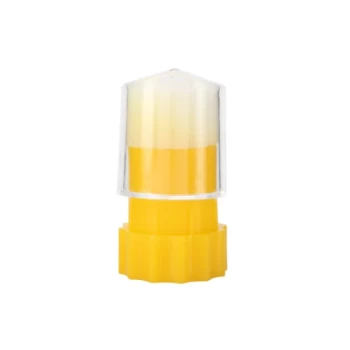
While the benefits are high, the process of marking carries physical risks to the queen. Rough handling or improper use of tools like marking tubes can damage her delicate legs or antennae.
Potential for Rejection
There is a risk that the colony may reject a newly marked queen. If the paint has a strong odor or if the queen is handled too much, the workers may ball (attack) her. Using proper non-toxic, water-based paints and allowing the mark to dry fully is essential to mitigate this risk.
Making the Right Choice for Your Goal
Deciding to mark your queen depends on what you value most in your management strategy.
- If your primary focus is efficiency and speed: Marking is essential to reduce inspection times and minimize disturbance to the bees.
- If your primary focus is breeding and production: Marking is critical for tracking age and ensuring you maintain a peak-performance queen.
By removing the guesswork from identification, marking empowers you to manage your apiary with precision rather than assumption.
Summary Table:
| Benefit of Marking | Key Advantage | Impact on Management |
|---|---|---|
| Visual Identification | Immediate location of the queen | Reduces inspection time and colony stress |
| Age Tracking | Standardized color-coding system | Enables proactive replacement planning |
| Colony Insights | Detects swarms or supersedure | Confirms if the original queen has been replaced |
| Health Monitoring | Track mobility and vigor | Early detection of failing queen performance |
Maximize Your Colony Productivity with HONESTBEE
Effective queen management is the cornerstone of a successful commercial apiary. HONESTBEE supports commercial beekeepers and distributors by providing a comprehensive range of professional-grade tools designed for precision and efficiency.
Whether you need reliable queen marking supplies, high-performance honey-filling machines, or durable hive-making hardware, we offer the full spectrum of beekeeping machinery and essential industry consumables. Partner with us to streamline your operations and scale your production with equipment built for the demands of the modern honey industry.
Contact HONESTBEE Today to Discuss Your Wholesale Needs
Related Products
- Queen Bee Marking Pen POSCA Queen Marking Pens for Beekeeping Bee Markers
- Plastic Long Marker Device for Catching and Marking Bees Queen Bee Marking Tube and Cage
- Queen Bee Marking Tube Cage Bottle Catcher Holder with Clear Plastic Plunger Marker
- One Hand Yellow Queen Marking Catcher Tube Cage Beekeeper Tool Accessory for Queen Bee
- Queen Bee Marking Pen UNI Medium Point for Queen and Bee Marking
People Also Ask
- What role do specialized marking pens and color-coding systems play in honeybee tracking? Enhance Research Precision
- Why are specialized marking pens used for stingless bee queens? Essential Tools for Large-Scale Breeding Success
- How should a new paint pen be primed before marking a queen bee? Essential Tips for Safe & Clear Markings
- How should a queen bee marking pen tip be properly primed? Master the Art of Safe Queen Marking
- What specifications are required for a high-quality queen bee marking pen? Ensure Safety and Precision for Your Colony