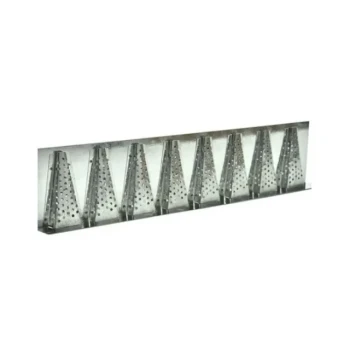
A bee-safety screen serves as a critical physical barrier located directly at the connection point between the heating unit and the beehive body. Its primary function is to permit the smooth passage of warm airflow into the hive while strictly preventing bees from crawling into the heating chamber, thereby stopping them from contacting dangerous mechanical components or heating elements.
The screen provides essential separation between the biological and mechanical systems, protecting bees from physical harm while simultaneously preventing hive debris or propolis from clogging the equipment and reducing its efficiency.
Prioritizing Colony Safety
The most immediate role of the safety screen is protecting the living colony during thermal treatment. Without this barrier, the natural curiosity and movement of the bees would put them in immediate danger.
Preventing Mechanical Injury
Heating units often utilize fans to circulate air. The screen ensures that bees cannot physically access these moving parts.
This eliminates the risk of bees coming into contact with fan blades, which would be fatal to the insects and potentially damaging to the fan mechanism.
Avoiding Thermal Damage
Inside the heating chamber, temperatures are significantly higher than the therapeutic range used within the hive.
The screen prevents bees from wandering too close to the active heating elements. This eliminates the risk of thermal injury or singing that would occur if bees entered the generation chamber directly.
Preserving Equipment Efficiency
Beyond protecting the bees, the screen is vital for the longevity and performance of the heating hardware.
Maintaining Clear Air Channels
For a thermal treatment to be effective, airflow must remain consistent.
The screen ensures that the internal air channels of the heater remain free of obstructions. By keeping bees out, it prevents the accumulation of biological debris that could disrupt the aerodynamics of the device.
Preventing Propolis Buildup
Bees naturally use propolis (a resinous mixture) to seal gaps and coat surfaces.
If bees were allowed access to the heating chamber, they would likely attempt to deposit propolis on the internal components. The safety screen keeps this sticky substance inside the hive, preventing it from fouling the heater’s mechanical parts.
Operational Considerations
While the screen is a safety necessity, it introduces a maintenance variable that must be managed.
The Trade-off of Airflow Restriction
Any physical barrier placed in an airstream creates some resistance.
While the screen is designed for smooth airflow, it is a collection point for debris. If the screen does its job well, it may eventually accumulate dead bees or wax, which can restrict air movement and reduce heating efficiency if not monitored.
Ensuring Successful Application
To get the most out of your thermal treatment setup, consider the following regarding the safety screen:
- If your primary focus is colony survival: Ensure the screen is securely seated before every use to guarantee no gaps exist for bees to bypass the barrier.
- If your primary focus is heating efficiency: Inspect and clean the screen surface regularly to ensure debris or propolis is not restricting the necessary airflow.
The bee-safety screen is the essential component that allows high-performance machinery to operate safely in close proximity to a delicate biological ecosystem.
Summary Table:
| Feature | Primary Function | Key Benefit |
|---|---|---|
| Physical Barrier | Prevents bee entry into heating chamber | Eliminates mechanical injury and thermal burns |
| Airflow Management | Permits passage of warm air | Ensures consistent and effective thermal treatment |
| Debris Protection | Blocks wax and hive debris | Prevents equipment clogging and fan damage |
| Propolis Control | Keeps resinous material out of hardware | Maintains longevity and performance of heating elements |
Maximize Your Apiary's Productivity with HONESTBEE
At HONESTBEE, we specialize in empowering commercial apiaries and distributors with professional-grade beekeeping solutions. From high-performance honey-filling and hive-making machinery to essential consumables and specialized hardware, our comprehensive wholesale portfolio is designed to enhance your operational efficiency and protect your biological assets.
Whether you are scaling your commercial production or looking for the most reliable equipment in the industry, our team is ready to provide you with the tools you need to succeed. Contact HONESTBEE today to discuss how our full spectrum of beekeeping tools and machinery can add value to your business.
References
- Georgios Goras, Andreas Thrasyvoulou. Hyperthermia -a non-chemical control strategy against varroa. DOI: 10.12681/jhvms.15869
This article is also based on technical information from HonestBee Knowledge Base .
Related Products
- Langstroth Screen Bottom Board for Beekeeping Wholesale
- 8-Cone Galvanized Steel Bee Robber Guard
- 8 Frame and 10 Frame Propolis Trap Collector Screen for Propolis Collection
- Metal Hive Feet Bee Hive Stand for Ant Protection
- Beekeeping Jacket with Hood and Veil for Beekeepers
People Also Ask
- Why is the combination of a screen bottom board and a sticky trap board essential for monitoring Varroa mite? Guide
- What is the primary function of a screen bottom board? Achieve Accurate Varroa Mite Assessment in Your Apiary
- What role do screen bottom boards and monitoring inserts play in assessing Varroa mite mortality and maintaining hive hygiene in Langstroth hives?
- What is the primary function of a standard screen bottom board when assessing honeybee grooming behavior? - Key Mite Data
- Why might a screen bottom board be less effective for pest control? Understanding the 'Mixed Sunlight' Complication