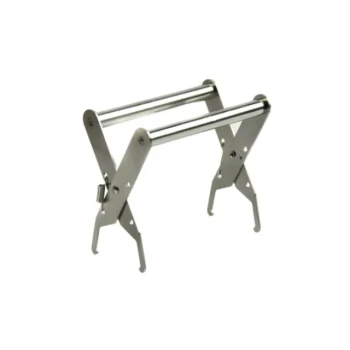
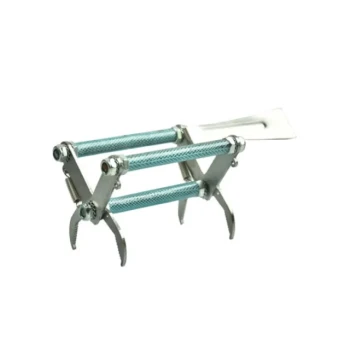
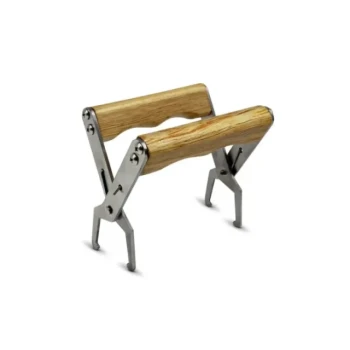
A high-precision measurement grid frame, often referred to as a Netz frame, is utilized to convert subjective visual observations of a hive into rigorous, quantitative data. By overlaying a standardized physical scale onto the honeycomb, technicians can divide the surface into precise statistical units, allowing for the exact measurement of capped and uncapped brood areas rather than relying on estimation.
The Netz frame transforms the abstract concept of "colony strength" into concrete numerical metrics. By standardizing the measurement of brood surface area, it provides the objective accuracy required for scientific apiary management and the precise evaluation of colony proliferation rates.
The Mechanics of Quantitative Assessment
Standardizing the Surface
The core function of the Netz frame is to impose a consistent structure on the honeycomb. Whether using a 5x5 cm, 10x10 cm, or square inch grid, the frame divides the comb into fixed statistical units. This eliminates the variability inherent in human visual estimation.
Converting Area to Population
The grid does not just measure space; it measures life. By determining the total area of capped brood, technicians can calculate specific offspring counts. For example, knowing the standard density of cells (such as approximately 418 cells per specific unit), users can mathematically derive the colony's exact reproductive status.
Eliminating Estimation Errors
Without a grid, assessing a colony is a qualitative guess. The Netz frame removes this ambiguity. It ensures that data regarding colony dynamics—such as the ratio of larvae to pupae—is repeatable and comparable across different hives and time periods.
Applications in Apiary Management
Measuring Colony Proliferation
The primary use of the Netz frame is to track the growth rate of the colony. By distinguishing between capped (pupae) and uncapped (larvae) brood, the tool provides a clear snapshot of the queen's recent egg-laying activity and the colony's future workforce.
Evaluating Feeding Strategies
To understand if a specific diet is working, you need hard data. The Netz frame allows apiarists to measure exactly how antioxidant agents or supplementary feeding programs influence the queen's fecundity. An increase in covered grid squares provides direct evidence of a successful intervention.
Assessing Environmental Adaptation
In regions where forage is scarce or the climate is arid, understanding a colony's adaptation capacity is critical. The grid frame enables the comparison of different honeybee ecotypes by quantifying their brood rearing and pollen storage in response to environmental stress.
Common Pitfalls to Avoid
Inconsistent Grid Standards
Because different frames may use different grid dimensions (e.g., 2 cm² vs. 25 cm²), data is not automatically comparable between different equipment sets. You must ensure the mathematical conversion factor (cells per square) matches the specific hardware being used.
Overlooking the "Why" for the "What"
While the frame provides excellent data on brood count, it is a tool for statistical analysis, not just observation. A common mistake is collecting the data without using it to calculate specific rates, such as daily egg-laying or brood-to-adult ratios, which are the actual indicators of colony health.
Making the Right Choice for Your Goal
To get the most out of a high-precision measurement grid, align your usage with your specific objectives:
- If your primary focus is Scientific Research: Prioritize consistent grid dimensions to ensure that egg-laying rates and proliferation data are statistically repeatable across all surveys.
- If your primary focus is Colony Nutrition: Use the frame specifically to track changes in capped brood area before and after applying feeding supplements to measure efficacy.
By replacing estimation with calculation, the Netz frame turns beekeeping into a precise science, ensuring management decisions are based on facts rather than feelings.
Summary Table:
| Feature | Purpose | Benefit |
|---|---|---|
| Standardized Grid | Divides comb into fixed statistical units | Eliminates human estimation errors |
| Area Conversion | Calculates cells based on square units | Provides exact brood and population counts |
| Data Comparison | Tracks capped vs. uncapped brood over time | Quantifies colony proliferation and queen fecundity |
| Application | Measures impact of feeding or environment | Enables evidence-based management decisions |
Optimize Your Apiary with Scientific Precision
Transition from estimation to data-driven beekeeping with professional-grade measurement tools. At HONESTBEE, we specialize in supporting commercial apiaries and distributors by providing the industry's most comprehensive selection of beekeeping equipment. From specialized hardware like hive-making machines and honey-filling systems to high-precision tools and essential consumables, we empower you to maximize your colony's productivity.
Partner with HONESTBEE for:
- Comprehensive Wholesale Offering: A one-stop shop for all beekeeping tools and machinery.
- Expert Solutions: Scalable equipment designed for industrial-level honey production.
- Global Reach: Supporting distributors and large-scale operations worldwide.
Ready to enhance your efficiency and scale your operations? Contact us today to explore our full range of honey-themed cultural merchandise and professional hardware.
References
- Silvia Pătruică, Marius Boldea. Economic Benefits of Using Essential Oils in Food Stimulation Administrated to Bee Colonies. DOI: 10.3390/agriculture13030594
This article is also based on technical information from HonestBee Knowledge Base .
Related Products
- HONESTBEE AC Powered Wire Embedder with Alligator Clips
- Ergonomic Plastic Frame Spacer Tool for Rapid Hive Management Beekeeping
- HONESTBEE Adjustable Voltage Wire Embedder with Digital Display
- HONESTBEE Professional Frame Wiring Board and Jig
- Wooden Bee Hive Frames for Beekeeping and Wholesale
People Also Ask
- How can combs be further strengthened? Embed Wires for Durable, High-Yield Hives
- What is an embedder in beekeeping? Essential Tool for Strengthening Wax Foundation & Hive Frames
- Why must strict sanitary and health prevention protocols be implemented for honeybee transport? Maximize Colony Survival
- What are the primary indicators of healthy honeybee colonies? Optimize Your Commercial Apiary for Peak Productivity
- Why must honeybee samples be stored in high-concentration ethanol and low temperatures? Ensure Genetic & Physical Integrity