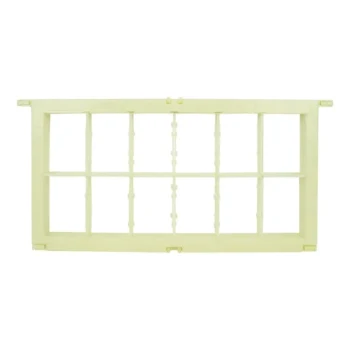
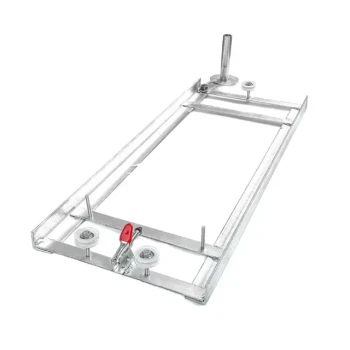
A standardized measurement frame with a 5x5 cm grid is a precision tool designed to convert the visual appearance of a honeycomb into accurate, quantitative data. By overlaying this physical grid on the comb, beekeepers and researchers can calculate exact population numbers of adult bees and brood rather than relying on subjective estimation.
Core Insight: The 5x5 cm grid serves as a bridge between abstract observation and precision quantitative analysis, allowing for the objective measurement of colony growth rates, reproductive capacity, and honey production potential.
The Mechanics of Quantitative Monitoring
Converting Area to Data
The primary function of the 5x5 cm grid is to delineate specific areas of the honeycomb, creating manageable 25-square-centimeter units. This allows technicians to perform a statistical count of the biological assets within the hive.
Instead of guessing colony strength, the grid enables the conversion of brood area directly into specific counts of bee offspring. This creates a concrete data set representing the number of adult bees or capped larvae present on a frame.
Tracking Population Increments
Using this standardized frame allows for the calculation of population increments over specific intervals. The primary reference suggests performing these assessments periodically, such as every 12 days, to track changes accurately.
By recording counts at these regular intervals, you can map the development dynamics of the colony. This reveals precisely how fast the population is expanding or contracting in response to seasonal conditions.
Strategic Applications of Grid Data
Assessing Honey Production Potential
The density of the adult bee population is a direct indicator of the colony's workforce. By quantifying the number of frames covered by bees using the grid, you can objectively project the colony's honey production potential.
Evaluating Feeding and Environmental Factors
The data derived from these measurements is essential for testing the efficacy of management interventions. Precise counting allows for an objective evaluation of how specific feeding strategies impact colony growth rates.
Furthermore, this method aids in assessing adaptation capacities. It provides the metrics needed to determine how different honeybee ecotypes respond to environmental stressors, such as heat or forage scarcity.
Understanding the Trade-offs
Precision vs. Disturbance
While the measurement frame is considered a non-destructive method, it requires opening the hive and physically placing a grid over the combs. This level of intrusion provides higher fidelity data than simple hive weighing, but it causes more disturbance to the colony than external monitoring methods.
The Necessity of Standardization
The value of this method relies entirely on the consistency of the equipment. Using standardized equipment is critical to control variables; without identical grid dimensions and frame sizes across all samples, the data becomes statistically invalid for comparative research.
Making the Right Choice for Your Goal
To maximize the utility of the 5x5 cm measurement frame, align your usage with your specific objectives:
- If your primary focus is Research and Experimentation: Use the grid to strictly control variables and measure specific biological responses to environmental factors or feeding programs.
- If your primary focus is Production Management: Use the grid periodically (e.g., every 12 days) to forecast honey flow readiness and identify weak colonies that require intervention before the season peaks.
Summary: The 5x5 cm grid transforms beekeeping from an art of estimation into a science of precision, providing the objective metrics required to optimize colony health and productivity.
Summary Table:
| Feature | Purpose & Function | Data Output |
|---|---|---|
| Grid Dimension | 5x5 cm (25 cm² units) | Precise area calculation |
| Count Interval | Every 12 days | Population development dynamics |
| Primary Metric | Brood & adult bee coverage | Colony growth & honey potential |
| Method Type | Non-destructive physical grid | Quantitative statistical analysis |
| Best For | Research & Production Management | Objective feeding & health assessments |
Maximize Your Colony Productivity with HONESTBEE Precision Equipment
To transform your beekeeping from estimation to a science of precision, you need reliable, standardized tools. HONESTBEE specializes in supporting commercial apiaries and distributors with a comprehensive wholesale range of high-quality beekeeping machinery, professional tools, and essential industry consumables.
Whether you require specialized hive-making and honey-filling machines to scale your operations or high-precision monitoring tools to assess your workforce, our portfolio is designed to enhance your efficiency and growth. Partner with us to access professional-grade hardware and honey-themed cultural merchandise tailored for the global market.
Ready to elevate your apiary's performance? Contact us today to discuss your wholesale needs!
References
- Ali TAHİROV, Yu. Rustamli. The Impact of Pack Bees on Honey Production. DOI: 10.33619/2414-2948/117/47
This article is also based on technical information from HonestBee Knowledge Base .
Related Products
- Wooden Bee Hive Frames for Beekeeping and Wholesale
- JZBZ Langstroth Queen Rearing Frame for Beekeeping
- 5 Frame Wooden Nuc Box for Beekeeping
- Professional Wooden Requeening Frame for Beekeeping
- Plastic Bee Frame Beekeeping Hive Frames for Wholesale
People Also Ask
- How does balancing the number of frames impact hive productivity? Optimize Your Apiary's Biological Output
- How do wooden and plastic hive frames compare in terms of durability? Wood vs. Plastic Longevity & Repairability
- What are the main considerations when choosing between wooden and plastic bee hive frames? Optimize Your Apiary's Efficiency
- How should beehive frames be maintained to prolong their lifespan? 5 Pro Tips for Durable Beekeeping Equipment
- Can I reuse old beehive frames? Save Money and Boost Hive Productivity