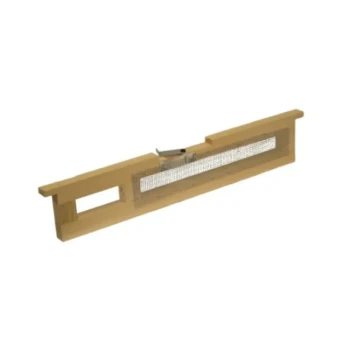
Artificial insemination (AI) equipment provides the absolute control necessary to bypass the biological randomness of natural mating. By enabling the precise pairing of specific queens with selected drones, this technology ensures that desirable genetic traits—such as disease resistance and productivity—are isolated, stabilized, and passed on to future generations with a certainty that open-air mating cannot achieve.
While natural mating relies on environmental chance, artificial insemination transforms breeding into a calculated science. It is the distinct capability to fix complex genetic traits like hygienic behavior and mite resistance that makes this equipment essential for modern, precision agriculture.
Eliminating the Variable of Chance
Bypassing Aerial Randomness
In natural settings, queens mate in the open air with drones of unknown origin. AI equipment removes this variable entirely, creating a closed mating environment where the breeder controls both sides of the genetic equation.
Clarifying Paternal Lineage
Precision breeding requires accurate data. By using AI tools, breeders can establish a clear pedigree, knowing exactly which drone lineage contributed to the offspring. This clarity allows for the accurate estimation of genetic parameters and speeds up the selection progress.
Controlled Semen Mixing
Advanced AI systems allow for the collection and mixing of semen from specific drones within a selected population. This technique ensures that a queen is fertilized by a representative sample of high-value genetics, reinforcing specific traits across the colony.
Targeting Critical Genetic Outcomes
Stabilizing Disease Resistance
AI is the core technical support for developing "hygienic" bees. It facilitates the stable transmission of traits such as Varroa Sensitive Hygiene (VSH) and the ability to remove over 95% of dead pupae within 24 hours.
Supporting Organic Beekeeping
By genetically fixing resistance to major threats like Varroa mites, American Foulbrood, and Chalkbrood, AI reduces the need for chemical interventions. This makes it a foundational tool for organic beekeeping operations aiming to lower chemical reliance.
Exploiting Male-Female Trait Correlations
The primary advantage of AI is the ability to select individual drones based on specific trait correlations. This precision allows breeders to identify desirable genes—sometimes using protein markers—and ensure they are reinforced in subsequent generations without the risk of dilution from uncontrolled hybridization.
Enhancing Operational Efficiency
Solving Low Productivity
AI is not just about biology; it is about technical efficiency. By cultivating queens with superior genetics, operations can significantly increase colony output and solve issues related to low productivity in the beekeeping cluster.
Creating High-Quality Breeder Queens
The technology enables the production of "breeder queens" that possess high concentrations of specific genes. These queens serve as the foundation for commercial production, ensuring that the benefits of precision breeding scale up to the entire operation.
Understanding the Trade-offs
The "Colony Cost" of Selection
While AI allows for the isolation of specific traits, hyper-focusing on a single gene can be detrimental. Breeders must be aware of the "colony cost" associated with selecting heavily for traits like mite resistance.
Balancing Complex Behaviors
Selection is not a zero-sum game. To ensure overall colony fitness, breeders must weigh disease resistance against other critical traits like productivity, temperament, and overwintering ability. AI is a tool for isolation, but the breeder must still ensure the final organism is balanced and viable.
Making the Strategic Choice for Your Apiary
To effectively utilize artificial insemination in your breeding program, align your approach with your specific operational goals:
- If your primary focus is Disease Resistance: Utilize AI to fix recessive traits like VSH or hygienic behavior to reduce chemical inputs and stabilize colony health.
- If your primary focus is Commercial Productivity: Use AI to create a line of high-quality breeder queens that can mass-produce daughter queens with predictable, high-output traits.
Precision breeding is the bridge between random survival and intentional improvement, securing the future of the colony through controlled genetic excellence.
Summary Table:
| Feature | Natural Mating | Artificial Insemination (AI) |
|---|---|---|
| Paternal Control | Unknown / Random Drones | Selected / Specific Drones |
| Genetic Stability | Low (Trait Dilution) | High (Trait Fixation) |
| Disease Resistance | Variable / Inconsistent | Optimized (e.g., VSH, Hygienic) |
| Pedigree Tracking | Impossible | 100% Accurate Data |
| Breeding Efficiency | Seasonal / Environmental | Precise & Scalable Selection |
Elevate Your Breeding Excellence with HONESTBEE
Precision breeding is the foundation of a resilient and profitable apiary. At HONESTBEE, we empower commercial apiaries and distributors by providing professional-grade artificial insemination equipment, specialized hive-making machinery, and honey-filling solutions.
Our comprehensive wholesale range covers the full spectrum of beekeeping tools and essential consumables, ensuring you have the hardware needed to fix superior genetic traits and maximize colony output.
Ready to secure your genetic future? Contact us today to explore our wholesale equipment and specialized machinery
References
- Olav Rueppell. The architecture of the pollen hoarding syndrome in honey bees: implications for understanding social evolution, behavioral syndromes, and selective breeding. DOI: 10.1007/s13592-013-0244-3
This article is also based on technical information from HonestBee Knowledge Base .
Related Products
- Queen Bee Artificial Insemination Instrument Equipment for Instrumental Insemination
- Stainless Steel Beekeeping Queen Grafting Tool for Honey Bee Rearing
- Plastic Beekeeping Honey Bee Larvae Grafting Tools for Queen Rearing and Chinese Grafting
- Plastic Handle Single Row Artificial Fiber Bee Brush
- Galvanized Beekeeping Smoker for Honey Bee and Apiculture
People Also Ask
- Why is maintaining sanitary conditions important during artificial insemination? Protect Your Queen from Fatal Infections
- Why are artificial insemination instruments critical in bee hybridization? Master Genetic Control & Pure Breeding
- What is the core value of bee artificial insemination instruments in breed improvement? Achieve Precise Genetic Control
- Why is professional bee artificial insemination equipment considered a core tool for genetic control in honeybee breeding? Ensure 100% Purity
- Why is high-purity CO2 used for queen bee artificial insemination? Unlock Precision Breeding & Faster Egg-Laying