Beeswax is often an overlooked profit center, not a worthless hive residue. Traditional beekeeping operations frequently discard or lose wax because they lack processing skills, market access, and suitable melting, filtering, refining, and molding equipment. Commercial processing systems can recover raw comb and turn it into refined wax blocks, foundation sheets, candles, polishes, cosmetics inputs, and other saleable products—without adding more colonies.
The core opportunity is value recovery: equipment converts irregular, contaminated wax byproducts into standardized materials that are easier to sell, use internally, and distribute to commercial customers.
Why Traditional Beekeeping Underutilizes Beeswax
Wax is treated as a secondary product
Honey is usually the primary commercial focus, while beeswax is viewed as a byproduct of extraction, comb replacement, or hive maintenance. This causes valuable wax to be stored poorly, mixed with debris, or discarded.
The missed opportunity is significant because beeswax can support revenue independently of honey production.
Raw wax is difficult to handle
Unprocessed comb may contain honey residues, propolis, pollen, dirt, and other impurities. Without dedicated equipment, recovering clean wax is labor-intensive and produces inconsistent results.
This makes raw wax harder to sell to buyers that require predictable quality, appearance, and form.
Traditional methods limit productivity
Small-scale melting methods may depend on manual heating, basic containers, and improvised filtration. These approaches can be slow, difficult to scale, and unsuitable for producing consistent commercial batches.
The issue is not simply whether wax can be melted. It is whether it can be processed efficiently into a repeatable product.
Market access favors standardized materials
Cosmetic, pharmaceutical, industrial, and manufacturing buyers generally prefer refined beeswax blocks, filtered material, or standardized sheets rather than unprocessed comb.
Apiaries that cannot provide these formats may have limited access to higher-value customers, even when they possess sufficient raw wax.
How Commercial Beeswax Equipment Creates Value
Step 1: Recover wax from hive byproducts
Collected comb, cappings, damaged foundation, and other wax residues can be gathered as a separate material stream. This establishes the feedstock for a dedicated recovery operation.
Instead of treating these materials as waste, the apiary can manage them as an inventory of secondary raw material.
Step 2: Melt the raw wax efficiently
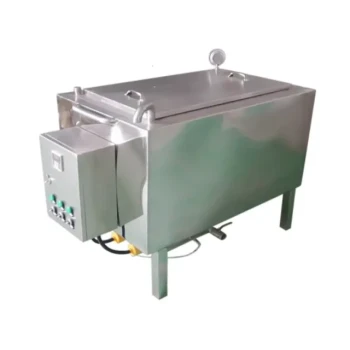
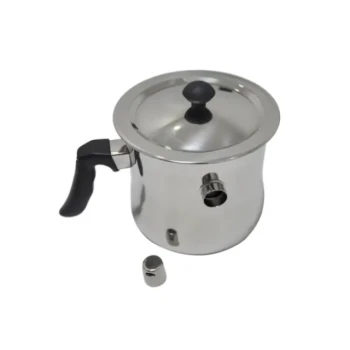
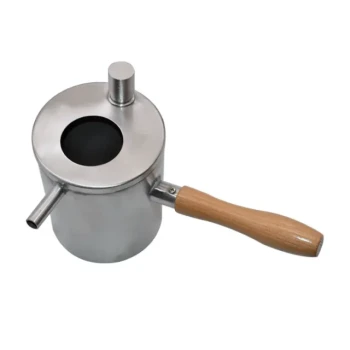
Wax melting equipment applies controlled heat to separate beeswax from the original comb structure. Commercial systems are designed to process larger quantities more consistently than improvised methods.
Efficient melting improves throughput and reduces the labor required for wax recovery.
Step 3: Remove impurities through filtering and refining
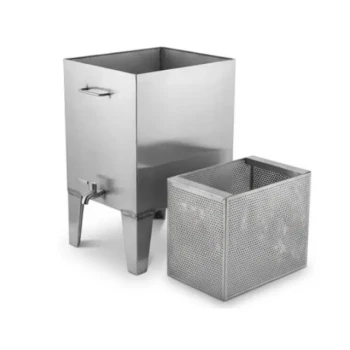
Filtering and refining remove unwanted particles and residues from the melted wax. The result is a cleaner, more uniform material suitable for further processing or sale.
For buyers in cosmetics, pharmaceuticals, food-related applications, and industrial manufacturing, this consistency is central to commercial usability.
Step 4: Mold wax into marketable forms
Molding equipment can convert refined wax into blocks, sheets, or other standardized formats. Foundation-molding equipment is particularly useful for producing hive foundation sheets for internal use or sale to other beekeepers.
Standardized products are easier to package, quote, store, ship, and incorporate into downstream production.
Revenue Opportunities Beyond Honey
Sell refined beeswax blocks
Refined blocks provide a relatively straightforward product for wholesalers, manufacturers, and distributors. They can serve as an input for candles, cosmetics, polishes, coatings, and other applications.
Block production also allows an apiary to sell wax in a stable, recognizable commercial form rather than negotiating over mixed raw comb.
Produce foundation sheets
Foundation sheets create both an internal saving and an external sales opportunity. An apiary can manufacture its own foundation material or supply other beekeepers.
This can reduce reliance on outside foundation suppliers while creating a product aligned with the existing beekeeping market.
Manufacture finished consumer products
With appropriate molding and workshop capabilities, refined wax can be used in products such as candles, soaps, skin balms, leather care products, wood polishes, and waterproofing products.
Finished goods may provide more value per unit of wax, but they also require product development, packaging, compliance, branding, and distribution.
Supply commercial industries
Beeswax is used in cosmetics, pharmaceutical applications, surface treatments, leather and wood care, candles, and specialized food packaging. Its natural sealing, waterproofing, preservative, and protective properties support this broad range of uses.
Commercial equipment helps apiaries move closer to the quality and format expectations of these markets.
Why Processing Increases Economic Output per Hive
It creates revenue without expanding colonies
Wax processing increases the value extracted from existing hive operations. The apiary does not necessarily need more colonies to create an additional product line.
This makes wax recovery especially relevant when land, labor, colony growth, or expansion capital is constrained.
It improves resource utilization
Every recovered kilogram of usable wax represents material that has been retained within the business rather than lost. Processing therefore improves the overall utilization rate of hive resources.
The gain comes from combining recovery with conversion into a product customers can reliably purchase.
It diversifies cash flow
Honey prices, harvest volumes, and seasonal conditions can vary. Beeswax products provide another commercial channel alongside bulk honey sales.
A diversified product portfolio can strengthen business resilience, particularly for operations serving multiple customer segments.
What Distributors and B2B Resellers Should Evaluate
Offer a complete processing pathway
Customers may need more than a single wax melter. A practical solution can include melting, filtering, refining, molding, foundation production, and supporting workshop tools.
A one-stop equipment portfolio makes it easier for distributors to serve commercial apiaries at different production stages.
Match equipment to the customer’s business model
A honey-focused apiary may prioritize wax recovery and block production. A foundation supplier may require sheet-molding capability, while a consumer-product manufacturer may need molding and finishing equipment.
The correct recommendation depends on feedstock volume, desired product format, labor availability, and target market.
Support the full purchasing process
Technical guidance, responsive communication, compatible equipment selection, and efficient order fulfillment can be as important as the machinery itself. Buyers need confidence that the proposed system will work as an integrated process.
For resellers, professional expertise and dedicated customer service can turn equipment supply into a longer-term commercial relationship.
Understanding the Trade-offs
Equipment requires upfront investment
Commercial processing machinery involves capital expenditure, installation, workspace, maintenance, and operator training. The investment should be evaluated against recoverable wax volume and realistic sales demand.
A small operation may begin with essential melting and filtering equipment before adding refining or molding capacity.
Processing does not automatically create a premium product
Machinery improves consistency and efficiency, but market value also depends on cleanliness, product specifications, packaging, documentation, and customer requirements. Equipment alone cannot replace quality control or market development.
Businesses should identify target buyers before selecting the final processing configuration.
Finished products involve greater complexity
Selling candles, cosmetics, balms, or polishes can increase value per unit, but it also introduces formulation, labeling, packaging, and regulatory responsibilities. Selling refined blocks or foundation sheets is often operationally simpler.
The highest-margin option is not always the most practical starting point.
Wax segregation matters
Different wax sources may vary in color, cleanliness, and composition. Mixing unsuitable materials can reduce the consistency of the finished product and limit its applications.
A basic collection and sorting system is therefore an important part of commercial wax recovery.
How to Apply This to Your Project
Commercial beeswax processing is most effective when equipment selection follows a defined product and sales strategy.
- If your primary focus is recovering hive waste: Start with appropriate melting and filtering capacity, then add refining or molding as sales volume develops.
- If your primary focus is supplying beekeepers: Prioritize foundation-sheet production and reliable output consistency.
- If your primary focus is selling raw materials to B2B buyers: Produce clean, standardized beeswax blocks and build specifications around customer requirements.
- If your primary focus is maximizing value per kilogram: Consider candles, balms, soaps, polishes, or other finished goods, while accounting for packaging and compliance requirements.
- If your primary focus is equipment distribution: Provide a complete, compatible product portfolio supported by rapid response, technical expertise, dedicated service, and efficient fulfillment.
With the right processing workflow, beeswax can become a dependable commercial product stream rather than an overlooked residue of honey production.
Summary Table:
| Step | Key Action | Result |
|---|---|---|
| 1. Recover | Collect comb, cappings, and residues | Feedstock for processing |
| 2. Melt | Apply controlled heat | Efficient separation of wax |
| 3. Filter/Refine | Remove impurities | Clean, uniform wax |
| 4. Mold | Form into blocks or sheets | Saleable, standardized products |
Ready to turn your hive waste into a revenue stream? HONESTBEE offers a full spectrum of beeswax processing equipment—from melters and filters to foundation molds. As your one-stop sourcing partner for commercial apiaries and distributors, we provide rapid response, dedicated service, and ultra-fast delivery. Whether you need to refine wax for cosmetics or produce foundation sheets for other beekeepers, our expert team supports you with OEM/ODM options and certified quality. Contact us today to maximize your profit per hive!
Related Products
- Electric Commercial Beeswax Melter for Factory Use
- Manual Beeswax Flat Sheet Machine for Beeswax Processing
- Beeswax Machine Press Embosser Wax Foundation Mold Printer Bee Hive Equipment Making Sheet
- Electric Beeswax Flat Sheet Machine with Operating Tray for Wax Processing
- Electric Flatting and Embossing Machine with Tray for Beekeeping
People Also Ask
- Why might a commercial beekeeper prefer an electric beeswax melter? Maximize Profit with Speed & Scale
- What safety precautions should be taken when melting beeswax? A Guide to Flammable Wax Handling
- What types of beeswax melters are available for different scales of beekeeping? Solar vs. Electric Melters Compared
- What are the three popular methods for melting beeswax? Safely Process Your Wax with Ease
- How do you melt beeswax without making a mess? Master Safe & Clean Techniques