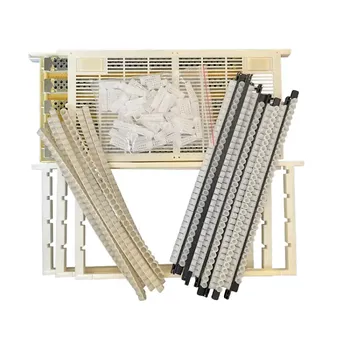
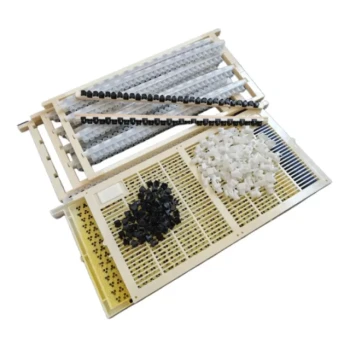
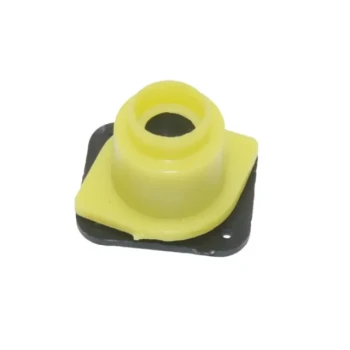
For Apis cerana, queen rearing equipment is not an optional support system—it is the practical foundation of genetic improvement. Instrumental insemination offers precise paternal control, but A. cerana drones produce very small semen volumes, making routine artificial insemination technically demanding and difficult to scale. Controlled queen rearing equipment therefore enables breeders to manage the complete process: selecting breeder queens, raising viable virgin queens, organizing mating, and propagating superior colonies.
The key point: Instrumental insemination controls genetics precisely in individual cases, while a controlled queen-rearing system makes improvement repeatable and operationally scalable for Apis cerana.
Why Standard Instrumental Insemination Is Not Enough
Low semen volume creates a technical bottleneck
Compared with many commercial breeding systems, A. cerana presents a particular challenge because drones ejaculate extremely low volumes of semen. Collection, handling, dilution, and deposition therefore require specialized micro-insemination equipment, high-specification capillaries, and skilled technicians.
This makes standard instrumental insemination relatively slow, delicate, and difficult to apply across large numbers of queens. A failure at the insemination stage can also waste valuable breeder material.
Artificial insemination controls only part of the production chain
Instrumental insemination can control the paternal contribution, but it does not by itself produce healthy, well-developed queens. Breeders still need reliable grafting, queen-cell handling, emergence management, and colony support.
Queen rearing equipment addresses these biological and operational steps before and after insemination. It turns genetic selection from a one-off laboratory procedure into a repeatable breeding workflow.
Natural mating makes pedigree control unreliable
Virgin queens normally mate in open drone congregation areas with drones from multiple colonies. They may mate with approximately 10–20 drones and travel several kilometres, making paternal identity difficult to track under ordinary field conditions.
Without isolated mating stations or carefully managed mating apiaries, breeders cannot reliably determine which drone lines contributed to the next generation. This weakens selection decisions for traits such as honey productivity, temperament, disease resistance, and reduced swarming.
How Controlled Queen Rearing Equipment Solves the Core Problem
It protects the maternal line
Grafting tools, cell cups, and rearing frames allow breeders to propagate larvae from carefully selected breeder queens. This is the first control point in a breeding program.
High-precision grafting is particularly important for A. cerana because larvae are fragile. Accurate transfer reduces injury and improves the chance of raising viable queens from the intended genetic line.
It manages queens safely after emergence
Professional queen cages provide physical separation for virgin queens during emergence and handling. This helps prevent queens from fighting or killing one another before they can be introduced, inseminated, or transferred.
That protection is essential for maintaining replacement schedules and avoiding losses of genetically valuable queens.
It creates a controlled mating environment
Isolated mating stations and mating apiary equipment reduce unwanted paternal influence by placing virgin queens near selected drone-producing colonies. The breeder cannot control every flight detail, but the surrounding drone population can be managed to increase the probability of desirable matings.
This approach is especially useful when full instrumental insemination is impractical for every queen. It provides a scalable middle ground between uncontrolled open mating and completely individual artificial insemination.
It standardizes handling and observation
Standardized hive dimensions and properly configured queen-rearing frames provide a stable working environment. Technicians can position cells consistently, inspect colonies more efficiently, and perform repeated operations with greater precision.
For distributors and commercial apiaries, this standardization also matters operationally. Compatible frames, cell cups, cages, and grafting tools simplify inventory management and reduce delays caused by mismatched components.
Why This Matters Specifically for Apis cerana Stock Improvement
The species requires a system, not a single instrument
Because A. cerana drone semen is difficult to collect and use at scale, breeders need complementary methods. A practical program combines selective queen rearing, controlled natural mating, isolated mating locations, and instrumental insemination where the genetic objective justifies the added technical effort.
The equipment is therefore critical because it supports the entire breeding system rather than relying on insemination alone.
It makes selection more repeatable
Stock improvement depends on repeating the same process across generations: identify superior colonies, rear queens from selected mothers, control or influence mating, evaluate daughter colonies, and retain the best lines.
Queen rearing equipment provides the physical infrastructure for repeating these steps consistently. This improves the reliability of selection for honey yield, reduced absconding, lower swarming tendency, colony population, and local adaptation.
It supports germplasm protection
For valuable or locally adapted A. cerana lines, controlled rearing and micro-insemination equipment help preserve selected maternal and paternal genetics. This is important when breeders need to maintain rare traits or protect stock from genetic dilution caused by uncontrolled mating.
The objective is not simply to produce more queens. It is to preserve and reproduce the right genetic combinations.
The Role of an Integrated Equipment Portfolio
Rearing tools establish the foundation
A complete queen-rearing setup may include:
- Grafting needles for accurate larval transfer.
- Cell cups for standardized queen-cell development.
- Rearing frames for organized colony management.
- Queen cages for safe isolation after emergence.
- Standardized hives and frames for consistent inspections and handling.
- Mating apiary equipment for managing controlled mating environments.
Each item addresses a different failure point. Supplying only insemination equipment leaves major gaps in queen production and post-emergence management.
Insemination equipment adds precision where needed
Micro-insemination devices, capillaries, and physiological diluents are valuable when breeders need direct paternal control, germplasm preservation, or highly specific crosses.
However, they should be positioned as part of an integrated program. For many commercial operations, controlled rearing and isolated mating may deliver greater practical value across a larger number of queens than attempting to inseminate every queen individually.
Service and fulfillment affect breeding continuity
Queen-rearing programs are time-sensitive. Missing cell cups, cages, capillaries, or compatible frames can interrupt an entire production cycle.
For commercial buyers, a one-stop supplier with a full-spectrum product portfolio, rapid response, technical expertise, and efficient fulfillment can reduce procurement risk. Compatibility guidance and dependable replacement supply are often as important as the individual product specification.
Understanding the Trade-offs
Controlled mating is not the same as complete genetic certainty
An isolated mating station improves paternal control, but it does not provide the same certainty as verified instrumental insemination. Queens may still mate with available drones outside the breeder’s intended selection plan if isolation is inadequate.
Breeders should therefore treat isolated mating as probability control, not absolute pedigree control.
Instrumental insemination remains technically valuable
The limitations of instrumental insemination do not make it unnecessary. It remains the most direct method for controlling paternal genetics and is important for elite-line breeding, research, and germplasm conservation.
Its constraints are mainly practical: low semen volume, specialized handling, technician skill, consumable requirements, and lower throughput.
Equipment quality cannot replace breeding discipline
Precision tools improve consistency, but they cannot compensate for weak selection criteria, poor colony health, unsuitable drone populations, or inadequate recordkeeping. Genetic improvement still requires clear breeding objectives and performance evaluation across generations.
The equipment is the enabling infrastructure—not a substitute for sound breeding management.
How to Apply This to Your Breeding or Supply Strategy
A practical purchasing decision should match the equipment portfolio to the scale and precision of the breeding objective.
- If your primary focus is commercial queen production: Prioritize grafting tools, cell cups, rearing frames, queen cages, standardized hives, and mating-station equipment to improve throughput and reduce dependence on inseminating every queen.
- If your primary focus is elite-line selection: Combine controlled queen rearing with micro-insemination equipment, precision capillaries, and suitable diluents for tighter maternal and paternal pedigree control.
- If your primary focus is germplasm preservation: Invest in high-precision insemination equipment alongside secure queen isolation and detailed lineage-management procedures.
- If your primary focus is reliable procurement: Select a supplier able to provide the complete compatible product range, technical guidance, rapid response, and fast order fulfillment from one source.
For Apis cerana, controlled queen rearing equipment transforms difficult genetic-control techniques into a practical, repeatable stock-improvement program.
Summary Table:
| Aspect | Controlled Queen Rearing Equipment | Standard Instrumental Insemination |
|---|---|---|
| Scalability | High: suitable for large-scale breeding programs | Low: time-consuming and requires specialized skills |
| Paternal control | Moderate: improves control via isolated mating stations | High: allows precise genetic selection |
| Technical complexity | Lower: easier to implement across many colonies | Higher: requires micro-insemination and delicate handling |
| Throughput | High: can rear many queens concurrently | Low: limited by insemination speed |
| Dependency on drone semen | Minimal: relies on natural mating or controlled conditions | High: requires collecting low-volume semen |
| Suitability for Apis cerana | Highly suitable: addresses species-specific challenges | Less practical: due to low semen volume and fragility |
Ready to enhance your Apis cerana breeding program? HONESTBEE offers a comprehensive range of queen rearing and insemination equipment, tailored for commercial breeders and distributors. Our one-stop supply, OEM/ODM support, expert guidance, and rapid fulfillment ensure your operations run smoothly. Contact us today to discover how we can boost your productivity and genetic improvement.
Related Products
- HONESTBEE Improved No Grafting Queen Rearing Kit For Queen Rearing and Royal Jelly Production
- Retractable Chinese Queen Rearing Grafting Tools Equipment
- No Grafting Queen Rearing Kit: System for Royal Jelly Production and Queen Rearing
- Nicot Queen Rearing Kit for Beekeeping and Grafting in Nicot System
- Stainless Steel Queen Grafting Tool for Beekeeping and Bee Queen Grafting
People Also Ask
- How can commercial queen rearers and royal jelly producers align their harvesting schedules and equipment with the biological timing of larval development? Master the 48-Hour Grafting Window and 72-Hour Harvest Cycle
- How do honeybee reproductive traits affect queen rearing and hive equipment?
- What equipment and systems are utilized in queen rearing operations to scale queen bee production? Essential Tools for Commercial-Scale Queen Rearing
- How can commercial queen breeders and apiaries utilize low-density SNP screening alongside queen rearing equipment to maintain genetic purity in native honey bee populations? Achieve Genetic Purity with Efficient Screening
- What biological principles govern honeybee queen rearing, and why should commercial beekeepers use controlled queen-rearing equipment rather than relying on natural queen cells?