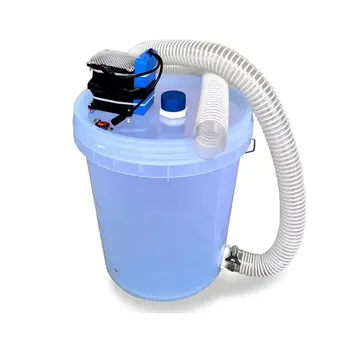
Industrial-grade vacuum dehydration is the only viable method for stabilizing stingless bee honey because it removes excess moisture—which naturally ranges from 28% to over 40%—without using high heat. By utilizing reduced-pressure evaporation, this equipment lowers the moisture content to below 20% at temperatures near 40°C. This process is critical to preventing spontaneous fermentation, stopping the production of excessive foam, and preserving the delicate bioactive enzymes that define the honey’s market value.
Core Takeaway: For B2B distributors, industrial vacuum dehydration is a non-negotiable requirement to transform a highly volatile raw material into a shelf-stable, export-quality commodity while maintaining its premium nutritional profile.
Solving the Volatility of Raw Stingless Bee Honey
The Risk of Spontaneous Fermentation
Stingless bee honey naturally contains significantly more water than honey from traditional Western honeybees. This high moisture environment acts as a catalyst for yeast activity, leading to rapid fermentation, spoilage, and a distinctive souring that can ruin entire batches.
Eliminating Excessive Foaming and Gas Build-up
During transport and storage, high-moisture honey often produces gas, leading to foaming and internal pressure within packaging. Industrial dehydration stabilizes the honey, ensuring that containers do not leak or burst during long-distance shipping or global distribution.
Preservation of Heat-Sensitive Bioactives
Traditional boiling to remove water would destroy the unique enzymes and antioxidants that command premium prices. Vacuum technology lowers the boiling point of water, allowing moisture to evaporate at low temperatures (around 40°C), which keeps the honey’s medicinal properties intact.
Optimizing Commercial Stability and Export Readiness
Meeting International Trade Standards
Most global markets and export regulations require honey moisture levels to be significantly lower than the natural state of stingless bee honey. Professional vacuum equipment allows producers to precisely hit moisture targets (typically 19% to 22%) required for legal sale and international logistics.
Extending Shelf Life for Wholesalers
By inhibiting microbial growth through moisture reduction, the shelf life of the product is extended from a few weeks to several years. This stability is essential for B2B resellers who require a predictable inventory that does not degrade while in the supply chain.
Consistency in Flavor and Texture
Industrial-grade machinery provides a standardized processing environment that prevents the flavor profile from shifting. This ensures that every shipment a distributor receives meets the same high-quality sensory benchmarks, regardless of seasonal harvest variations.
Understanding the Trade-offs and Pitfalls
Capital Investment vs. Product Loss
The primary trade-off is the high initial cost of industrial-grade machinery compared to traditional methods. However, the cost of product loss due to fermentation and the risk of shipping rejected batches far outweigh the equipment investment for serious commercial operations.
Risk of Over-Processing
Improperly calibrated equipment can strip away the unique volatile aromatics that give stingless bee honey its prized "zesty" profile. It is vital to use precision-controlled vacuum systems that offer exact temperature and pressure monitoring to avoid over-dehydration.
Maintenance and Technical Expertise
These machines require a higher level of operational expertise and regular maintenance compared to simple filtration tools. Distributors should partner with suppliers who offer comprehensive technical support and a deep understanding of honey rheology.
Choosing the Right Equipment for Your Business Model
Reliable sourcing and efficient processing are the cornerstones of a successful honey distribution business. Selecting the right equipment depends on your specific volume and target market requirements.
- If your primary focus is international export: Prioritize high-capacity vacuum cylindrical decompression devices that can guarantee moisture levels below 20% for global compliance.
- If your primary focus is premium medicinal positioning: Invest in low-temperature precision dehydrators that provide documented proof of enzyme and antioxidant retention.
- If your primary focus is rapid order fulfillment: Select integrated systems that combine vacuum extraction with dehydration to minimize processing time and move product into the supply chain faster.
By integrating industrial-grade vacuum technology, you transition from selling a volatile agricultural byproduct to offering a stable, high-value functional food designed for the global stage.
Summary Table:
| Challenge | Vacuum Dehydration Solution | Commercial Impact |
|---|---|---|
| High Moisture (28-40%+) | Low-pressure evaporation at ~40°C | Prevents fermentation & spoilage |
| Heat Sensitivity | Low-temperature moisture removal | Preserves medicinal enzymes & bioactives |
| Packaging Volatility | Stabilization & gas reduction | Prevents leaking/bursting during shipping |
| Export Regulations | Precision moisture targeting (<20%) | Ensures compliance for international trade |
| Shelf Life | Microbial growth inhibition | Extends shelf life from weeks to years |
Elevate Your Honey Production with HONESTBEE
Scale your operations and maximize market value with HONESTBEE, your premier partner for commercial beekeeping excellence. We provide a comprehensive one-stop sourcing solution, offering a full spectrum of industrial beekeeping machinery—from precision vacuum dehydration systems and honey-filling machines to specialized hive hardware and industry consumables.
Why partner with HONESTBEE?
- For Distributors & Wholesalers: We offer high-performance equipment designed for reliability, ensuring superior profit margins and consistent supply for your clients.
- OEM/ODM Support: Tailor-made machinery solutions to meet your specific technical and branding requirements.
- Expert Industry Insights: Leverage our deep professional expertise to navigate international certifications and export standards.
- Rapid Fulfillment: Benefit from our ultra-fast delivery and dedicated customer service to keep your supply chain moving efficiently.
Ready to transition from raw agricultural products to premium, export-quality commodities? Contact HONESTBEE today to explore our wholesale offerings and industrial equipment solutions.
References
- Y. Oktavia, A. Arbain. Stingless Bee Honey Farming and Farmer Empowerment in Sawahlunto City, West Sumatra, Indonesia. DOI: 10.1051/bioconf/202515907001/pdf
This article is also based on technical information from HonestBee Knowledge Base .
Related Products
- 0.5T Capacity Honey Dehumidifier Dryer with Vacuum Heating and Thickening Filtering Machine
- Honey Concentrating Vacuum Heating Thickening Machine Dehumidifier for Honey
- High Quality Honey Dehumidifier Dryer Thickening Machine for Beekeeping
- Honey Concentrating and Filtering Dehumidifier Machine 2T Capacity for Honey
- Economy Small Scale Honey Dryer Dehumidifier Thickening Machine
People Also Ask
- What is the primary function of professional dehumidification equipment in honey processing? Stability & Quality
- How to dry up honey? The Safe Guide to Stabilizing Honey and Preventing Fermentation
- What is the process for using a dehumidifier to lower honey's moisture content? Expert Drying Techniques
- How to decrease moisture in honey? Prevent Fermentation and Ensure Long-Term Quality
- How to remove humidity from honey? Protect Your Harvest from Fermentation