Investing in automated honey extraction, wax processing, and bottling machinery is vital because it converts fragmented hive harvests into consistent, hygienic, market-ready products at commercial scale. For apiary co-operatives and bulk distributors, the equipment reduces manual handling, post-harvest losses, and contamination risks while improving throughput, product consistency, and compliance with food safety and export requirements.
The central value is operational control. Automated processing allows co-operatives to aggregate harvests efficiently, preserve honey and wax quality, fulfill large orders reliably, and offer distributors standardized products that are easier to sell across demanding markets.
Why Commercial Processing Capacity Matters
Fragmented Harvests Need Centralized Control
Apiary co-operatives often combine honey from many beekeepers, colonies, and locations. Without centralized extraction and processing, differences in handling can create inconsistent filtration, moisture control, cleanliness, and packaging quality.
A shared processing facility equipped with industrial machinery gives the co-operative a repeatable system for turning diverse raw harvests into standardized commercial products.
Bulk Buyers Require Reliable Supply
Distributors and wholesalers need dependable volumes, predictable specifications, and fast order fulfillment. Manual processing can become a bottleneck when several producers harvest at the same time or when a large customer places an urgent order.
Automated equipment increases processing capacity and helps co-operatives respond to bulk demand without relying on a proportional increase in labor.
Value Is Created Beyond the Hive
Raw honey and beeswax have commercial value, but properly processed and packaged products generally offer greater marketability. Filtering, controlled extraction, wax recovery, and professional bottling help transform agricultural output into products suitable for retail, foodservice, private-label, and export channels.
This additional processing can strengthen the co-operative’s bargaining position when negotiating with major distributors or international buyers.
How Automation Improves Honey Quality
Efficient Extraction Protects the Honeycomb
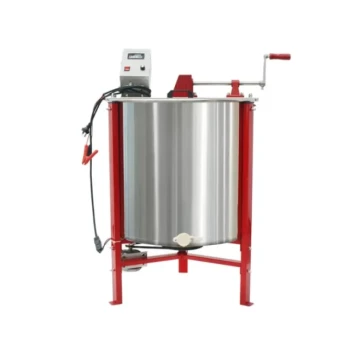
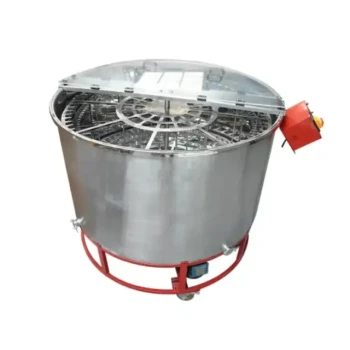
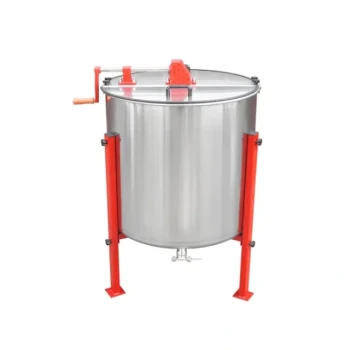
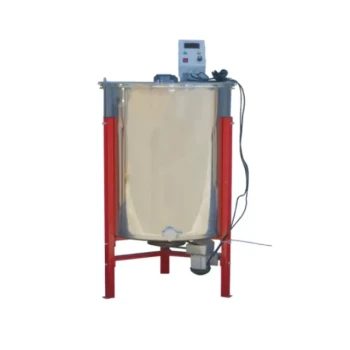
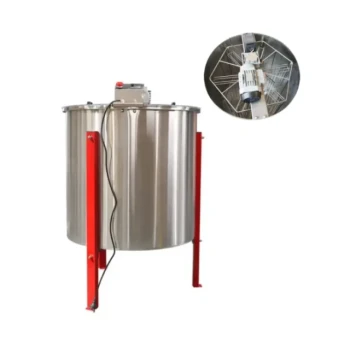
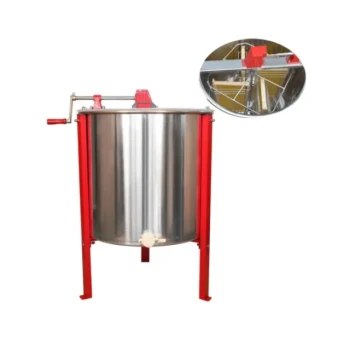
Industrial honey extractors use centrifugal force to remove honey from the comb. When correctly operated, this method separates honey efficiently while allowing the honeycomb to remain largely intact for reuse by the bees.
Preserving the comb reduces harvesting losses and supports a more efficient production cycle across participating apiaries.
Filtration Reduces Physical Impurities
Filtration systems remove unwanted particles from extracted honey before it reaches storage or filling equipment. This supports a cleaner, more consistent finished product and reduces variation between batches.
Temperature control is important because honey viscosity affects filtration and filling. Controlled processing can improve flow without relying on excessive heating that may reduce product quality.
Closed Processing Reduces Contamination Risk
Every manual transfer creates an opportunity for dust, debris, or other contaminants to enter the product. Automated systems reduce the number of direct handling points and can maintain more controlled processing and filling environments.
This does not eliminate the need for sanitation, maintenance, or proper operator practices. It does, however, make hygienic control more repeatable and easier to manage.
Why Wax Processing Belongs in the Same Investment
Wax Recovery Reduces Waste
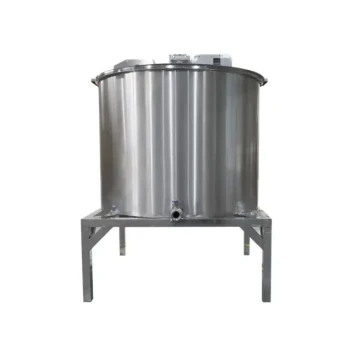
Wax melt tanks allow co-operatives to recover usable beeswax from cappings, damaged comb, and processing residues. Instead of treating wax as waste, the facility can convert it into a separate commercial product or return it to beekeepers for further hive use.
This improves the value recovered from each harvest and makes the processing operation more resource-efficient.
Beeswax Expands the Product Portfolio
Processed beeswax can support additional sales channels, including candle production, cosmetics, polishes, and beekeeping supplies. For distributors, access to both honey and wax creates a more complete sourcing proposition.
A broader product portfolio also makes it easier to consolidate orders and serve buyers seeking multiple apiary-related products from one supplier.
Centralized Wax Handling Improves Consistency
Manual wax processing can produce inconsistent melting, filtration, and recovery results. Dedicated equipment provides more controlled handling and helps separate wax from impurities before storage or resale.
Consistent wax quality is particularly important when supplying manufacturers that require predictable raw materials.
How Automated Bottling Supports Distribution
Precise Filling Improves Commercial Consistency
Automated filling machines use flow or weight-based metering to deliver consistent quantities into each container. This reduces underfilling, overfilling, and batch-to-batch variation.
Consistent fill levels improve inventory control, customer confidence, labeling accuracy, and the professional presentation expected by high-end distribution markets.
Faster Bottling Improves Order Fulfillment
Bottling is often the final constraint between processed honey and a shippable order. Automated filling and capping equipment increases throughput, allowing co-operatives to prepare larger orders in less time.
Higher throughput supports rapid response times, a critical service advantage for wholesalers, resellers, and buyers operating on fixed delivery schedules.
Packaging Becomes Easier to Standardize
Professional machinery can support repeatable filling across different commercial formats, provided the equipment is configured for the relevant container sizes and honey viscosity. This helps co-operatives serve retail, foodservice, private-label, and bulk-packing requirements more efficiently.
Standardized packaging also simplifies downstream warehousing, order picking, and distribution.
The Business Case for Co-operatives and Distributors
Co-operatives Gain Stronger Bargaining Power
A co-operative with extraction, wax processing, filtration, and bottling capability can offer more than aggregated raw honey. It can supply tested, processed, packaged, and commercially consistent products.
That added capability strengthens negotiations with large distributors and reduces dependence on external processors.
Distributors Gain a More Reliable Supplier
For a distributor, a supplier’s machinery is part of its supply-chain reliability. Processing capacity, quality controls, and packaging flexibility reduce the risk of delays, inconsistent batches, and last-minute rework.
A well-equipped co-operative can function as a one-stop source for multiple honey and beeswax products, simplifying procurement and improving order efficiency.
Professional Processing Supports Premium Positioning
Clean, consistent, well-packaged products are easier to position in competitive markets. Although machinery alone does not create a premium brand, it provides the operational foundation for consistent quality, dependable presentation, and credible compliance practices.
This is especially important when selling to export markets or customers with strict specifications.
Understanding the Trade-offs
The Initial Investment Is Significant
Industrial extractors, wax melt tanks, filtration systems, and filling machinery require capital, installation, utilities, maintenance, and trained operators. The investment must be matched to realistic harvest volumes and customer demand.
A system that is too small creates bottlenecks, while an oversized system can leave capital underused.
Automation Does Not Replace Quality Management
Machinery cannot compensate for poor raw-material handling, inadequate sanitation, unsuitable storage, or weak traceability. Operators still need documented procedures for cleaning, inspection, temperature management, batch separation, and equipment maintenance.
Food safety compliance depends on the complete process, not on the presence of automated equipment alone.
Temperature Must Be Managed Carefully
Temperature control can improve honey flow and filtration, but excessive or poorly controlled heat may affect honey quality. Equipment should therefore provide appropriate monitoring and control rather than simply maximizing temperature.
The objective is efficient processing while preserving the characteristics and value of the product.
Equipment Requires Correct Configuration
Honey varies in viscosity, and containers vary in size and shape. Filling equipment must be selected and configured for the intended products, volumes, closures, and operating conditions.
Co-operatives should also confirm local regulatory requirements, export specifications, cleaning compatibility, spare-parts availability, and after-sales technical support before purchasing.
Making the Right Choice for Your Goal
The best investment is a coordinated processing line that matches both the co-operative’s production profile and its buyers’ requirements.
- If your primary focus is higher processing capacity: Prioritize an industrial extractor, efficient filtration, and automated filling system that can handle peak seasonal volumes.
- If your primary focus is food safety and consistency: Choose closed or controlled processing and filling equipment with reliable temperature, metering, sanitation, and batch-management capabilities.
- If your primary focus is maximizing harvest value: Include wax melt and recovery equipment so beeswax can be processed, reused, or sold as a separate product.
- If your primary focus is serving distributors and export buyers: Select scalable machinery that supports standardized packaging, repeatable quality, documented processes, and dependable order fulfillment.
- If your primary focus is one-stop sourcing: Build a coordinated honey and beeswax processing operation capable of supplying multiple product formats through a single procurement relationship.
For apiary co-operatives and bulk distributors, the right machinery is not merely a labor-saving purchase; it is the infrastructure that turns variable harvests into dependable commercial supply.
Summary Table:
| Aspect | Manual Processing | Automated Machinery |
|---|---|---|
| Throughput | Labor-intensive, limited by workforce | High-speed, consistent output |
| Quality control | Inconsistent, higher contamination risk | Closed systems, precise metering, consistent quality |
| Waste management | Wax often discarded or underutilized | Wax recovery adds revenue |
| Scalability | Bottleneck during peak seasons | Easily handles bulk orders |
| Compliance | Difficult to maintain hygiene standards | Supports food safety and export compliance |
Upgrade your apiary operation with HONESTBEE's comprehensive processing solutions. From industrial extractors to automated bottling lines, we supply everything you need for efficient, hygienic, and scalable production. Join leading co-ops and distributors who rely on our one-stop sourcing, rapid delivery, and dedicated support. Contact us today to discuss your requirements and boost your bottom line.
Related Products
- Stainless Steel Manual 8 Frame Radial Honey Extractor Machine for Beehives
- HONESTBEE 6 Frame Three Use Electric Honey Extractor for Beekeeping
- 10L Stainless Steel Electric Honey Press Machine
- HONESTBEE 72 Frame Industrial Electric Honey Extractor for Beekeeping
- Commercial Electric 12 Frame Honey Extractor Spinner Motorized Honey Extractor
People Also Ask
- What types of beehive frames are compatible with honey extractor machines? Find the Perfect Match for Your Apiary
- Which type of honey extractor is generally more durable? Focus on Material & Build Quality for Longevity
- What are the key features and benefits of a stainless steel honey extractor? Upgrade to Professional Purity
- Why are manual extractors popular among beginner beekeepers? A Guide to Starting Simple & Saving Money
- What are the disadvantages of a manual honey extractor? Overcome Efficiency Bottlenecks in Your Apiary