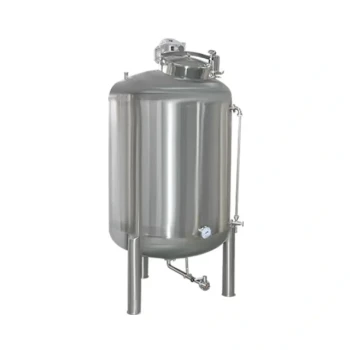
Implementing high-standard sanitary cleaning systems is critical because honey, despite being a high-sugar food, remains vulnerable to microbial influence during industrial processing. These systems perform a necessary deep purification of stainless steel tanks, pipes, and contact surfaces to kill pathogens and remove residual impurities. Without this rigor, a facility cannot meet international export hygiene standards, qualify for official health permits, or ensure the product remains safe for consumption over time.
While honey is naturally robust, modern processing demands rigorous sanitation to prevent microbial spoilage and remove contaminants. Advanced cleaning protocols are the only way to guarantee the extended shelf life and regulatory compliance required for premium international markets.
Preserving Product Integrity
To understand the necessity of these systems, one must look at the biological and physical properties of honey in an industrial setting.
Mitigating Microbial Risks
Although honey has natural preservative qualities, it is a high-sugar food susceptible to microbial influence.
If equipment is not sterilized, bacteria and yeasts can survive in residue left in tanks or pipes.
High-standard cleaning systems are designed to effectively kill pathogens that could otherwise compromise the safety of the batch.
Deep Purification of Equipment
Surface wiping is insufficient for modern processing lines.
Sanitary systems perform deep purification of critical hardware, including stainless steel tanks, piping networks, and all contact surfaces.
This removes invisible biofilms and residual impurities that accumulate during high-volume production.
Enhancing Sensory Quality
Beyond safety, sanitation directly impacts the physical appearance of the final product.
Proper filtration and purification remove wax debris and suspended impurities.
This results in improved purity and transparency, key indicators of quality for consumers.
The Business Case for Hygiene
Implementing these systems is not merely a technical requirement; it is a fundamental business strategy for modern plants.
Ensuring Regulatory Compliance
To operate legally and expand market reach, plants must qualify for official health permits.
Furthermore, accessing lucrative foreign markets requires meeting strict international export hygiene standards.
High-standard sanitation is the baseline requirement for these certifications.
Extending Shelf Life
Microbial contamination and high moisture content are the primary causes of spoilage.
By killing pathogens and precisely controlling moisture, these systems significantly extend the shelf life of the honey.
This allows for longer storage periods and reduces product loss due to spoilage.
Countering Economic Pressures
The honey production industry faces increasing marginal costs.
Justifying Premium Pricing
To remain profitable, processing plants must position their products at higher price points.
Superior sanitation leads to a product with higher sensory quality and guaranteed safety.
This quality differentiation allows producers to command higher market pricing, effectively offsetting rising production costs.
Understanding the Trade-offs
While high-standard sanitation is essential, it introduces specific challenges that facility managers must navigate.
Operational Complexity vs. Efficiency
Implementing industrial-grade purification and filtration adds layers of complexity to the production line.
Operators must be trained to manage precise controls for moisture content and cleaning cycles.
Failure to maintain the cleaning system itself can lead to a false sense of security while contaminants build up in neglected components.
Cost vs. Value
The initial investment for high-end sanitary systems and stainless steel infrastructure is significant.
However, attempting to cut costs on sanitation often results in rejected export shipments or spoiled inventory.
The trade-off is high upfront capital expenditure in exchange for long-term operational security and market access.
Making the Right Choice for Your Goal
The specific sanitation protocols you implement should align with your primary business objectives.
- If your primary focus is Global Export: Prioritize systems that meet international hygiene standards to ensure you qualify for health permits and border clearance.
- If your primary focus is Brand Positioning: Focus on filtration capabilities that enhance transparency and purity to justify premium pricing in a competitive market.
- If your primary focus is Logistics and Storage: Invest in deep purification and moisture control to maximize shelf life and reduce inventory spoilage risks.
Ultimately, a robust sanitation system is the bridge between raw agricultural production and a commercially viable, export-grade commodity.
Summary Table:
| Key Benefit | Description | Business Impact |
|---|---|---|
| Pathogen Elimination | Deep purification of tanks and pipes to kill bacteria and yeast. | Guaranteed food safety & product integrity. |
| Regulatory Compliance | Meets international export hygiene standards and official health permits. | Access to premium global markets. |
| Shelf Life Extension | Removes biofilms and moisture-related spoilage risks. | Reduced product loss & longer storage periods. |
| Sensory Enhancement | Advanced filtration removes wax debris for better transparency. | Justifies premium market pricing. |
Elevate Your Honey Processing Standards with HONESTBEE
Maintaining a sterile production environment is non-negotiable for commercial success in the global honey market. At HONESTBEE, we empower commercial apiaries and honey distributors with the professional-grade tools and machinery required to meet the world's strictest hygiene standards.
Our value to your business:
- Comprehensive Equipment: From high-capacity hive-making machines to precision honey-filling lines designed for easy sanitation.
- Wholesale Reliability: We supply the full spectrum of beekeeping hardware and essential consumables for high-volume operations.
- Global Market Access: Our solutions are engineered to help you qualify for health permits and international export clearances.
Ready to upgrade your facility with industry-leading technology?
Contact HONESTBEE Today to explore our wholesale offerings and secure your production integrity.
References
- Augusto Paschoalino, Helena Carvalho De Lorenzo. Limites e possibilidades para a apicultura na região central do Estado de São Paulo. DOI: 10.5902/1983465912830
This article is also based on technical information from HonestBee Knowledge Base .
Related Products
- 0.5T Capacity Honey Dehumidifier Dryer with Vacuum Heating and Thickening Filtering Machine
- Electric Double Wall Honey Filtering Machine Purifier Equipment for Honey Processing Plant
- Honey Concentrating and Filtering Dehumidifier Machine 2T Capacity for Honey
- Professional Honey Filter with Tripod Support Stand
- Heavy Duty Stainless Steel Honey Processing Machine Decrystallizing Tank
People Also Ask
- What is the primary function of professional dehumidification equipment in honey processing? Stability & Quality
- How to dry up honey? The Safe Guide to Stabilizing Honey and Preventing Fermentation
- What is the process for using a dehumidifier to lower honey's moisture content? Expert Drying Techniques
- How to decrease moisture in honey? Prevent Fermentation and Ensure Long-Term Quality
- How to remove humidity from honey? Protect Your Harvest from Fermentation