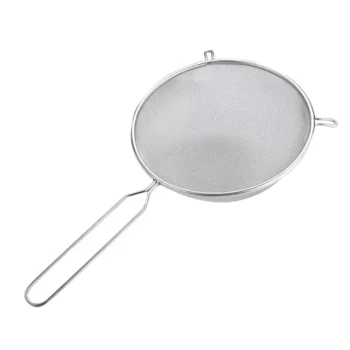
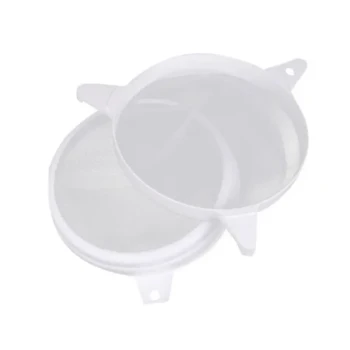
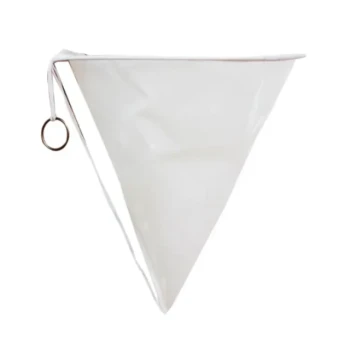
High-mesh fine filter cloth is the critical mechanical barrier required to transform raw, wild-harvested honey into a stable, consumable product. Unlike farmed honey extracted via centrifuge, wild sources like Apis dorsata often require crushing or squeezing the honeycomb, which forces high volumes of beeswax, soil, and organic debris directly into the liquid. Fine filtration is the mandatory step to physically strip these suspended solids, ensuring the honey achieves the necessary clarity and purity for safe consumption.
The extraction method used for wild honey introduces complex organic impurities, including larval proteins and soil, which can accelerate spoilage. High-mesh filtration is not merely an aesthetic choice; it is a preservation necessity that stabilizes the product by removing the agents of fermentation and rancidity.
The Unique Challenge of Wild Extraction
The Consequence of Manual Squeezing
Wild honeycombs, particularly from aggressive or migratory species like Apis dorsata, are frequently incompatible with standard centrifugal extractors.
Harvesters must often use squeezing equipment to extract the honey. This mechanical pressure inevitably mixes the honey with structural debris that would otherwise be left behind in a standard apiary extraction.
The Composition of Impurities
The squeezing process introduces a heavy load of suspended matter.
This "slurry" typically includes beeswax residue, soil particles, and bee remains. Without immediate intervention, these particles remain suspended, compromising the texture and visual appeal of the final product.
Biological Stabilization and Quality
Preventing Spoilage and Rancidity
The most critical technical reason for fine filtration is the removal of biological contaminants.
Squeezing wild combs often crushes bee larvae and eggs into the honey. If these larval proteins are left in the mixture, they will decompose, leading to rapid rancidity and distinct off-flavors that ruin the honey's sensory profile.
Mitigating Fermentation Risks
Wild honey is biologically active and prone to instability.
Impurities act as nucleation points and fuel for microbial activity. By removing these suspended solids, you significantly reduce the risk of impurities inducing fermentation during the storage period.
Ensuring Process Consistency
Filtration is a prerequisite for any subsequent processing.
It serves as a core pre-treatment step that intercepts large particulate matter. This ensures that downstream fine processing stages proceed smoothly without clogging machinery or contaminating the final bottling line.
Understanding the Trade-offs
Balancing Purity with Botanical Identity
While the goal is to remove debris, there is a limit to how fine the filtration should be.
The ideal filtration system—often a combination of industrial double-layer screens and laboratory-grade cloths—must remove wax and bee parts but maximize the retention of natural pollen grains.
The Importance of Pollen
Over-filtration can strip honey of its unique character.
Pollen is essential for identifying the botanical source of the honey. A properly selected high-mesh cloth cleans the honey of "dirt" while preserving the microscopic pollen required for authenticity testing and nutritional value.
Making the Right Choice for Your Goal
Select your filtration approach based on the specific balance of stability versus authenticity you require.
- If your primary focus is Shelf Stability: Prioritize a tighter mesh to ensure the absolute removal of all larval proteins and organic solids that cause rancidity.
- If your primary focus is Botanical Certification: Use a multi-stage filtration system that removes visible debris but is calibrated to allow microscopic pollen grains to pass through.
Effectively processing wild honey requires a filtration strategy that aggressively removes contamination while respecting the product's natural biological footprint.
Summary Table:
| Feature | Impact on Wild Honey Quality | Technical Benefit |
|---|---|---|
| Impurity Removal | Eliminates beeswax, soil, and organic debris | Ensures honey clarity and smooth texture |
| Biological Stability | Filters out larval proteins and bee remains | Prevents decomposition, off-flavors, and rancidity |
| Fermentation Control | Reduces microbial nucleation points | Minimizes risk of fermentation during storage |
| Pollen Retention | Calibrated mesh sizes preserve botanical identity | Maintains nutritional value and source authenticity |
| Process Efficiency | Pre-treats honey for downstream machinery | Prevents clogging in filling and bottling lines |
Elevate Your Honey Quality with HONESTBEE
Processing wild honey from species like Apis dorsata requires specialized equipment to handle heavy impurity loads. At HONESTBEE, we empower commercial apiaries and distributors with the high-performance tools needed to achieve market-ready purity without sacrificing botanical integrity.
From high-precision filtration cloths and honey-filling machines to large-scale hive-making hardware, we provide the full spectrum of professional beekeeping machinery and consumables. Whether you are scaling a wholesale operation or sourcing essential tools for regional distribution, we deliver the expertise and equipment your business demands.
Ready to optimize your honey production line? Contact HONESTBEE Today for a Professional Consultation
References
- Misbhauddin Khan, Muthuswamy Balasubramanyam. Amino acid characteristics of multifloral honey of indigenous bee apis dorsata f. and apis cerana indica from Udupi, Dakshina Kannada and Uttara Kannada districts of Karnataka. DOI: 10.24214/jcbps.a.13.1.11017
This article is also based on technical information from HonestBee Knowledge Base .
Related Products
- Nylon Honey Strainer Square Filter Cloth for Honey Filters
- Conical Nylon Honey Strainer Filter Bag for Beekeeping and Honey Filtration
- Professional Stainless Steel Honey Filter with Support Handle
- Stainless Steel Triangle Support Honey Strainer and Filters
- Professional Honey Filter with Tripod Support Stand
People Also Ask
- What is the significance of using professional filter cloths or sieves in honey processing? Ensure Purity and Quality
- What is the simple straining method for processing honey? A Cost-Effective Guide to Pure Extraction
- What cloth for straining honey? The Best Materials for Clean, High-Quality Honey
- What size mesh to strain honey? A Guide to the Standard Double-Sieve Method
- Why is specialized filter cloth preferred over the traditional squeezing method for wild honey? Achieve Higher Purity