The mechanical separation of propolis relies entirely on thermal manipulation. At ambient temperatures, propolis is naturally ductile and adhesive, which makes removing it from carrier meshes mechanically impossible. By subjecting the material to low-temperature pre-treatment, you force a phase transition that renders the propolis hard and brittle, allowing it to shatter and detach cleanly rather than adhering to the machinery.
Core Takeaway Cooling is the functional prerequisite for mechanical stripping; it temporarily alters the physical properties of propolis from a sticky adhesive to a brittle solid, ensuring clean separation from Ethylene-Vinyl Acetate (EVA) meshes without clogging equipment.
The Physics of Separation
To understand why cooling is non-negotiable, you must look at the physical interaction between the raw material and the collection technology.
Overcoming Natural Adhesion
In its raw state, propolis exhibits high viscosity. It acts like a glue.
If you attempt to strip it from a carrier mesh at room temperature, it will stretch and smear. This ductility prevents the clean "break" required for efficient collection.
Inducing Brittleness
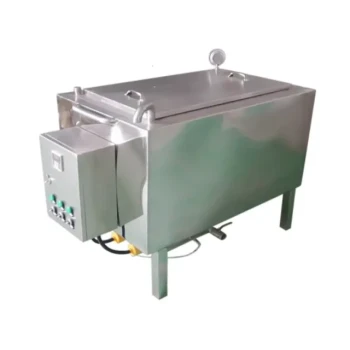
The industrial cooling equipment serves a specific purpose: embrittlement.
By lowering the temperature, you increase the material's rigidity. The goal is to transform the propolis from a viscoelastic resin into a hard solid that fractures under stress.
The Role of the Carrier Mesh
Propolis is collected on Ethylene-Vinyl Acetate (EVA) meshes.
For the propolis to release from the EVA material, the bond between the two must be broken mechanically. This is only possible when the propolis is brittle enough to flake off rather than stretch along with the mesh.
Operational Parameters
Precision in temperature and duration is critical for process consistency.
The Temperature Threshold
For the specific task of stripping propolis from meshes, extreme freezing is not always required.
Primary technical protocols indicate that maintaining the carrier mesh at +5 degrees Celsius is sufficient. This temperature effectively nullifies the sticky properties of the propolis without requiring deep-freeze energy expenditure.
Duration Requirements
Temperature alone is not enough; thermal equilibrium must be reached.
The standard requirement is a 60-minute duration at the target temperature. This ensures the cooling penetrates the entire mass of the material, preventing "soft spots" that could gum up the stripping machinery.
Understanding the Trade-offs
While low-temperature pre-treatment is essential, it introduces specific constraints to the production line that must be managed.
Throughput Bottlenecks
The 60-minute cooling requirement creates a fixed timeline for production.
You cannot speed up the mechanical stripping process faster than you can cool the meshes. This makes the capacity of your industrial cooling equipment the defining factor in your daily throughput.
Energy vs. Application
It is important to distinguish between separation and pulverization.
While +5°C is sufficient for stripping propolis from a mesh, other processes like grinding it into a fine powder may require significantly lower temperatures (e.g., -20°C) to prevent clogging. Over-cooling the mesh for simple separation may be an unnecessary energy expense.
Making the Right Choice for Your Goal
When configuring your propolis processing line, align your thermal management with your specific stage of production.
- If your primary focus is efficient mesh stripping: Target a stable temperature of +5°C for 60 minutes to ensure the propolis becomes brittle enough to shatter off the EVA mesh cleanly.
- If your primary focus is further processing (grinding): Be aware that while +5°C works for stripping, you may need to reduce temperatures further (to approx. -20°C) later in the line to pulverize the material effectively.
The success of mechanical separation is determined not by force, but by the precise thermal control of the material's physical state.
Summary Table:
| Process Parameter | Requirement | Objective |
|---|---|---|
| Target Temperature | +5°C (41°F) | Induce embrittlement and nullify adhesion |
| Treatment Duration | 60 Minutes | Achieve thermal equilibrium across the mass |
| Material State | Brittle / Rigid | Enable shattering and clean mechanical break |
| Mesh Compatibility | EVA (Ethylene-Vinyl Acetate) | Ensure the bond releases without mesh damage |
| Processing Stage | Pre-Separation | Prevent equipment clogging and gumming |
Maximize Your Apiary’s Efficiency with HONESTBEE
At HONESTBEE, we understand that the precision of your processing line defines your profitability. As a premier provider for commercial apiaries and global distributors, we offer a comprehensive wholesale range of professional beekeeping tools and advanced machinery—from honey-filling and hive-making machines to high-capacity processing equipment.
Whether you are looking to optimize your propolis extraction with industrial cooling solutions or stock up on essential industry consumables, our expert team is here to support your growth. Experience the value of professional-grade hardware and specialized support tailored to your business.
Contact Us Today to Optimize Your Production
References
- Roman Dvykaliuk. Testing of the collecting propolis device on the bee farms in different regions of Ukraine. DOI: 10.24263/2225-2924-2023-29-2-9
This article is also based on technical information from HonestBee Knowledge Base .
Related Products
- 8 Frame and 10 Frame Propolis Trap Collector Screen for Propolis Collection
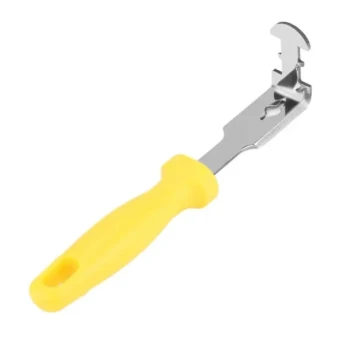
- Heavy Duty Stainless Steel Frame Cleaner with Plastic Handle
- Electric Commercial Beeswax Melter for Factory Use
- High Quality Honey Dehumidifier Dryer Thickening Machine for Beekeeping
- Professional Thermostatic Conical Honey Melter
People Also Ask
- Why is a specific wooden frame required when installing a propolis screen? Optimize Your Propolis Harvest Efficiency
- What are the advantages of using propolis collector screens? Elevate Your Harvest to Pharmaceutical Purity
- How does the mesh size of a propolis collection screen influence the efficiency of propolis harvesting? Optimize Yields!
- How do commercial-grade plastic screens compare to custom fine-mesh screens? Maximize Your Propolis Yield & ROI
- What are the technical advantages of using specialized propolis collection screens? Maximize Purity and Efficiency