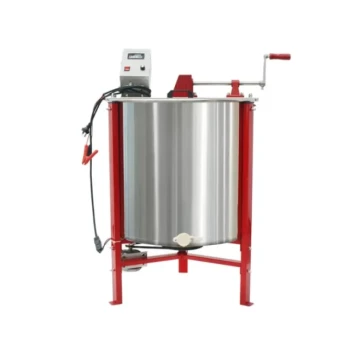
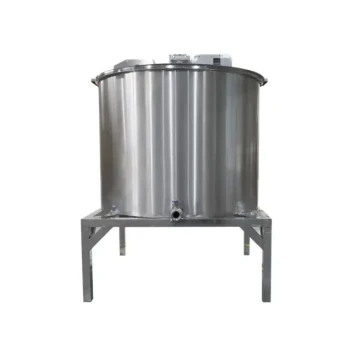
Multi-stage quality control is critical because honey can be compromised at several points—not just during filling. Commercial extraction and filling machinery must therefore support a documented control process that combines physical filtration, process monitoring, authenticity testing, hygienic handling, and final-product verification. This protects purity, regulatory compliance, consistency, and the commercial reputation of producers, distributors, and resellers.
The central principle: no single inspection or laboratory test can verify every aspect of honey quality. Effective operations place multiple controls at processing checkpoints, combining sugar-profile and chemical-marker testing with filtration, temperature control, accurate filling, and contamination prevention.
Why a Single Quality Check Is Not Enough
Adulteration Can Occur at Multiple Stages
Honey adulteration may occur during production, handling, blending, transport, or bulk storage. A product that passes one test at intake could still be affected by later mixing, contamination, or improper storage.
For this reason, authenticity verification should not be treated as a one-time approval. Testing at defined processing checkpoints creates traceability and helps identify where a deviation occurred.
Different Tests Detect Different Problems
Sugar-profile testing can help screen for abnormal sugar composition, while chemical-marker identification can provide additional evidence about honey authenticity and processing history. Neither approach should automatically be treated as a complete substitute for the other.
A multi-parameter workflow provides broader coverage than relying on a single indicator. It also gives commercial operators stronger evidence when responding to customer, regulatory, or certification requirements.
Machinery Does Not Replace Quality Assurance
Automated equipment improves repeatability, hygiene, and process control, but it cannot independently confirm that incoming honey is authentic. Machinery can process material consistently; it cannot correct adulteration that entered the line upstream.
The equipment and the quality system must therefore work together. Automation controls execution, while testing and inspection verify the material being processed.
Where Quality Control Should Be Applied
At Raw-Honey Intake
Incoming honey should be assessed before it enters extraction, filtration, blending, or filling operations. This is the first opportunity to identify abnormal composition, unsuitable material, or inconsistencies between supplier documentation and the physical product.
For distributors and wholesalers, intake controls also provide a defensible basis for supplier approval and batch acceptance. They reduce the risk of processing or packaging a questionable lot and discovering the problem only after delivery.
During Filtration and Extraction
Multi-stage filtration removes physical impurities such as beeswax microparticles, bee fragments, and other organic material. This improves clarity and sensory quality before the honey reaches decanting and bottling.
Filtration, however, addresses physical cleanliness, not authenticity. A visually clear product may still require sugar-profile and chemical-marker screening.
During Heating and Transfer
Honey is a high-viscosity, heat-sensitive product. Filling systems with controlled flow and temperature management help reduce crystallization and avoid unnecessary physical or chemical changes during transfer and packaging.
Temperature control is also important for limiting abnormal increases in hydroxymethylfurfural (HMF). Monitoring should therefore include both equipment settings and relevant product checks where required by the quality program.
During Filling and Sealing
Precision metering pumps and anti-drip systems help deliver consistent quantities while reducing product loss and mess around the filling area. Accurate dosing supports net-weight compliance and improves uniformity across finished units.
A closed or controlled filling environment also reduces exposure to air and external impurities. This is particularly important for products marketed as premium or organic, although the exact hygiene and certification requirements depend on the applicable standard.
After Packaging
Final checks should confirm that the packaged product meets specifications for quantity, appearance, closure integrity, labeling, and required quality indicators. Finished-goods verification is the final barrier before products enter distribution.
This stage is especially valuable when multiple batches, suppliers, or product grades are handled on the same line. It helps ensure that the contents and presentation match the product specification promised to customers.
How Multi-Stage Control Protects Commercial Value
It Supports Regulatory Compliance
Honey sold across regions may be subject to requirements involving authenticity, composition, net quantity, hygiene, labeling, and certification. A documented, multi-stage process produces stronger evidence of control than an informal final inspection.
Accurate filling is part of this compliance picture. Consistent dosing helps each unit meet declared net-weight requirements and reduces disputes caused by underfilled containers.
It Protects Product Consistency
Customers expect repeated purchases to have stable appearance, texture, taste, and pack quantity. Filtration, temperature management, controlled filling, and batch testing work together to maintain that consistency.
This matters to resellers because inconsistent product generates complaints, returns, and additional customer-service costs. Consistency is not only a technical benefit; it is a commercial asset.
It Reduces Waste and Rework
Early detection prevents unsuitable material from moving through expensive downstream operations. Finding a problem before filling is generally more efficient than discovering it after labeling, case packing, and shipment.
High-precision machinery further reduces avoidable waste through accurate metering and anti-drip operation. The greatest benefit is achieved when equipment controls and quality checks are integrated rather than managed separately.
It Strengthens Supply-Chain Confidence
Distributors and B2B buyers need confidence that a supplier can provide repeatable quality, responsive support, and reliable order fulfillment. Multi-stage records make it easier to answer technical questions and demonstrate how each batch was controlled.
This is particularly valuable when sourcing from multiple suppliers or serving premium, organic, dietary-supplement, or cross-regional markets. A strong control system makes the supplier relationship more transparent and easier to scale.
Understanding the Trade-offs
More Controls Require More Time and Cost
Laboratory testing, sampling, equipment checks, filtration, and recordkeeping add operational cost. They may also introduce hold times before a batch can be released.
These costs should be evaluated against the consequences of a failed batch, customer rejection, product recall, or damaged market reputation. The objective is not to test without purpose, but to place the right controls at the points where risk is highest.
Automation Is Not a Substitute for Validation
A filling machine may deliver highly repeatable volumes, but its accuracy depends on calibration, suitable settings, cleaning, and maintenance. Viscosity and crystallization behavior can also affect performance if the process is not properly controlled.
Operators should validate filling accuracy and monitor the machine during production. “Automated” should mean more consistent and controllable—not free from inspection.
Visual Appearance Cannot Prove Authenticity
Clear, attractive honey may still require analytical verification. Filtration improves physical presentation, but it does not establish that the sugar composition or chemical profile is genuine.
This is a common mistake in commercial operations: treating appearance as proof of purity. Appearance, cleanliness, authenticity, and quantity are separate quality dimensions.
Excessive Heat Can Create New Quality Problems
Heating may be used to improve flow, but uncontrolled or unnecessary heat can affect product characteristics and contribute to undesirable chemical changes. Temperature control should be designed around the honey’s viscosity and the required production rate.
The goal is not simply to make honey flow faster. It is to achieve reliable processing while preserving the product’s intended quality and stability.
How to Apply This to Your Operation
A practical quality system should connect supplier controls, machinery settings, laboratory checks, sanitation procedures, and batch-release decisions.
- If your primary focus is authenticity: Use checkpoint-based sampling that combines sugar-profile testing with chemical-marker identification rather than relying on a single test.
- If your primary focus is hygiene and purity: Combine multi-stage filtration with controlled or closed filling, documented cleaning, and prevention of secondary contamination.
- If your primary focus is regulatory compliance: Verify net weight, product specifications, labeling, and required quality indicators before batch release.
- If your primary focus is premium or organic markets: Maintain stronger traceability, controlled handling, packaging integrity, and evidence that the process protects product purity.
- If your primary focus is operational efficiency: Use precision metering, anti-drip filling, temperature control, and early-stage screening to reduce waste, rework, and shipment disruption.
- If your primary focus is distribution reliability: Choose machinery and suppliers that provide technical support, responsive service, spare-parts access, and documentation suitable for repeat commercial orders.
Multi-stage quality control turns honey machinery from a production tool into part of a reliable, traceable, and commercially defensible quality system.
Summary Table:
| Stage | Control Measure | Purpose |
|---|---|---|
| Raw Honey Intake | Sugar profile, chemical markers | Verify authenticity, approve suppliers |
| Filtration/Extraction | Multi-stage filtration | Remove impurities, improve clarity |
| Heating/Transfer | Temperature control | Prevent HMF increase, maintain quality |
| Filling/Sealing | Precision dosing, anti-drip | Ensure weight accuracy, reduce waste |
| Post-Packaging | Finished-goods checks | Verify labels, closure, specs |
Partner with HONESTBEE for a complete range of extraction and filling machinery designed to support multi-stage quality control. Our one-stop sourcing, rapid response, and full-spectrum portfolio give distributors and beekeepers the tools to maintain authenticity, comply with regulations, and deliver consistent quality. Contact us today to explore how we can strengthen your supply chain.
Related Products
- Precision Durable Efficient HONESTBEE Rotary Honey Filling Machine
- Automatic Honey Filling and Filtering Machine for Beekeeping Bottle Filling
- Economy Small Honey Filling Machine Honey Bottle Filler Packaging Machine
- Fully Automatic Honey Filling Packaging Machine for Processing Line
- Commercial Rotary Honey Filling Machine for Production
People Also Ask
- How do high-precision honey filling machines ensure quality? Optimize Your Commercial Production with HONESTBEE
- How do honey filling machines work? Achieve Precision & Speed for Your Apiary
- What is a key feature of the new generation of the honey filling machine? The Advanced Electronic Control Unit
- What are the common types of bottling machines used for honey? Choosing the Right Solution for Your Apiary
- How do honey filling and processing machines aid native bee product conservation? Boost Value with HONESTBEE Technology