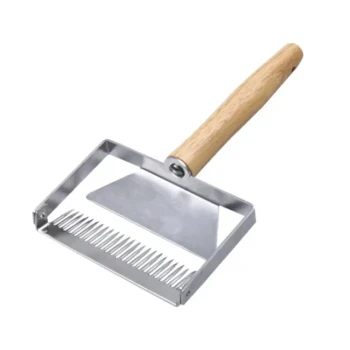
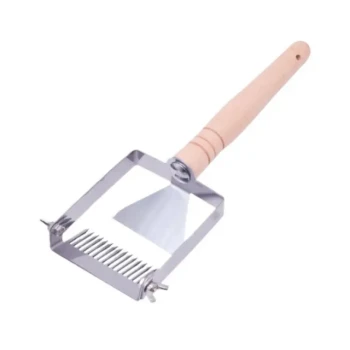
Precise harvest timing protects both honey volume and commercial margin. Delaying extraction by only one week after nectar flow ends can reduce total honey yield by approximately 13%, with losses reaching 19% in colonies with large brood areas, because bees consume stored honey to feed brood. Modern commercial harvesting equipment enables fast, high-capacity extraction at flow cessation, helping apiaries secure mature honey before it is consumed or production conditions change.
The critical window is the transition from nectar flow to post-flow consumption. Apiaries that combine accurate harvest timing with sufficient supers, efficient extraction equipment, and reliable measurement can capture more saleable honey while maintaining colony momentum for future flows.
Why Late Nectar Flow Creates a Narrow Harvest Window
Bees Begin Using Stored Honey Quickly
When external nectar sources decline, colonies rely more heavily on stored honey to nourish brood and maintain activity. This makes honey left in the hive after flow cessation vulnerable to rapid consumption.
The primary reference indicates that a one-week delay can reduce overall yield by about 13%, or as much as 19% in colonies with large brood areas. The larger the brood demand, the greater the potential loss.
Strong Colonies Can Fill Supers in Days
During peak nectar flow, a strong colony may fill a honey super within only a few days. Harvest planning therefore cannot rely on a fixed calendar alone.
Apiaries must monitor nectar flow, colony strength, storage capacity, capping rate, and honey moisture. These indicators help determine when honey is sufficiently mature and when extraction should occur.
Timing Affects More Than Quantity
Harvesting too late risks losing stored honey to brood consumption and changing environmental conditions. Harvesting too early can create quality problems if honey has not reached suitable maturity or moisture levels.
The correct objective is timely extraction of mature honey, not simply the earliest possible removal from the hive.
How Modern Equipment Maximizes Commercial Yield
High-Capacity Extraction Reduces Processing Delays
Commercial extraction equipment uses centrifugal force to separate honey from the comb efficiently. This allows large numbers of frames to be processed quickly without damaging the honeycomb structure.
Higher throughput is especially valuable when multiple colonies reach harvest readiness at the same time. The apiary can remove honey during the narrow late-flow window instead of allowing full supers to remain in the hive while processing catches up.
Integrated Harvesting Protects Product Quality
A practical harvesting system may include uncapping equipment, extractors, filtration or handling equipment, filling machinery, and accurate weighing or metering tools. Used together, these components reduce bottlenecks between hive removal and finished-product preparation.
Efficient handling also helps minimize honey losses and preserve the purity, biological activity, and commercial value of the extracted product.
Accurate Metering Improves Management Decisions
Precise weight data gives commercial operators an objective measure of actual harvest output. Comparing harvested weight with predicted production helps identify the effects of colony condition, weather, forage availability, and management practices.
This information supports better decisions about future harvest dates, colony placement, equipment capacity, and labor planning. It also helps verify whether a management strategy is producing an acceptable economic return.
Equipment Keeps the Harvest Cycle Moving
Rapid extraction prevents harvested frames from becoming a processing backlog. This matters because timely removal of full honey supers can restore storage space and reduce congestion inside the hive.
When bees have adequate room, they can continue collecting nectar more efficiently. Apiaries therefore use equipment not only to process honey, but also to protect production momentum during the remainder of the flow.
The Hive-Side Requirements for Capturing Maximum Yield
Provide Storage Before the Flow Peaks
Equipment cannot recover yield that was lost because bees ran out of storage space. Commercial apiaries should maintain a ready supply of standardized supers, hive bodies, and prepared frames with wax or plastic foundations.
As the colony fills a 10-frame hive, additional supers provide room for nectar storage. Expanding capacity in advance helps prevent congestion, reduced foraging efficiency, and unwanted swarming.
Maintain Strong, Productive Colonies
Weak colonies may not exploit a major nectar flow as effectively as strong colonies. Supplementary management practices include uniting weak colonies with stronger ones and maintaining young, prolific queens.
These measures help align colony population with the available nectar resource, increasing the amount of nectar that can be collected and stored during the peak period.
Keep Honey Supers Harvest-Ready
Raised frames or frames with properly embedded foundation give bees immediate usable space for brood rearing and nectar storage. Queen excluders can help keep the queen from laying in honey supers, making those frames cleaner and more efficient to process.
These preparations improve the performance of the harvesting system because more of the available super capacity contains extractable honey rather than brood or poorly prepared comb.
Understanding the Trade-offs
Faster Is Not Always Better
Extracting before honey reaches suitable maturity can compromise final quality, particularly if moisture remains too high. Harvest decisions should therefore combine flow timing with moisture readings and capping rates.
The most productive schedule is fast after the honey is ready, rather than indiscriminately fast.
More Capacity Requires Better Coordination
High-capacity equipment can process large harvests, but the rest of the operation must support that throughput. Labor, transport, frame handling, storage, filtration, filling, and order fulfillment can all become bottlenecks.
For distributors, wholesalers, and B2B resellers, this means equipment selection should be evaluated as part of a complete operating system rather than as an isolated extractor purchase.
Yield Data Must Be Interpreted in Context
Harvest weight is an essential performance metric, but it does not explain every production difference by itself. Weather, forage conditions, colony health, brood area, queen quality, and hive placement can all affect output.
Using measured results alongside production models and field observations produces more reliable conclusions than comparing raw weights alone.
Delayed Harvest Has an Opportunity Cost
A delayed extraction may reduce the amount of honey available for sale while also occupying supers and processing capacity. In a commercial operation, that can affect subsequent harvests, inventory planning, and delivery commitments.
Reliable equipment availability and responsive supply support are therefore operational advantages, particularly when harvest windows are brief and demand is concentrated.
Making the Right Choice for Your Goal
The best solution depends on whether the priority is maximizing biological yield, maintaining product quality, or scaling commercial throughput.
- If your primary focus is maximum honey yield: Schedule extraction at or immediately after nectar-flow cessation, while ensuring adequate supers and sufficient processing capacity to prevent bees from consuming stored honey.
- If your primary focus is honey quality: Use moisture and capping-rate checks to confirm maturity, then process efficiently with equipment that minimizes contamination, comb damage, and handling losses.
- If your primary focus is commercial scale: Build a coordinated equipment and supply plan covering extraction, handling, metering, filling, frames, supers, and rapid replenishment from a dependable B2B source.
- If your primary focus is operational improvement: Record precise harvest weights and compare actual results with predicted output to refine colony management and future harvesting schedules.
Precise timing combined with properly scaled equipment turns a short late-flow window into more captured honey, better operational control, and stronger commercial returns.
Summary Table:
| Factor | Impact of Delayed Harvest | Mitigation with Modern Equipment |
|---|---|---|
| Honey yield | Up to 19% loss with large brood areas | Fast extraction at flow cessation |
| Storage capacity | Congestion reduces foraging | Efficient processing frees supers |
| Honey quality | Maturity and moisture issues | Controlled extraction and handling |
| Operational efficiency | Backlogs and bottlenecks | High-capacity, integrated systems |
Ready to maximize your honey yield and streamline extraction? HONESTBEE offers a comprehensive range of commercial beekeeping equipment, from extractors and uncappers to filling lines and metering systems. We support distributors and beekeepers with one-stop sourcing, rapid delivery, and expert advice. Contact us today to optimize your harvest and boost profitability. Contact us now!
Related Products
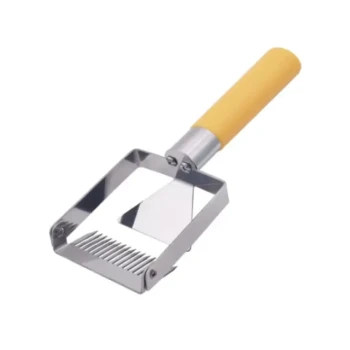
- All-Stainless Steel Pivoting Honey Uncapping Fork for Beekeeping
- Stainless Steel Pivoting Honey Uncapping Fork with Plastic Handle
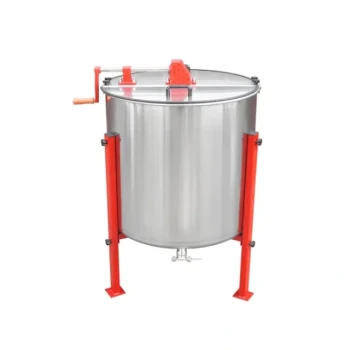
- 6 Frame Manual Stainless Steel Honey Extractor Beekeeping Equipment
- Electric 8 Frame Honey Spinner Extractor Equipment for Beekeeping
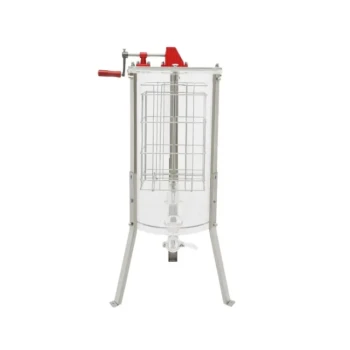
- HONESTBEE 2 Frame Manual Acrylic Honey Extractor Beekeeping Equipment
People Also Ask
- How does a honey uncapping fork supplement the use of an uncapping knife? Boost Your Honey Yield and Extraction Efficiency
- What is the design purpose of honey uncapping forks and honey uncapping tanks? Maximize Your Harvest Efficiency
- What are the essential tools for uncapping honey frames? Choose the Right Tool for Your Apiary
- What tools are used for honey uncapping? Choose the Right Knife for Your Harvest
- What are the tools used for uncapping honeycombs? Expert Guide to Tools & Functions for Maximum Yield