Precision morphometric equipment is necessary because visual identification alone cannot reliably distinguish closely related honeybee subspecies. In queen rearing and selective breeding, microscopic analysis of wing venation, cubital index, and proboscis length provides objective evidence that breeding stock conforms to a target subspecies standard. This helps breeders avoid uncontrolled hybridization, preserve predictable traits, and supply queens with more consistent temperament, productivity, and local adaptation.
Morphometric equipment turns subspecies identification from a visual judgment into a measurable quality-control process. It should be used alongside controlled mating, accurate records, and careful specimen handling to protect genetic integrity throughout the breeding program.
Why Visual Identification Is Not Enough
Closely related subspecies can look nearly identical
Honeybee subspecies such as Apis mellifera caucasica and Apis mellifera carnica may share similar coloration, body form, and general appearance. These similarities make visual inspection insufficient for confirming purity, particularly when colonies have a history of migration or uncontrolled mating.
Morphometric analysis adds measurable characteristics that are less dependent on observer experience. This gives breeders a more defensible basis for accepting or rejecting potential breeding stock.
Hybridization can change commercially important traits
Random crossing between distinct subspecies can produce colonies with unpredictable combinations of behavior and performance. The resulting hybrids may show excessive defensiveness, persistent following behavior, reduced management suitability, or inconsistent honey production.
The issue is not that every hybrid is undesirable. The key problem is loss of predictability: breeders can no longer reliably forecast temperament, foraging performance, overwintering behavior, or adaptation to local conditions.
How Morphometric Measurement Protects Subspecies Purity
Wing analysis provides objective identification data
Microscopic wing analysis allows breeders to examine the arrangement and proportions of wing veins. The cubital index, calculated from wing venation, is one of the important measurements used to compare bees with recognized subspecies standards.
Because the result is numerical rather than purely visual, it can be recorded, compared across colonies, and reviewed during selection decisions.
Proboscis length supports functional and taxonomic evaluation
Proboscis length is another measurable feature used in morphometric assessment. It can help characterize a bee population and evaluate whether it aligns with the expected profile of a target subspecies.
This measurement also has practical relevance because mouthpart structure can influence access to floral resources. It should therefore be interpreted as part of a broader dataset rather than used as the sole proof of genetic identity.
Standardized methods improve repeatability
High-magnification equipment used with established approaches, such as the Alpatov measurement method, helps standardize how features are measured. Consistent magnification, positioning, calibration, and recording reduce variation between operators and between breeding cycles.
For commercial operations, repeatability is essential. A measurement system is valuable not only when it produces a result, but when different technicians can reach comparable conclusions.
Why Measurement Matters in Queen Rearing
Breeding stock determines future colony performance
A queen transmits half of the colony’s nuclear genetic material, while her mating history also affects the genetic composition of her worker offspring. Selecting queens from morphometrically verified colonies helps breeders begin with a more reliable genetic foundation.
This does not guarantee a specific outcome by itself. It must be combined with controlled mating, pedigree records, and evaluation of colony performance.
Natural mating makes pedigree control difficult
Honeybee queens mate in flight with multiple drones, often from an uncertain population. This creates a major challenge for maintaining clear lineage records and preventing unwanted genetic mixing.
Morphometric testing helps identify whether the source colonies are consistent with the desired subspecies before queens or drones are used in a breeding program. Controlled mating stations, geographic isolation, and artificial insemination can then provide additional safeguards.
Selection becomes more consistent at commercial scale
Small breeding operations may rely heavily on experience and visual assessment. At larger scale, these methods become difficult to apply consistently across many colonies, technicians, and shipments.
A morphometric workflow creates a documented screening step for breeder colonies, queen mother colonies, and commercially distributed queens. This supports more consistent quality claims and reduces the risk of distributing queens with unclear origin.
Morphometrics Are Part of a Larger Breeding System
Specimen handling affects measurement accuracy
A wing must remain structurally intact for reliable cubital index analysis. Tears, folds, compression, or deformation during collection and preparation can alter the apparent position of veins and produce misleading results.
High-precision sampling tools, fixation materials, and careful preparation procedures are therefore not minor laboratory accessories. They are necessary to protect the validity of the measurement itself.
Behavioral and production data must be recorded too
Morphometric conformity does not directly prove that a colony is gentle, productive, disease resistant, or well adapted to a particular climate. These traits require field observation and performance records.
Breeders should combine morphometric data with measurements or observations of temperament, honey production, brood patterns, egg-laying rhythm, foraging behavior, overwintering performance, and relevant disease resistance traits such as Varroa mite tolerance.
Equipment should support the complete workflow
A practical breeding program may require more than a microscope or wing-measuring device. Depending on its objectives, the equipment portfolio can include:
- Microscopic morphometric systems for wing venation and proboscis measurements.
- Sampling and fixation tools for undamaged specimen preparation.
- Grafting needles and queen-rearing tools for standardized larval transfer.
- Artificial insemination instruments for controlled genetic combinations.
- Mating hives and controlled mating stations for reducing unwanted hybridization.
- Environmental control systems for consistent queen-rearing conditions.
- Data recording systems for linking measurements to colonies, queens, and field results.
For distributors and B2B resellers, this creates a practical one-stop sourcing opportunity: customers often need an integrated workflow rather than a single instrument.
Understanding the Trade-offs
Morphometric results are not absolute genetic proof
Morphometric traits can vary within a subspecies and may overlap between populations. Environmental conditions, colony history, sample size, and measurement technique can also affect interpretation.
Morphometrics should therefore be treated as a strong screening and verification tool, not as an infallible substitute for genetic analysis or documented breeding history.
Measurement requires training and quality control
Poor calibration, inconsistent wing orientation, inaccurate scaling, or damaged specimens can undermine the result. Operators need clear procedures for collection, preparation, measurement, and data recording.
A lower-cost instrument may be adequate for occasional screening, but commercial programs generally benefit from better optical quality, stable measurement platforms, repeatable imaging, and technical support.
Controlled mating adds cost and operational complexity
Geographic isolation, mating stations, and artificial insemination improve genetic control but require additional facilities, labor, and expertise. They do not eliminate the need for morphometric verification.
The appropriate investment depends on the program’s goal. A conservation project, a regional queen producer, and a large commercial breeding operation will have different requirements for precision, throughput, and documentation.
Overreliance on one index can mislead selection
The cubital index is useful, but it should not be used as the only selection criterion. A breeding decision based on a single measurement may overlook important behavioral, reproductive, health, or productivity traits.
The most reliable programs use multiple morphometric features together with colony performance and mating records.
Making the Right Choice for Your Goal
The equipment strategy should match the level of genetic control and commercial assurance your operation requires.
- If your primary focus is subspecies identification: Choose a calibrated microscopic morphometric system capable of measuring wing venation, cubital index, and proboscis length with repeatable documentation.
- If your primary focus is commercial queen production: Combine morphometric screening with queen-rearing tools, mating hives, controlled mating facilities, and standardized production records.
- If your primary focus is breeding accuracy: Add artificial insemination equipment, controlled-environment systems, and robust lineage tracking to reduce uncertainty from natural mating.
- If your primary focus is product quality and distribution: Source an integrated equipment portfolio from suppliers that can provide rapid response, technical expertise, dependable consumables, and efficient order fulfillment.
- If your primary focus is long-term local adaptation: Use morphometrics alongside records of temperament, honey yield, foraging efficiency, disease resistance, and performance under local climatic conditions.
Reliable morphometric measurement gives breeders the evidence needed to preserve genetic identity, make better selection decisions, and deliver more predictable honeybee queens.
Summary Table:
| Challenge | Solution | Benefit |
|---|---|---|
| Visual ID unreliable | Morphometric wing analysis | Objective subspecies verification |
| Uncontrolled hybridization | Cubital index measurement | Preserves predictable traits |
| Inconsistent breeding stock | Proboscis length evaluation | Functional and taxonomic validation |
| Natural mating uncertainty | Standardized measurement methods | Repeatable, documented screening |
| Commercial scale inconsistency | Integrated workflow equipment | Consistent quality assurance |
Ensure the purity and performance of your breeding program with precision morphometric tools. HONESTBEE offers a comprehensive range of high-quality beekeeping equipment, including microscopes, measurement software, and queen-rearing supplies. As a trusted wholesale partner for commercial apiaries and distributors, we provide full-spectrum solutions, rapid response, and reliable supply. Contact us today to discuss your needs and elevate your breeding standards — get in touch.
Related Products
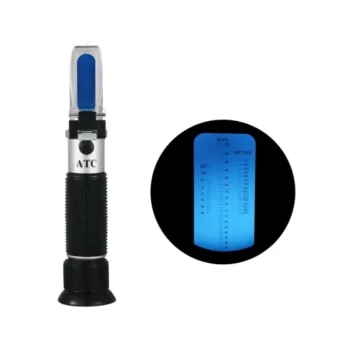
- Digital Honey Refractometer for Precision Measurement of Optimal Honey Quality
- Precision Honey Refractometer Instrument for Quality Assessment
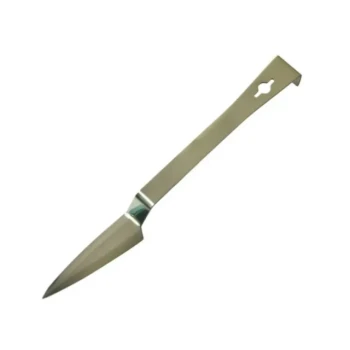
- HONESTBEE Professional Long Handled Hive Tool with Precision Cutting Blade
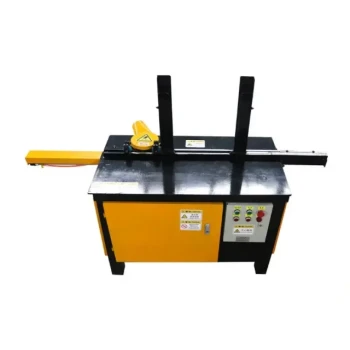
- HONESTBEE Bee Frame Grooving Machine | Precision Slotting for Bee Frame Making
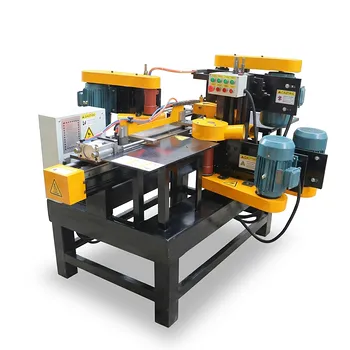
- Professional Bee Frame Machine for Side Bar Shaping
People Also Ask
- What role do high-precision refractometers play in determining the maturity and quality of honey? Ensure Honey Purity.
- Do the color and viscosity of honey affect its refractometer reading? Mastering Moisture Measurement Accuracy
- How is the reading taken from a honey refractometer? A Guide to Accurate Moisture Measurement
- What is a honey refractometer? The Essential Tool for Perfect Honey Quality
- How do refractometers ensure technical precision when measuring honey moisture? Secure Quality and Prevent Fermentation