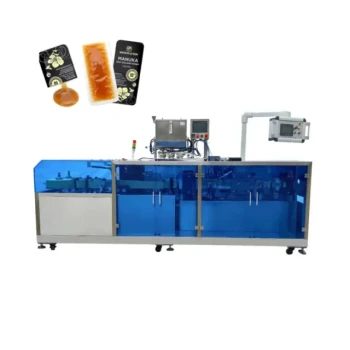
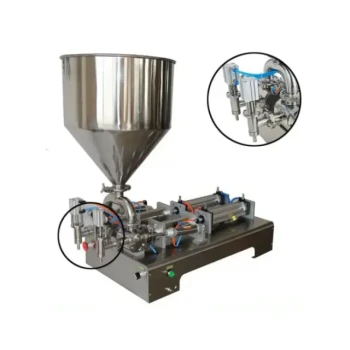
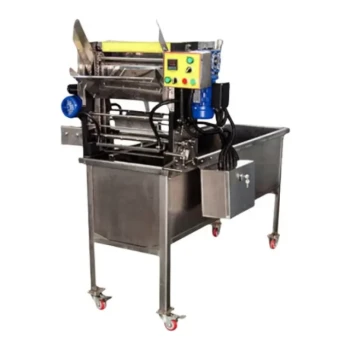
Regular deep cleaning of honey processing machinery is the critical firewall against cross-contamination. In commercial operations, honey from multiple apiaries passes through shared filling and processing lines. If this equipment is not subjected to industrial-grade disinfection, residual honey remaining in the system acts as a medium for pathogen spores, facilitating the spread of disease from one batch to another and potentially back to the hives.
Core Takeaway While automated machinery reduces human contact, it creates a central point where pathogens from diverse colonies can aggregate. Without rigorous deep cleaning to remove spore-laden residues, your processing line becomes a vector for disease, risking a cycle of infection that threatens the health of your entire apiary network.
The Mechanics of Cross-Contamination
The Risks of Centralized Processing
Commercial beekeeping often involves processing honey from various apiaries through a single facility. This aggregation creates a bottleneck where biological material from diverse environments mixes. If one source is compromised, the shared machinery becomes a distribution hub for that pathogen.
Residual Honey as a Pathogen Reservoir
Even high-efficiency automated systems retain microscopic amounts of product in valves, filters, and lines. According to the primary technical data, this residual honey can harbor dormant pathogen spores. Without deep cleaning, these spores survive in the machinery, waiting to contaminate the next batch of honey passing through the line.
The Cycle of Re-infection
The danger is not limited to the final packaged product; it threatens the biological stability of the apiaries. Contaminated honey acts as a source of infection that can cycle back into the apiaries if used for feeding or if equipment is moved between sites. Industrial-grade cleaning processes are the only reliable method to break this chain of transmission.
Automation and Hygiene Standards
Reducing Secondary Contamination
Automated machinery provides a sterile packaging environment that minimizes human contact. By reducing manual handling, these machines significantly lower the risk of "secondary contamination" from external sources. However, this mechanical isolation does not protect against "primary contamination" inherent in the honey itself, such as spores brought in from the hive.
Conserving Active Nutrients
Advanced machinery uses precise temperature controls to maintain honey viscosity without overheating. This preserves active nutrients, enzymes, and amino acids, which are vital for a high-quality product. Deep cleaning protocols must be compatible with these sensitive components to ensure the machinery remains calibrated and effective.
Understanding the Trade-offs
The Cost of Downtime vs. Biosecurity
Deep cleaning requires shutting down processing lines, which temporarily reduces throughput. This operational downtime is often viewed as a loss of productivity. However, this "cost" is negligible compared to the financial and biological devastation of a widespread disease outbreak across your colonies.
The Illusion of "Self-Cleaning"
Modern machines are designed for efficiency and flow, but they are not immune to bio-film or spore buildup. Operators often mistake the visual cleanliness of stainless steel for biological sterility. Reliable disease prevention requires active, industrial-grade disinfection, not just a reliance on the machine's flow efficiency.
Making the Right Choice for Your Goal
To protect your operation, you must align your cleaning protocols with your specific biosecurity and production targets.
- If your primary focus is Apiary Disease Prevention: Implement industrial-grade sterilization cycles between batches from different apiaries to destroy pathogen spores and prevent cross-contamination.
- If your primary focus is Product Marketability: Ensure a sterile filling environment to prevent fermentation and secondary contamination, preserving the brand premium and nutrient profile.
Treating your processing machinery as a critical biosecurity control point safeguards both the quality of your product and the longevity of your colonies.
Summary Table:
| Aspect of Maintenance | Impact on Biosecurity | Impact on Product Quality |
|---|---|---|
| Deep Disinfection | Eradicates dormant spores; breaks the cycle of re-infection. | Prevents fermentation and ensures a sterile, premium product. |
| Automated Cleaning | Reduces manual contact and human-source secondary contamination. | Maintains machinery calibration and protects active enzymes/nutrients. |
| Residue Removal | Eliminates pathogen reservoirs in valves, filters, and lines. | Ensures batch purity and prevents flavor/quality degradation. |
| Batch Separation | Prevents cross-contamination between different apiary sources. | Guarantees consistent market standards and brand integrity. |
Secure Your Apiary’s Health with HONESTBEE
Don't let your processing line become a disease vector. HONESTBEE provides commercial apiaries and distributors with the professional tools and industrial-grade machinery needed to maintain the highest biosecurity standards. From advanced honey-filling machines designed for easy sterilization to comprehensive beekeeping equipment and consumables, we supply the hardware that protects your investment.
Maximize your productivity and safeguard your colonies today. Contact us for wholesale inquiries and expert machinery solutions!
References
- Barbara Locke, Eva Forsgren. An integrated management strategy to prevent outbreaks and eliminate infection pressure of American foulbrood disease in a commercial beekeeping operation. DOI: 10.1016/j.prevetmed.2019.03.023
This article is also based on technical information from HonestBee Knowledge Base .
Related Products
- Fully Automatic Honey Filling Packaging Machine for Processing Line
- Automatic Honey Filling and Filtering Machine for Beekeeping Bottle Filling
- Precision Durable Efficient HONESTBEE Rotary Honey Filling Machine
- Precision Automated Packaging Turntable Honey Spoon Filling Sealing Packing Machine
- Automatic Single-Dose Snap & Squeeze Honey Sachets Packing Machine
People Also Ask
- Why are fully automatic honey filling and packaging lines essential? Boost Your Honey's Market Value and Quality
- What is a fully-automatic honey filler? Streamline Your Production with High-Precision Automation
- How do automated honey filling and packaging machines affect profitability? Boost Margins with HONESTBEE Technology
- How do automated honey filling and packaging machines contribute to the market value of honey products? Maximize Your ROI
- How do industrial-grade automated honey filling and packaging machines mitigate the risk of physical contamination?