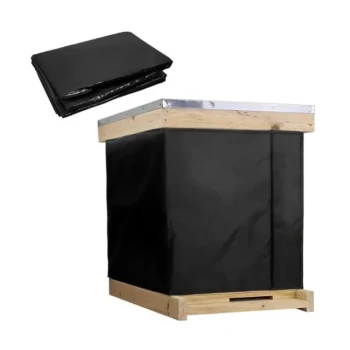
Specialized overwintering infrastructure is the primary defense against the lethal volatility of temperate winters. By placing colonies in a controlled environment featuring constant temperature, stable humidity, and total darkness, beekeepers shield hives from extreme fluctuations and wind. This protection drastically reduces the metabolic energy bees must expend to generate heat, significantly lowering food consumption and preserving the colony's physical endurance for spring.
By stabilizing the external environment, overwintering rooms remove random weather events as a cause of mortality. This shifts the survival equation from luck to a manageable metric of colony health and resource efficiency.
The Physiology of Winter Survival
Reducing Metabolic Stress
In outdoor environments, honeybees must consume vast amounts of stored food to generate heat through muscle vibrations. Specialized rooms drastically reduce this physical exertion.
By maintaining a constant, mild temperature, the bees remain in a calmer state. This conservation of energy prevents the premature exhaustion of the bees' physiological reserves.
Minimizing Resource Depletion
The direct result of reduced physical exertion is lower food consumption. Colonies housed in overwintering rooms do not burn through honey stores as aggressively as those exposed to outdoor extremes.
This ensures that critical food resources remain available for the colony's expansion in the early spring, rather than being exhausted simply to survive the winter freeze.
Creating a Standardized Environment
Precision Climate Control
These facilities do not just offer shelter; they provide active regulation. Temperature is typically held at a precise 4±1°C.
This specific range is optimal for colony clustering without inducing freezing or unwanted activity. Humidity is also strictly controlled to prevent the buildup of moisture, which is often more lethal to bees than the cold itself.
The Role of Total Darkness
Light stimulates bee activity, which is detrimental during the winter dormancy period. Overwintering rooms provide total darkness.
This lack of visual stimulation keeps the colony in a necessary state of quiescence. It prevents individual bees from leaving the cluster or attempting to forage in fatal conditions.
Implications for Breeding and Genetics
Removing Environmental Noise
For breeders, outdoor overwintering introduces too many variables, such as varying wind exposure or sun orientation. Indoor facilities standardize the environment for every colony.
This creates a level playing field. When environmental conditions are identical for all hives, breeders can be certain that survival is due to the bees' inherent biology, not their location in the apiary.
Evaluating True Cold Hardiness
With non-genetic environmental factors minimized, breeders can objectively evaluate the inherent cold hardiness of specific lineages.
This allows for the accurate selection of genetic traits that contribute to survival. It transforms overwintering from a gamble into a data-driven process for improving bee stock.
Understanding the Operational Trade-offs
The Requirement for Precision
The effectiveness of this infrastructure relies entirely on the stability of the control systems. Fluctuations negate the benefits.
If the temperature deviates significantly from the 4±1°C target, or if light leaks occur, the colony's dormancy can be broken. The system requires rigorous monitoring to ensure the environment remains static.
Dependency on Infrastructure
Moving bees indoors disconnects them from natural cues. The beekeeper assumes total responsibility for the colony's "weather."
This means the survival of the apiary is no longer dependent on nature, but on the mechanical reliability of the climate control systems.
Making the Right Choice for Your Goal
Whether you are a commercial honey producer or a genetic breeder, the utility of an overwintering room depends on your specific objectives.
- If your primary focus is Resource Management: Utilize overwintering rooms to minimize honey consumption, ensuring colonies emerge in spring with higher energy reserves and lower physical stress.
- If your primary focus is Genetic Selection: Use the standardized environment to filter out environmental noise, allowing you to identify and propagate lineages with superior inherent survival capabilities.
Ultimately, specialized overwintering rooms transform winter from a season of uncertainty into a controlled phase of resource conservation and genetic evaluation.
Summary Table:
| Feature | Optimal Range/Condition | Impact on Colony Survival |
|---|---|---|
| Temperature | 4°C ± 1°C | Prevents freezing and reduces metabolic energy expenditure. |
| Light Level | Total Darkness | Maintains quiescence and prevents bees from leaving the cluster. |
| Humidity | Strictly Regulated | Prevents lethal moisture buildup and mold growth. |
| Environment | Standardized/Static | Eliminates environmental 'noise' for accurate genetic selection. |
Maximize Your Colony Survival with HONESTBEE
Transitioning from uncertainty to precision is the key to thriving commercial apiaries. HONESTBEE empowers commercial beekeepers and distributors by providing the comprehensive tools and machinery required to manage successful overwintering and production cycles.
Whether you need specialized hive-making machinery, high-efficiency honey-filling systems, or premium beekeeping consumables, we deliver the industrial-grade solutions your business demands. Partner with us to enhance your resource management and genetic selection processes.
Ready to scale your apiary's efficiency?
References
- Mariia Fedorіak, V. Jos. RESULTS OF HONEY BEE COLONY LOSSES MONITORING IN UKRAINE IN THE CONDITIONS OF WAR AFTER THE WINTER OF 2022-2023. DOI: 10.31861/biosystems2024.01.084
This article is also based on technical information from HonestBee Knowledge Base .
Related Products
- HONESTBEE AC Powered Wire Embedder with Alligator Clips
- Professional Insulated Winter Hive Wrap for Beekeeping
- Wholesales Dadant Size Wooden Bee Hives for Beekeeping
- Solid Bottom Board Australian Pine Wood Langstroth Bottom Board for Wholesale
- Langstroth Solid Bottom Board for Beekeeping
People Also Ask
- How can combs be further strengthened? Embed Wires for Durable, High-Yield Hives
- What is an embedder in beekeeping? Essential Tool for Strengthening Wax Foundation & Hive Frames
- Why must strict sanitary and health prevention protocols be implemented for honeybee transport? Maximize Colony Survival
- What are the primary indicators of healthy honeybee colonies? Optimize Your Commercial Apiary for Peak Productivity
- Why must honeybee samples be stored in high-concentration ethanol and low temperatures? Ensure Genetic & Physical Integrity