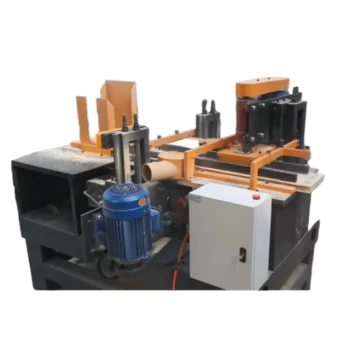
Standardized beehive manufacturing machinery is essential for large-scale operations because it guarantees the strict dimensional consistency required for modular management and mass logistics. In industrial contexts, high-precision processing creates stable structures that withstand the rigors of relocation while minimizing the physical stress on bee colonies, ensuring they remain healthy enough to meet the demands of intensive agricultural pollination.
The success of professional beekeeping relies less on individual craftsmanship and more on systemic uniformity. By utilizing specialized manufacturing machinery, operators establish a precise hardware foundation that enables rapid scalability, mechanized maintenance, and a stable biological environment for the hive.
The Engineering Behind Efficient Management
Achieving Absolute Interchangeability
The primary value of standardized machinery is the creation of uniform components that fit together perfectly across thousands of units. In a large-scale apiary, the ability to move a frame, super, or lid from one hive to another without friction is vital for modular management.
Manufacturing machinery ensures that every joint and measurement meets exact specifications. This consistency allows for rapid colony turnover and simplifies daily maintenance, as beekeepers do not have to struggle with mismatched parts during critical inspection windows.
Supporting Mobile Pollination Services
Industrial beekeeping often involves moving colonies vast distances to service agricultural pollination contracts. High-precision mechanical processing creates physically stable structures that can endure the vibrations and shocks of transport.
If hives are poorly constructed with irregular tolerances, they risk structural failure during transit. Standardized machinery produces rugged equipment that protects the colony during relocation, directly supporting the revenue streams derived from pollination services.
Facilitating Mechanized Workflows
As operations scale, manual handling becomes inefficient. Standardized hives produced by automated assembly processes are compatible with other industrial equipment, such as uncapping machines and pallet loaders.
This hardware compatibility serves as the technical foundation for mechanizing the apiary. It allows for the rapid expansion of projects by lowering the labor burden per hive, significantly reducing unit production and operational costs.
The Biological Advantage
Minimizing Structural Stress
A often-overlooked factor in hive manufacturing is the impact of construction quality on the bees themselves. Poor hive quality induces stress responses in honeybees, distracting them from foraging and brood rearing.
Precision machinery minimizes gaps and structural instabilities. By providing a secure physical environment, the machinery helps mitigate unnecessary biological stress, allowing the colony to focus energy on production and survival.
Stabilizing the Internal Microclimate
Beyond physical security, machine-made hives offer superior thermal insulation and moisture resistance due to tighter construction tolerances. A stable breeding environment is critical for maintaining population density.
When the internal climate is consistent, bees consume fewer resources regulating temperature. This optimization aligns colony growth cycles with major floral blooms, maximizing the yield of honey and beeswax by ensuring the population peaks at the right time.
Understanding the Operational Trade-offs
The Rigidity of Standardization
While standardization streamlines operations, it creates a dependency on specific dimensional systems. Once an operation commits to a specific machine-tooled standard (e.g., specific frame dimensions), introducing non-standard equipment becomes logistically difficult. You trade flexibility for efficiency.
Capital Investment vs. Unit Cost
Implementing industrial-grade manufacturing machinery requires significant upfront capital compared to manual construction methods. However, this is a calculated trade-off: the initial expense is offset by the lowered unit production costs and the extended durability of the equipment over time.
Making the Right Choice for Your Operation
For professional beekeepers, the decision to invest in standardized machinery is about aligning hardware with long-term business goals.
- If your primary focus is Rapid Scalability: Prioritize machinery that offers automated assembly processes to lower unit costs and ensure hardware availability for fast expansion.
- If your primary focus is Pollination Services: Focus on machinery capable of producing high-precision, rugged joints to ensure hive integrity during frequent transport.
- If your primary focus is Yield Optimization: Select equipment that ensures tight tolerances for thermal insulation, directly supporting the colony's ability to maintain an optimal microclimate.
Standardization is not just about convenience; it is the physical foundation that transforms beekeeping from a craft into a scalable, industrial science.
Summary Table:
| Key Benefit | Technical Advantage | Operational Impact |
|---|---|---|
| Dimensional Consistency | High-precision processing | Full component interchangeability and modular management. |
| Structural Durability | Rugged, machine-tooled joints | Hive integrity during long-distance mobile pollination transport. |
| Workflow Automation | Hardware compatibility | Seamless integration with pallet loaders and uncapping machines. |
| Biological Stability | Tight construction tolerances | Optimized thermal insulation and reduced stress for healthier colonies. |
| Economic Efficiency | Mass production capability | Lowered unit production costs and faster scalability for large apiaries. |
Elevate Your Apiary’s Performance with HONESTBEE
To compete in the industrial beekeeping market, precision and scalability are non-negotiable. HONESTBEE caters specifically to commercial apiaries and distributors with a comprehensive wholesale offering designed to streamline your operations.
From high-precision hive-making and honey-filling machines to a full spectrum of beekeeping tools, equipment, and essential industry consumables, we provide the hardware foundation needed for success. Whether you are looking to modernize your production line or supply high-quality equipment to the global market, our portfolio covers everything from heavy machinery to honey-themed cultural merchandise.
Ready to scale your operation? Contact HONESTBEE today to discuss our wholesale solutions and technical support!
References
- Sylvie Guillerme. A systemic approach of the vulnerability in the post-industrial society: the case of the bee colonies collapse disorder. DOI: 10.14428/aes.v3i1.57423
This article is also based on technical information from HonestBee Knowledge Base .
Related Products
- High-Efficiency Pneumatic Bee Hive Making Machine for Rapid Box Assembly
- Beehive Handle and Frame Rest Cutting Machine: Your Specialized Hive Machine
- HONESTBEE Top Bar & Bottom Bar Forming Machine | Bee Frame Machine
- Mini Desktop Bee Hive Frame Forming Making Machine
- Beehive Machine Double End Saw for Precision Hive Component Manufacturing
People Also Ask
- How does the introduction of professional beehive-making machinery benefit sustainable beekeeping? Scale Your Apiary
- Why is specialized beehive-making machinery critical for low-defense breeding? Enhance Selection with Precision Tools
- How does the introduction of specialized beehive making machinery contribute to increasing the scale of regional beekeeping industries?
- What is the importance of specialized beehive making machinery in a circular bio-economy? Build Local Sustainability
- Why is specialized beehive-making machinery essential? Scale Your Apiary with Precision Industrial Standards