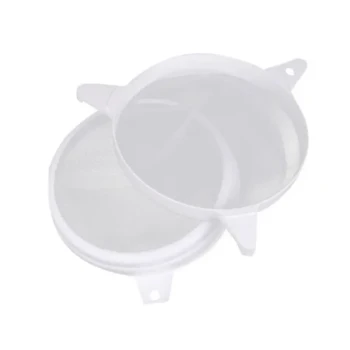
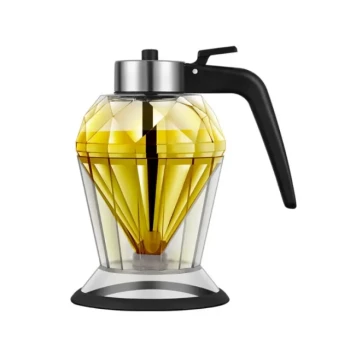
Temperature is the single most critical variable controlling the physical workability of honey. During the filtering and bottling stages, maintaining a warmer environment is standard industry practice because it directly reduces the honey's viscosity. By keeping the honey warm, producers ensure it flows freely enough to pass through fine filters without clogging and fills containers efficiently.
Core Takeaway While temperature management is essential for reducing viscosity to facilitate mechanical processing, it requires a delicate balance; you must apply enough heat to ensure efficient flow and filtration, but avoid excessive temperatures that degrade the honey's nutrients and flavor profile.
The Mechanics of Flow and Filtration
Viscosity Reduction
The primary operational challenge with honey is its natural thickness, or viscosity. Warmth significantly lowers this viscosity, transforming thick, slow-moving honey into a fluid that behaves more like a thin syrup. Without this thermal input, the honey resists movement, making mechanical transfer difficult.
Enabling Fine Filtration
Infused honey often requires straining to remove particulates or infusion ingredients. Cool honey will clog fine mesh filters almost immediately. By warming the product, it can pass through tighter filtration media, ensuring a clean, clear final product without stalling the production line.
Bottling Efficiency
Whether you are using gravity-fed systems or mechanical pumps, the fill rate is dictated by flow. Warmer honey fills bottles faster and settles more evenly. This reduces air pockets and speeds up the overall packaging timeline.
Impact on Composition and Structure
Moisture Content Regulation
Processing temperature has a measurable effect on the final moisture content of the honey. Higher processing temperatures generally result in lower moisture levels. For example, honey processed at 80°C retains significantly less moisture than honey processed at 60°C, which can influence shelf stability and texture.
Crystal Management
Temperature during bottling sets the stage for future stability. Bottling at cold temperatures accelerates crystallization. Avoiding the 57°F (14°C) range during bottling is crucial, as this specific temperature window is optimal for rapid crystal formation, which is usually undesirable for liquid honey products.
Understanding the Trade-offs
The Risk of Thermal Degradation
While heat aids processing, it is a destructive force if uncontrolled. Exposing honey to high temperatures degrades its nutritional value and alters its flavor profile. Excessive heat destroys heat-sensitive enzymes and antioxidants, effectively turning a raw product into a simple sugar syrup.
Handling Specialized Products
Not all honey products benefit from warmth. If you are producing cut-comb honey, warmth is detrimental. In this specific context, cooler, firmer conditions are required to prevent the wax from becoming soft and the comb from collapsing during handling.
The "Goldilocks" Window
Extreme cold makes honey unworkable, while extreme heat damages it. Room temperature (50°F - 70°F) is generally best for storage, but processing often requires the upper end of this range or slightly higher. The goal is to apply the minimum amount of heat necessary to achieve flow, then return the honey to ambient temperature quickly.
Making the Right Choice for Your Goal
To optimize your filtering and bottling process, align your temperature strategy with your specific product requirements:
- If your primary focus is Production Speed: Utilize a warm room or warming tank to lower viscosity, ensuring rapid filtration and consistent bottle fills.
- If your primary focus is Nutrient Preservation: Keep processing temperatures as low as possible while still allowing flow to prevent the degradation of enzymes and flavor compounds.
- If your primary focus is Cut-Comb Honey: Maintain a cooler environment to keep the wax structure firm and prevent the comb from becoming "floppy" and unmanageable.
Mastering temperature allows you to manipulate honey's physical state without compromising its chemical integrity.
Summary Table:
| Temperature Range | Effect on Processing | Impact on Quality |
|---|---|---|
| Cold (< 14°C/57°F) | High viscosity; clogs filters | Accelerates crystallization |
| Room (18°C - 21°C) | Slow flow; manual handling only | Best for long-term storage |
| Warm (35°C - 45°C) | Low viscosity; fast filtration | Maintains enzyme & flavor integrity |
| High (> 50°C) | Rapid flow and bottling | Risk of thermal degradation & nutrient loss |
Scale Your Honey Production with HONESTBEE
Optimizing temperature is just one part of a successful apiary operation. At HONESTBEE, we empower commercial apiaries and distributors by providing the industrial-grade machinery and equipment needed to master the bottling process.
From precision honey-filling machines that handle varying viscosities to specialized hive-making hardware and essential industry consumables, our comprehensive wholesale offering is designed to increase your efficiency and protect your product's quality. Whether you are scaling up your production line or sourcing high-quality beekeeping tools, we deliver the solutions you need to succeed in the competitive honey market.
Ready to upgrade your facility? Contact HONESTBEE today to explore our wholesale equipment solutions!
Related Products
- Automatic Honey Filling and Filtering Machine for Beekeeping Bottle Filling
- Manual Honey Filling Machine Bottling Machine for Honey
- Double Nozzle Small Honey Filling Machine Honey Sachet Packing Packaging Equipment
- Electric Double Wall Honey Filtering Machine Purifier Equipment for Honey Processing Plant
- Honey Gate Valve with Ergonomic Ball Handle Plastic Bee Honey Tap for Beekeeping Bottling and Honey Extractor Equipment
People Also Ask
- What process advantages do professional honey filtering and filling machines provide? Optimize Your Organic Honey Output
- How do honey filling and filtering machines increase product value? Turn Raw Honey into Premium Export-Grade Goods
- How do honey filtration and filling machinery contribute to industrialization? Scale Your Commercial Honey Production
- What specific issues do industrial filtration and automated filling machinery address? Ensure Honey Quality & Compliance
- How does the use of professional honey filtration and filling machinery facilitate international honey exports?