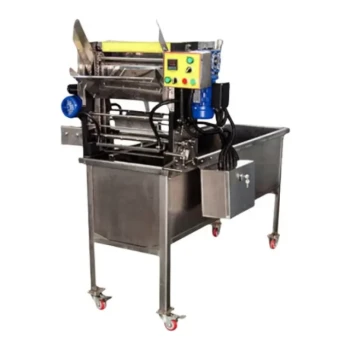
The introduction of semi-automatic honey filling and sealing machinery is the critical step that transitions a beekeeping operation from raw material production to a viable commercial business. It is necessary because it allows producers to transform bulk honey into retail-ready consumer goods that meet strict regulatory standards for hygiene, volume accuracy, and packaging security.
The core value of this technology lies in its ability to simultaneously enforce quality control and increase profit margins. By automating precision and sealing, you convert a variable agricultural product into a standardized, high-value brand asset.
Elevating Market Value and Competitiveness
Transforming Bulk to Retail
The primary necessity for this machinery is the ability to shift from selling low-margin bulk honey to high-margin terminal consumer goods. According to industrial standards, mechanized packaging allows you to create finished products that are attractive to the retail market, significantly increasing the added value of every kilogram produced.
Achieving Standardization
Manual extraction often introduces inconsistencies in volume and appearance. Semi-automatic machinery enables standardized packaging, which is essential for building a recognizable brand. This consistency directly enhances market attractiveness and competitiveness against larger producers.
Ensuring Quality and Regulatory Compliance
Meeting Strict Safety Standards
Compliance is not optional in the food industry. Industrial-grade machinery provides reliable leak-proof sealing, which is critical for meeting retail regulatory requirements and ensuring food safety. This protects your business from liability and ensures your product is accepted by retailers.
Precision Volume Control
To sell commercially, you must guarantee that the volume stated on the label matches the content of the jar. Automated filling offers precise volume control, eliminating the variance of manual filling. This prevents revenue loss from overfilling and regulatory fines from underfilling.
Preserving Nutritional Integrity
Advanced processing machinery often includes temperature-controlled filtration and constant-pressure filling. This technology prevents the loss of active nutrients often destroyed during manual handling. It ensures the final product retains the quality of the raw biological output, maintaining its value.
Operational Efficiency and Risk Mitigation
Handling Production Surges
For operations involved in pollination (such as Clover seed production), honey volume can surge dramatically as a byproduct. High-efficiency machinery allows apiaries to process these massive quantities effectively, converting the biological byproduct of pollination into immediate economic value.
Reducing Contamination Risks
Manual extraction and filling are prone to introducing impurities into the honey. Industrial-grade machinery significantly reduces these impurities. This results in a cleaner, higher-quality final product that commands a better price.
Stabilizing Revenue Streams
Investing in processing capability allows for the creation of diversified, high-value-added products like refined honey, beeswax, and propolis. This diversity provides a stable revenue stream that acts as a buffer against agricultural risks, such as crop failures caused by irregular rainfall.
Understanding the Trade-offs
Process Rigidity vs. Flexibility
While manual filling allows for on-the-fly adjustments for odd-shaped jars or tiny batches, semi-automatic machinery thrives on consistency. Implementing this technology requires a commitment to standardized container sizes and lids to maintain efficiency, potentially limiting your ability to use "artistic" or irregular packaging without equipment adjustment.
Maintenance and Complexity
Moving to industrial-grade machinery introduces a layer of technical complexity. While you reduce manual labor costs, you must account for the maintenance of filtration systems and pressure controls. Neglecting the upkeep of these precision components can lead to downtime that cancels out the speed advantages.
Making the Right Choice for Your Goal
To maximize the return on your investment, align the equipment choice with your specific business objective:
- If your primary focus is Retail Compliance: Prioritize machinery that guarantees leak-proof sealing and precise volume control to meet regulatory safety standards.
- If your primary focus is Product Quality: Select equipment with constant-pressure filling and temperature control to preserve active nutrients and minimize impurities.
- If your primary focus is Revenue Stability: Use the machinery to diversify into high-value byproducts (like propolis and beeswax) to mitigate the risks of seasonal crop variances.
Ultimately, semi-automatic machinery is not just a tool for speed; it is the infrastructure required to turn a harvest into a brand.
Summary Table:
| Key Feature | Business Necessity | Impact on Profitability |
|---|---|---|
| Precise Volume Control | Eliminates overfilling waste and ensures regulatory compliance. | Prevents revenue loss and legal fines. |
| Leak-Proof Sealing | Meets strict food safety standards for retail distribution. | Reduces product returns and enhances brand trust. |
| Bulk-to-Retail Conversion | Transforms raw honey into standardized, consumer-ready goods. | Significantly increases price per unit/kg. |
| Nutrient Preservation | Uses temperature-controlled filling to keep honey's active enzymes intact. | Justifies premium pricing for high-quality honey. |
| Operational Scaling | Manages production surges during peak pollination seasons. | Stabilizes cash flow and reduces labor overhead. |
Ready to Transform Your Apiary into a Leading Retail Brand?
At HONESTBEE, we understand that transitioning from raw production to a commercial business requires the right infrastructure. We specialize in helping commercial apiaries and distributors bridge this gap with high-performance honey-filling and sealing machinery.
Why partner with HONESTBEE?
- Comprehensive Wholesale Offering: From hive-making machinery to precision honey-filling systems.
- Industry Expertise: We provide the full spectrum of beekeeping tools and essential consumables designed for scale.
- Value-Added Growth: Our equipment ensures your products meet global safety standards while preserving the nutritional integrity of your honey.
Take the next step toward operational excellence. Contact our expert team today to find the perfect machinery solution for your business.
References
- I Ketut Gede Intan Kurniawan, Ni Wayan Sucindra Dewi. Kinerja dan Keberlanjutan Kelompok Tani Hutan (KTH) Lebah Madu di Kabupaten Tabanan, Provinsi Bali. DOI: 10.47701/sintech.v5i2.4993
This article is also based on technical information from HonestBee Knowledge Base .
Related Products
- Semi Automatic Small Honey Bottle Filling Machine Honey Filler
- Precision Durable Efficient HONESTBEE Rotary Honey Filling Machine
- Precision Automated Packaging Turntable Honey Spoon Filling Sealing Packing Machine
- Automatic Honey Filling and Filtering Machine for Beekeeping Bottle Filling
- Automatic Single-Dose Snap & Squeeze Honey Sachets Packing Machine
People Also Ask
- What is a semi-automatic honey filler? Scale Your Honey Production with Precision and Efficiency
- What types of filling mechanisms are used in honey filling machines? Find the Best Tech for Your Viscosity
- How does high-precision honey filling machinery help improve product competitiveness in modern apiary upgrades?
- What does the honey packaging process in a factory typically involve? A Step-by-Step Guide to Quality Honey Production
- What are the key features to consider in a honey filling machine? Optimize Your Production with the Right Equipment