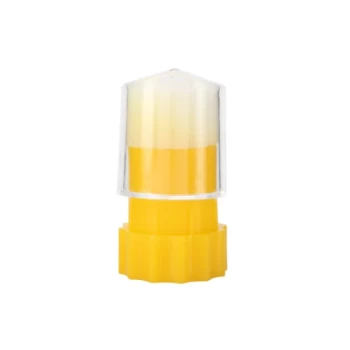
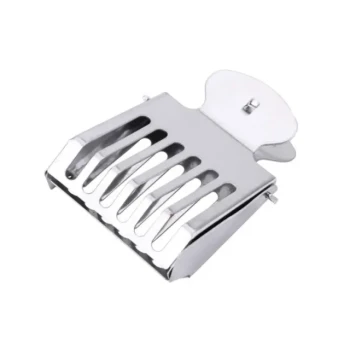
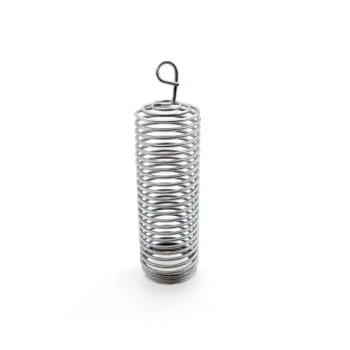
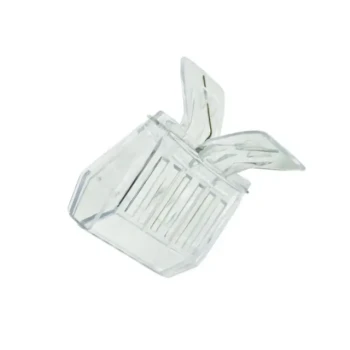
The physical marking of a queen bee is the fundamental mechanism for establishing identity continuity. It serves as the only reliable way to distinguish the original laying queen from newly emerged virgin or mated queens within the same hive. Without this visible identifier, an observer cannot definitively confirm whether the queen currently heading the colony is the original matriarch or a recent replacement.
Marking the queen transforms colony observation from a guessing game into a precise science. It provides the definitive proof required to distinguish between generations, ensuring that any conclusions drawn regarding natural swarming or supersedure are factually accurate.
Establishing Identity Continuity
Distinguishing Between Generations
In the dense population of a hive, a new queen can look remarkably similar to her predecessor.
Physical marking removes ambiguity by assigning a visual "ID card" to the specific bee.
This allows for immediate differentiation between the original queen and any daughters that may have emerged.
Validating Presence vs. Replacement
A colony is a dynamic environment where queens are occasionally replaced.
If you find a queen in the hive, marking is the only way to know if she is the same queen you saw last month.
This continuity is the baseline requirement for any serious tracking of colony lifecycles.
Deciphering Biological Processes
Accurate Swarming Analysis
Natural swarming is a complex event where the old queen typically leaves with a portion of the workers.
If the queen is unmarked, an observer finding a queen in the hive after a swarm might assume the original never left.
Marking verifies the departure, proving that the queen remaining in the hive is a new successor, not the original.
Identifying Supersedure
Supersedure is the process where the colony replaces a failing queen without swarming.
This can happen quietly and quickly.
Marking allows you to pinpoint exactly when the "turnover" occurred, providing critical data on the longevity and health of the specific queen.
Ensuring Data Integrity
The Necessity of Causal Inference
To understand why a colony is behaving a certain way, you must know who is leading it.
Reliable causal inference—linking a cause (e.g., a failing queen) to an effect (e.g., replacement)—is impossible if the subject's identity is uncertain.
Marking prevents false correlations by ensuring you are tracking the biological history of a single individual.
Eliminating Observation Errors
Visual confirmation reduces the margin for human error during inspections.
It ensures that observation data remains consistent over time.
This rigor is essential for distinguishing between complex biological triggers and random variations in hive behavior.
The Risks of Unmarked Observations
The Illusion of Stability
An unmarked queen can be replaced by a daughter that has mated and begun laying without the beekeeper noticing.
This creates a false sense of continuity, leading the observer to believe the colony is stable when it has actually undergone a major transition.
Compromised Decision Making
Management decisions often rely on the known age or genetics of a queen.
If you cannot verify identity, you may attribute the vigor of a young queen to an old one, or the failure of an old queen to a new one.
This lack of clarity leads to poor management choices regarding breeding or requeening.
Making the Right Choice for Your Goal
The decision to mark a queen should be driven by the level of precision you require in your observations.
- If your primary focus is rigorous scientific data: Marking is mandatory to validate identity continuity and ensure accurate causal inference regarding colony events.
- If your primary focus is general hive management: Marking is highly recommended to accurately track queen age and identify when natural supersedure has occurred.
By physically marking the queen, you convert the hive from an opaque system into a transparent, trackable entity.
Summary Table:
| Key Metric | Importance of Marking | Impact on Management |
|---|---|---|
| Identity Continuity | Distinguishes original queen from successors | Prevents false assumptions of hive stability |
| Biological Events | Verifies swarming vs. supersedure | Allows for precise timing of colony turnover |
| Data Integrity | Eliminates observation errors | Ensures accurate causal inference for health trends |
| Decision Making | Confirms queen age and genetics | Facilitates informed requeening and breeding choices |
Maximize Your Apiary Productivity with HONESTBEE
Successful commercial beekeeping relies on precision and the right tools. At HONESTBEE, we empower commercial apiaries and distributors by supplying a comprehensive range of professional-grade beekeeping tools and industrial machinery.
Whether you need specialized hardware like hive-making and honey-filling machines to scale your operations, or essential industry consumables to maintain colony health, we provide the wholesale solutions your business demands. From technical equipment to honey-themed cultural merchandise, our portfolio is designed to enhance your efficiency and market reach.
Ready to upgrade your equipment? Contact us today to discover how our wholesale offerings can drive your apiary's growth!
References
- Norman E. Gary, Roger A. Morse. The Events Following Queen Cell Construction in Honeybee Colonies. DOI: 10.1080/0005772x.2011.11417391
This article is also based on technical information from HonestBee Knowledge Base .
Related Products
- Plastic Long Marker Device for Catching and Marking Bees Queen Bee Marking Tube and Cage
- Queen Bee Marking Tube Cage Bottle Catcher Holder with Clear Plastic Plunger Marker
- Queen Bee Marking Pen UNI Medium Point for Queen and Bee Marking
- Queen Bee Marking Pen POSCA Queen Marking Pens for Beekeeping Bee Markers
- One Hand Yellow Queen Marking Catcher Tube Cage Beekeeper Tool Accessory for Queen Bee
People Also Ask
- Where on the queen bee's body should the mark be applied? Master the Art of Safe Queen Identification
- What are the primary objectives for marking a queen bee? Master Hive Management and Data Tracking
- How do you capture and immobilize a bee for marking? Master Safe Queen Handling for Your Apiary
- What are the different methods for applying a mark to a queen bee? Master Safe and Effective Queen Marking Techniques
- What equipment is necessary for a beekeeper to mark a queen bee? Essential Tools for Safe Queen Identification