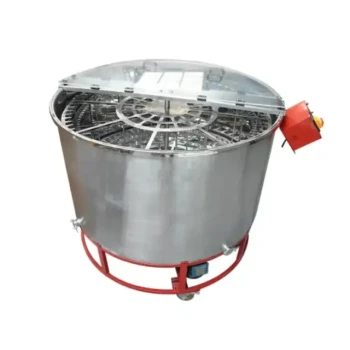
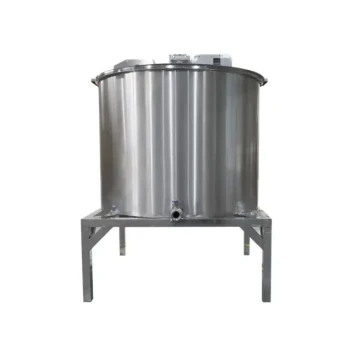
The sterilization of industrial honey extraction and bottling machinery is the defining factor in maintaining food safety compliance and product purity. Under the Hazard Analysis and Critical Control Points (HACCP) framework, this machinery is classified as a "critical risk node." Thorough sterilization is required to prevent the introduction of external impurities, microorganisms, and residues, ensuring the honey remains safe and pure from the apiary to the final bottle.
The Core Takeaway Industrial machinery acts as the primary interface between raw product and consumer packaging; without rigorous sterilization, it becomes a vector for contamination. Implementing strict hygiene protocols is the only way to mitigate biological risks and preserve the honey’s physical integrity within a professional HACCP system.
Managing Critical Risk Nodes
The machinery used in honey processing does not merely move product; it interacts with it at a microscopic level. Understanding the risks at these touchpoints is essential for modern production.
The Role of HACCP
In professional honey processing, hazard analysis identifies specific points where safety can be compromised. Extraction and bottling equipment are flagged as critical risk nodes.
Failure to control these nodes negates the quality of the harvest. Sterilization is the mechanism used to neutralize these risks before production begins.
Eliminating Biological Contamination
Raw honey is naturally resistant to many bacteria, but it is not immune to external microorganisms introduced during processing.
Unsterilized surfaces can harbor yeasts or bacteria that thrive in residue. Thorough cleaning ensures that the biological footprint of the machinery does not transfer to the fresh batch.
Preventing Residue Accumulation
Machinery can retain traces of previous harvests, cleaning agents, or maintenance lubricants.
Sterilization removes these insoluble impurities and chemical residues. This ensures that the final product contains only honey, meeting strict purity standards.
Preserving Product Integrity
Beyond safety, sterilization protects the commercial value of the honey. It preserves the physical and sensory qualities that define high-value products.
Mitigating Secondary Contamination
"Secondary contamination" refers to pollutants introduced after the honey leaves the hive.
Manual handling and prolonged exposure to air are common culprits, but dirty machinery is equally dangerous. Automated filling processes rely on sterile pathways to transfer honey from tanks to retail packaging without degrading its quality.
Maintaining Sensory Quality
Honey is prized for its specific floral aromas and physicochemical properties.
Contaminants from unwashed machinery can alter the flavor profile or cloud the visual clarity of the honey. A sterile environment ensures the consumer experiences the honey exactly as the bees produced it.
Understanding the Trade-offs
While sterilization is non-negotiable for safety, the methods used involve operational trade-offs that must be managed.
Chemical Residue Risks
Using aggressive chemical sterilizers can backfire if not rinsed or managed correctly. The chemicals themselves can become a contaminant, violating the very purity standards you are trying to uphold.
Operational Downtime
Proper sterilization requires time and halts production. There is often a tension between maximizing throughput (high-efficiency extraction) and pausing for necessary hygiene protocols. Prioritizing speed over sterilization invites immediate safety violations.
Making the Right Choice for Your Goal
Your approach to sterilization should align with both regulatory requirements and your market positioning.
- If your primary focus is Regulatory Compliance: Prioritize the HACCP identification of critical risk nodes to ensure your sterilization logs meet all food safety audits.
- If your primary focus is Premium Market Positioning: Focus on sterilization as a tool to prevent secondary contamination, preserving the delicate floral aromas and clarity that command higher prices.
Treat your machinery not just as production tools, but as the hygienic barrier that safeguards your brand's reputation.
Summary Table:
| Aspect | Importance of Sterilization | Impact on Honey Quality |
|---|---|---|
| HACCP Compliance | Identifies machinery as a "critical risk node" | Ensures legal & food safety standards are met |
| Biological Control | Eliminates yeasts and external microorganisms | Prevents fermentation and spoilage |
| Purity Assurance | Removes chemical residues and insoluble impurities | Maintains 100% pure product integrity |
| Sensory Preservation | Prevents cross-harvest flavor/aroma contamination | Guarantees authentic floral taste and clarity |
Elevate Your Honey Production Standards with HONESTBEE
Maintaining a sterile and efficient production line is the backbone of a successful commercial apiary. HONESTBEE specializes in supporting commercial beekeeping operations and distributors with high-performance, easy-to-sterilize honey-making machinery and filling equipment designed to meet strict HACCP standards.
From automated industrial honey-filling machines to professional-grade hardware and essential consumables, we provide the tools you need to minimize risk and maximize purity. Let us help you safeguard your brand's reputation with equipment that bridges the gap between the apiary and the premium retail market.
Ready to upgrade your facility? Contact HONESTBEE Today to explore our wholesale machinery and equipment solutions!
References
- Mathew P Odekunle, Olusola John Adeniran. The effectiveness and oversight of quality in the harvesting and processing of honey. DOI: 10.33545/26180723.2023.v6.i2a.448
This article is also based on technical information from HonestBee Knowledge Base .
Related Products
- HONESTBEE 72 Frame Industrial Electric Honey Extractor for Beekeeping
- Precision Durable Efficient HONESTBEE Rotary Honey Filling Machine
- Manual Honey Filling Machine Bottling Machine for Honey
- Automatic Honey Filling and Filtering Machine for Beekeeping Bottle Filling
- Fully Automatic Honey Filling Packaging Machine for Processing Line
People Also Ask
- What is the importance of balancing honeycomb frames within a honey extractor? Ensure Stability and Protect Machinery
- How is honey separated from the frames after they are uncapped? Efficient Extraction Methods for High Yields
- What are the main benefits of using a honey extractor? Maximize Yields and Protect Your Honeycomb
- What are the recommended methods for removing honey from the honeycomb? Top Extraction Techniques for Maximum Efficiency
- How do manual honey extractors compare to electric honey extractors? Choosing the Right Tool for Your Apiary Growth