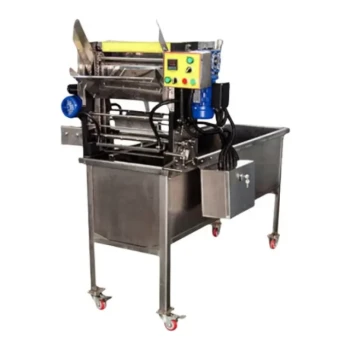
Automated honey filling machines serve as the fundamental bridge between raw production and viable commercial distribution. They are essential because they replace variable manual processes with precise dosage control and high-speed sealing capabilities. This automation guarantees the packaging consistency and strict hygiene compliance necessary to transition honey from a bulk agricultural product to a shelf-ready consumer good.
Manual filling creates bottlenecks, contamination risks, and inconsistencies that modern supply chains cannot tolerate. Automation resolves these issues by standardizing the final product, ensuring regulatory compliance, and enabling the high-volume throughput required for wholesale and international markets.
Ensuring Commercial-Grade Precision
Eliminating Volumetric Variance
In a commercial setting, every milliliter counts. Manual filling often results in inaccurate measurements, leading to either product waste (overfilling) or regulatory penalties (underfilling). Automated machines utilize precise volumetric control to ensure every unit contains the exact declared weight.
Achieving Aesthetic Uniformity
Retail consumers and supermarkets demand visual consistency on the shelf. Automated systems prevent common manual errors such as dripping or uneven fill lines. This ensures that every bottle presents a standardized commercial appearance, which is critical for brand reputation.
Meeting Rigorous Food Safety Standards
The Closed-Loop Advantage
Hygiene is the primary barrier to entry for large-scale distribution. Automated fillers often feature fully enclosed, hygienic designs that isolate the honey from the external environment. This "closed-loop" process significantly reduces the risk of contamination associated with human handling.
Compliance with International Regulations
To enter high-volume retail channels or export markets, producers must meet strict food safety protocols. Automated sealing and metering systems provide the process validation required by regulatory bodies. They ensure the product remains safe and uncontaminated from the tank to the final seal.
Scaling for High-Volume Markets
Accelerating Production Throughput
The transition from a local apiary to a commercial distributor requires a massive leap in packaging speed. Automation facilitates high-efficiency bottling, allowing producers to convert bulk raw materials into retail units at a pace manual labor cannot match. This is essential for meeting the immediate supply requirements of large distribution networks.
Operational Flexibility
Modern commercial operations often manage multiple product lines. Advanced filling machines allow for rapid switching between different bottle sizes and volumes. This agility enables distributors to fulfill diverse orders without significant downtime.
Understanding the Operational Trade-offs
Capital vs. Consistency
While automation ensures consistency, it represents a significant initial capital expenditure compared to manual labor. Producers must weigh this upfront cost against the long-term value of reduced waste and access to higher-tier markets.
Maintenance and Calibration
Precision requires upkeep. Unlike simple manual tools, automated fillers rely on accurate metering systems that require regular calibration and cleaning. Neglecting maintenance can lead to the very inconsistencies the machine was purchased to avoid.
Scaling Your Distribution Strategy
For honey producers, the choice of equipment dictates market access.
- If your primary focus is entering supermarkets: Prioritize machines with fully enclosed hygienic designs to meet the rigorous safety audits required by large retailers.
- If your primary focus is maximizing profit margins: Focus on high-precision volumetric control to eliminate product giveaway and overfilling waste.
- If your primary focus is product variety: Select equipment capable of rapid changeovers to handle different bottle sizes and honey varieties efficiently.
Automation is not just about speed; it is the technical requirement that transforms honey from a raw commodity into a trusted, scalable commercial brand.
Summary Table:
| Feature | Manual Filling | Automated Filling | Business Impact |
|---|---|---|---|
| Filling Precision | High variance; risk of waste | Precise volumetric control | Prevents overfilling & regulatory penalties |
| Hygiene & Safety | Higher contamination risk | Enclosed, hygienic design | Meets international food safety standards |
| Production Speed | Slow; labor-intensive | High-speed throughput | Enables large-scale retail & export supply |
| Consistency | Visual inconsistencies | Uniform fill lines & seals | Enhances brand reputation on retail shelves |
| Flexibility | Difficult to scale | Rapid container changeovers | Supports diverse product lines & bottle sizes |
Elevate Your Honey Distribution with HONESTBEE
Transitioning from local production to a global commercial scale requires more than just honey—it requires precision engineering. HONESTBEE specializes in empowering commercial apiaries and distributors with the high-performance machinery needed to dominate the market.
Whether you need automated honey-filling machines to ensure drip-free precision, hive-making hardware for infrastructure, or specialized honey-themed cultural merchandise to diversify your brand, we provide the full spectrum of beekeeping tools and industrial equipment.
Ready to automate your success? Contact HONESTBEE today to discover how our wholesale solutions can streamline your operations, ensure regulatory compliance, and maximize your profit margins.
References
- Cristina Bianca Pocol. Methods of Commercialization of Bee Products in the North-West Region of Romania. DOI: 10.15835/buasvmcn-hort:7094
This article is also based on technical information from HonestBee Knowledge Base .
Related Products
- Fully Automatic Honey Filling Packaging Machine for Processing Line
- Automatic Honey Filling and Filtering Machine for Beekeeping Bottle Filling
- Precision Durable Efficient HONESTBEE Rotary Honey Filling Machine
- Semi Automatic Small Honey Bottle Filling Machine Honey Filler
- Precision Automated Packaging Turntable Honey Spoon Filling Sealing Packing Machine
People Also Ask
- Why are fully automatic honey filling and packaging lines essential? Boost Your Honey's Market Value and Quality
- What is a fully-automatic honey filler? Streamline Your Production with High-Precision Automation
- How do automated honey filling and packaging machines affect profitability? Boost Margins with HONESTBEE Technology
- How do automated honey filling and packaging machines contribute to the market value of honey products? Maximize Your ROI
- How do industrial-grade automated honey filling and packaging machines mitigate the risk of physical contamination?