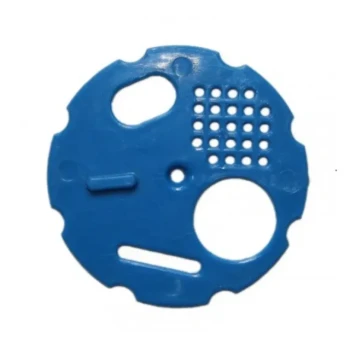
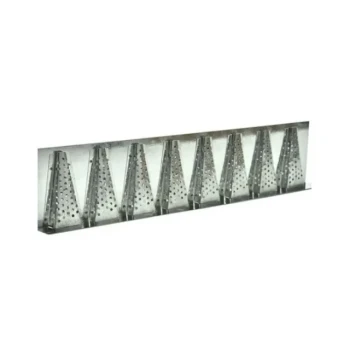
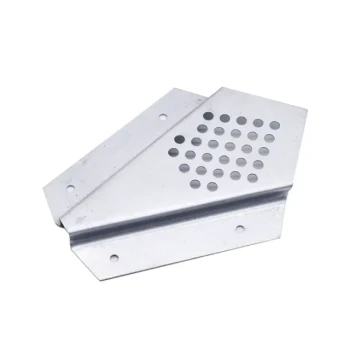
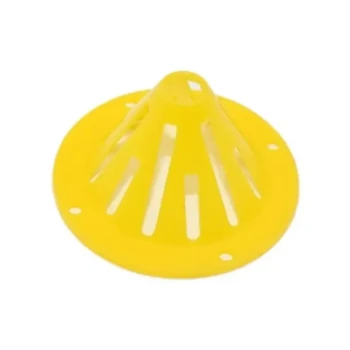
The strategic application of hive entrance narrowing devices is a non-negotiable component of successful overwintering. These devices perform two essential functions: they physically restrict the volume of cold air entering the hive to preserve the colony's core temperature, and they serve as a hardened barrier against predators seeking warmth and food during the dormant season.
Core Insight The winter survival of a bee colony depends on minimizing energy expenditure and maintaining a disturbance-free environment. Entrance reducers act as the primary control valve for the hive's microclimate, balancing the need for ventilation with the critical requirement to block freezing drafts and destructive intruders like mice and wasps.
Regulating the Internal Microclimate
Minimizing Thermal Stress
The primary function of an entrance reducer is to limit the intrusion of cold winter winds. By narrowing the flight holes, you significantly reduce the volume of freezing air that circulates through the hive body.
Preserving Cluster Energy
Bees do not hibernate; they form a cluster to generate heat through muscle vibration. A wide-open entrance forces the colony to consume excessive honey stores to combat the influx of cold air. Narrowing the entrance helps maintain the constant temperature required by the bee cluster, directly reducing the metabolic stress on individual bees.
Enhancing Spring Recovery
Precise management of the entrance does more than just ensure survival; it preserves the colony's vitality. By reducing the energy load during winter, you ensure the colony emerges with enough strength to recover rapidly and expand in the following spring.
Establishing a Physical Security Perimeter
Preventing Rodent Intrusion
During winter, mice and other rodents actively seek warm, sheltered spaces with a ready food supply. Without a reducer or mouse guard, a hive is an inviting target.
Protecting the Dormant State
If rodents enter, they damage the honeycomb structure, contaminate the hive environment, and feed on pollen and honey. More critically, their presence disturbs the bee cluster during dormancy. This disturbance causes stress that can increase mortality rates even if the bees are not directly attacked.
Blocking Opportunistic Predators
Entrance narrowing also prevents the entry of wasps and other predatory insects. These pests often attempt to raid hives when the colony is torpid and unable to defend a large, wide-open entrance effectively.
Understanding the Trade-offs: Ventilation and Blockage
The Risk of Accumulation
While narrowing the entrance is vital for warmth, it introduces the risk of obstruction. During the winter, bees naturally die inside the hive and fall to the bottom board. In a restricted entrance, these dead bees can quickly pile up and seal the opening completely.
The Necessity of Cleansing Flights
A blocked entrance is a fatal hazard. Live bees require a clear path to exit the hive for "cleansing flights" (defecation) on unseasonably warm winter days. If the reducer is clogged with debris, the colony cannot maintain hygiene, leading to disease or suffocation.
Maintenance Requirements
Using these devices requires a commitment to periodic monitoring. You must check the entrance regularly and use a tool, such as a stiff wire or an old bee brush, to clear out accumulated dead bees without dissembling the hive or breaking the thermal seal.
Making the Right Choice for Your Colony
To ensure high survival rates, you must balance insulation with accessibility.
- If your primary focus is Thermal Conservation: Install the reducer with the smallest opening facing inward to maximize wind protection, but pair it with an upper entrance or ventilation shim to manage moisture.
- If your primary focus is Predator Defense: Ensure the reducer is pinned firmly in place or use a metal mouse guard, as rodents can chew through wooden reducers if they sense heat escaping.
- If your primary focus is Low Maintenance: Schedule checks after every major temperature drop to clear the entrance of dead bees, ensuring the colony is never trapped inside.
By treating entrance regulation as a precise technical operation rather than an afterthought, you provide your bees with the stability they need to endure the winter and thrive in the spring.
Summary Table:
| Function | Primary Benefit | Winter Impact |
|---|---|---|
| Thermal Regulation | Minimizes cold air intrusion | Reduces honey consumption & metabolic stress |
| Predator Defense | Blocks mice and wasps | Prevents comb damage & cluster disturbance |
| Microclimate Control | Balances heat & airflow | Preserves colony vitality for spring recovery |
| Hygiene Management | Facilitates cleansing flights | Requires periodic clearing of debris/dead bees |
Secure Your Apiary’s Success with HONESTBEE
Transitioning your colonies through winter requires precision tools that balance protection with ventilation. HONESTBEE provides commercial apiaries and distributors with high-quality hive-making machinery, metal mouse guards, and specialized entrance reducers designed for durability.
Whether you are scaling a commercial operation or stocking your distribution network, our comprehensive wholesale portfolio—from honey-filling machines to essential overwintering consumables—ensures your business and your bees thrive.
Enhance your overwintering strategy today: Contact our experts for wholesale solutions.
References
- Hasan Vural, SÃ ⁄ leyman Karaman. Socio-Economic Analysis of Beekeeping and the Effects of Beehive Types on Honey Production. DOI: 10.15835/nbha3723298
This article is also based on technical information from HonestBee Knowledge Base .
Related Products
- Beehive Entrance Reducer Guardian Metal Hive Entrance for Bees
- Steel Round Disc Entrance Reducer for Flexzion Bee Hive Nuc Box Gate
- Multi-Functional Rotary Hive Entrance Disc for Beekeeping
- Professional Hive Front Entrance Bee Feeder
- Multi-Functional Sliding Hive Entrance for Beekeeping
People Also Ask
- Why are entrance reducers used to counter hornet infestations? Protect Your Hive with Strategic Choke Points
- What is the purpose of an entrance reducer for a beehive? Strengthen Colony Defense and Prevent Robbery
- What are the proper guidelines for using hive entrance reducers? Master Temperature Control & Colony Defense
- Why is it critical to maintain a smaller entrance for a newly established bee hive? Boost Colony Growth and Security
- What is the physical mechanism behind the use of hive entrance reducers? Protect Your Bees from Vespa velutina