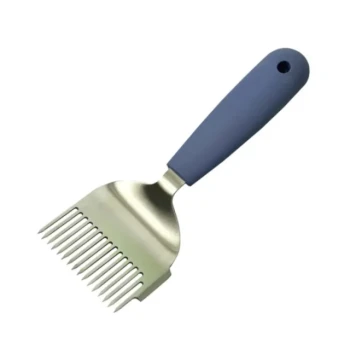
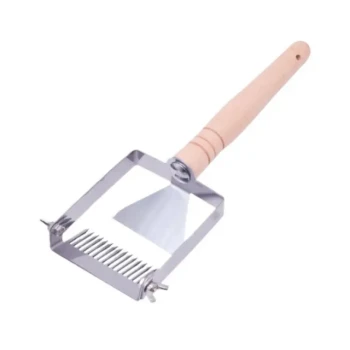
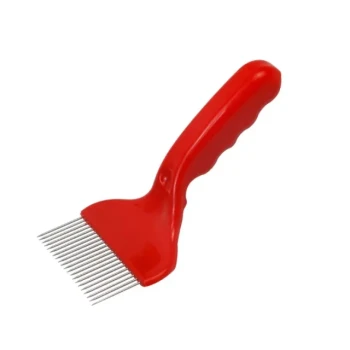
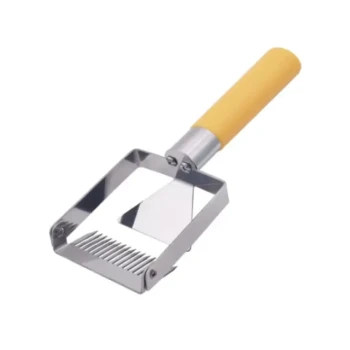
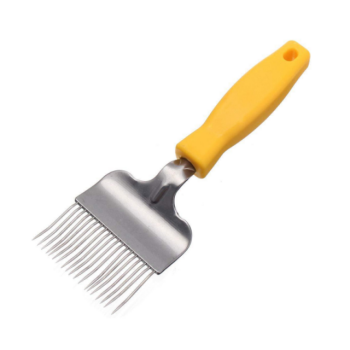
Uncapping tools are the non-negotiable key to accessing the harvest. They are considered essential because honeybees physically seal cells containing mature honey with airtight beeswax caps for long-term preservation. Before any extraction can occur, these tools must be used to slice or scratch off the wax seals, exposing the honey and allowing it to flow freely during the centrifugal spinning process.
Core Takeaway The extraction process relies on centrifugal force to pull honey from the comb, but this force is useless against the structural integrity of a beeswax seal. Uncapping tools bridge the gap between biological preservation and mechanical harvesting by removing the physical barrier without destroying the comb.
The Biological Barrier to Extraction
Nature's Preservation System
Honeybees are efficient preservationists. When honey has reached the appropriate maturity and moisture content, bees seal the cell with a watertight capping of beeswax.
The Necessity of Physical Removal
This wax cap is not merely a cover; it is a structural bond intended to prevent leakage and spoilage. No amount of spinning in an extractor can force honey through this cap; the seal must be physically broken or removed to access the contents.
The Mechanics of Extraction
Enabling Centrifugal Flow
Modern extraction uses a centrifuge to spin frames, using force to throw the honey out of the comb. Uncapping tools are the prerequisite for this step, as they open the "exit door" for the fluid.
Addressing Cell Geometry
Honey cells are naturally sloped slightly upward to prevent nectar from dripping out before it is capped. Uncapping tools remove the lid of the cell, allowing the honey to overcome this slope once centrifugal force is applied.
Secondary Benefits of Uncapping
Creating High-Value Byproducts
The "cappings" (the wax removed during this process) are distinct from the rest of the comb. This wax is often of the highest purity and quality, serving as a valuable industrial or artisanal byproduct for the beekeeper.
Preserving Comb Integrity
While the goal is to remove the wax seal, the use of specialized tools—such as heated knives or forks—ensures the underlying comb structure remains largely intact. This allows the frame to be returned to the hive for immediate reuse by the colony.
Understanding the Trade-offs
Precision vs. Structure
While removing the cap is essential, aggressive uncapping can damage the cell walls. The goal is to slice deeply enough to expose the honey fully but shallowly enough to leave the foundation ready for the bees to repair quickly.
Heat Application
Many uncapping tools use heat to melt through wax effortlessly. However, excessive heat applied incorrectly can potentially degrade the quality of the honey near the surface or damage the delicate structure of the comb.
Optimizing Your Harvesting Workflow
To ensure your extraction process is efficient and sustainable, consider your specific goals when approaching the uncapping stage.
- If your primary focus is maximum honey yield: Ensure your tools cut flush with the frame surface to fully open every cell, minimizing honey retention during spinning.
- If your primary focus is colony sustainability: Prioritize tools that minimize damage to the cell walls, allowing bees to refill the comb with less energy expenditure.
- If your primary focus is byproduct revenue: Use a system that cleanly separates the cappings, as this "virgin wax" commands a higher market price than recycled brood comb wax.
Mastering the uncapping step transforms a biological storage unit into a harvestable resource.
Summary Table:
| Benefit | Description | Impact on Extraction |
|---|---|---|
| Breaking Seals | Removes airtight beeswax caps | Essential to allow honey flow |
| Centrifugal Flow | Opens cell "exit doors" | Enables honey release during spinning |
| Comb Preservation | Specialized tools minimize cell damage | Frames can be reused by the colony |
| Wax Byproducts | Harvests high-purity "cappings" | Creates additional revenue streams |
Elevate Your Commercial Apiary with HONESTBEE
At HONESTBEE, we understand that efficient uncapping is the gateway to a successful honey harvest. We cater exclusively to commercial apiaries and distributors, providing a comprehensive wholesale range of professional-grade beekeeping tools and machinery.
Our portfolio includes everything from precision uncapping equipment and honey-filling machines to essential industry consumables. By partnering with us, you gain access to high-performance hardware designed to maximize yield while preserving your valuable comb infrastructure.
Ready to scale your production? Contact us today to explore our wholesale solutions and see how our expertise can streamline your honey harvesting workflow.
References
- Sumit Saini, Vadde Anoosha. Maximizing income through beekeeping (<i>Apis mellifera)</i>by following right management practices. DOI: 10.1080/00218839.2020.1864091
This article is also based on technical information from HonestBee Knowledge Base .
Related Products
- Professional Multi-Function Uncapping Fork with Ergonomic Rubber Grip
- Adjustable Stainless Steel Honey Uncapping Fork with Scraper for Beekeeping
- Professional Wide Head Honey Uncapping Fork for Beekeeping
- Wide Adjustable Stainless Steel Honey Uncapping Fork with Scraper
- All-Stainless Steel Pivoting Honey Uncapping Fork for Beekeeping
People Also Ask
- What is the primary use of an uncapping fork in beekeeping? A Guide to Precision Honey Harvesting
- What is the use of an uncapping fork? A Precision Tool for Hive Management and Honey Harvesting
- What is the original purpose of an uncapping fork? Mastering Precision Honey Extraction and Comb Preservation
- How is an uncapping fork used to uncap honey frames? Precision Techniques for Perfect Honey Extraction
- What is an uncapping fork? A Precision Tool for Efficient Honey Harvesting