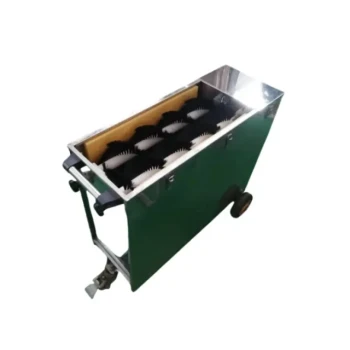
Ultraviolet sterilization offers a safer, residue-free alternative to traditional chemical disinfection for treating American Foulbrood (AFB). Unlike chemical methods that require the mixing, storage, and handling of potentially hazardous agents, UV light acts as a physical sterilization method that leaves no chemical traces behind. This ensures the hive environment remains pristine for future colonies while achieving high pathogen reduction rates in as little as 15 minutes.
While chemical disinfectants are effective at saving equipment, UV sterilization is recommended for its operational safety and environmental purity. It eliminates the risk of chemical byproducts harming the bees or contaminating honey, offering a streamlined, additive-free solution.
The Advantages of Physical Sterilization
Eliminating Chemical Residues
The primary argument for UV sterilization is that it is a physical, additive-free method.
Traditional chemical disinfection carries the inherent risk of leaving residues on hive surfaces. UV light eliminates this variable entirely. Because no substances are applied to the material, there is zero risk of introducing toxins into the beekeeping environment.
Reducing Operational Hazards
Chemical disinfection requires strict protocols for storing and mixing potent agents.
This introduces safety risks for the beekeeper and requires careful management of supplies. UV sterilization removes these logistical burdens. It functions as an easily operable alternative that bypasses the need for handling hazardous liquids.
High Efficiency on Simple Structures
For specific applications, such as PVC beehives, UV is highly effective.
It can achieve high logarithmic reduction rates of pathogens quickly. The process can be completed in approximately 15 minutes. This aligns well with the 2-to-30-minute timeframe of chemical alternatives, without the drying time or off-gassing periods often required by liquids.
Understanding the Trade-offs
While UV offers distinct safety advantages, it is important to understand where it fits in the broader context of apiary management.
Structural Limitations
UV light relies on line-of-sight exposure.
The primary reference specifically highlights its effectiveness on "simple structures like PVC beehives." If the equipment has complex geometries or deep crevices where light cannot reach, the sterilization may be incomplete.
Material Considerations
Chemical disinfectants remain a valid tool for general equipment salvage.
As noted in the supplementary data, chemical agents allow for the reuse of gloves, tools, and general hardware, significantly reducing replacement costs. UV is a specialized tool for hive bodies, whereas chemicals may still be needed for irregular tools where light exposure is difficult to guarantee.
Making the Right Choice for Your Apiary
When deciding between UV and chemical disinfection, consider your primary objective and the specific equipment being treated.
- If your primary focus is environmental purity: Prioritize UV sterilization to ensure a residue-free habitat that eliminates chemical risks to the colony.
- If your primary focus is treating simple hive bodies: Use UV sterilization for a rapid, 15-minute turnover without the need for drying or chemical handling.
- If your primary focus is complex tools and gloves: Recognize that chemical immersion may be necessary to reach pathogens in areas where UV light is obstructed.
By integrating UV sterilization for hive structures, you modernize your disease control strategy while protecting the biological integrity of your apiary.
Summary Table:
| Feature | UV Sterilization | Chemical Disinfection |
|---|---|---|
| Mechanism | Physical (Line-of-sight light) | Chemical (Liquid immersion/spray) |
| Residues | None (100% Additive-free) | Potential chemical traces |
| Processing Time | Approx. 15 minutes | 2 to 30 minutes + drying time |
| Safety Risk | Low (No hazardous handling) | High (Requires storage & mixing) |
| Best Used For | PVC & simple hive structures | Complex tools, gloves, and hardware |
Modernize Your Disease Control with HONESTBEE
Protect your colony's biological integrity and ensure a pristine hive environment with professional-grade sterilization solutions. At HONESTBEE, we specialize in empowering commercial apiaries and distributors with high-efficiency beekeeping machinery and equipment. From advanced hive-making technology to essential apiary consumables, our comprehensive wholesale offering is designed to scale your operations safely.
Ready to upgrade your apiary’s safety standards?
Contact us today to explore our full spectrum of beekeeping tools and industry-leading hardware tailored for your success.
References
- M. A. Al-Rajhi. Evaluation the UV sterilization of Paenibacillus larvae on beehive building materials. DOI: 10.53663/turjfas.1126574
This article is also based on technical information from HonestBee Knowledge Base .
Related Products
- Precision Stainless Steel Frame Cleaner for Hive Grooves and Corners
- Professional Stainless Steel Pry-Bar Hive Tool
- European Stainless Steel Bee Smoker for Honey Bee Hive
- Heavy Duty Manual Bee Smoker Blower for Beekeeping
- Economy Galvanized Beekeeping Honey Bee Smoker for Wholesale
People Also Ask
- What tools are recommended for cleaning hive frames? Top 4 Essential Maintenance Tools for Beekeepers
- What are the primary functions of a stainless steel hive tool? Essential Equipment for Professional Beekeeping
- What is the function of a professional stainless steel hive tool in IFB? Optimize Your Colony Strength Assessment
- What are the primary functions of a stainless steel hive tool? Essential Tips for Efficient Apiary Maintenance
- Which technical challenges in hive maintenance are addressed by using a professional stainless steel hive tool?