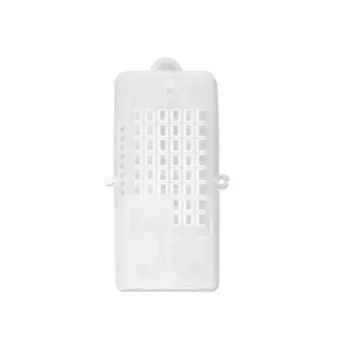
Painting the exterior of a mating box serves a dual purpose: infrastructure preservation and navigation assistance. Primarily, applying paint protects the wooden material from harsh weather conditions, preventing rot and significantly extending the equipment's operational life. Furthermore, applying different colors to specific sides creates visual cues that help the queen orient herself, ensuring she returns to the correct entrance after her mating flights.
To maximize the lifespan of your equipment and the survival rate of your queens, you must treat painting as both a preservation method and a navigational tool. A strategic multi-color approach on sides with opposing openings reduces the risk of queens entering the wrong colony.
The Functional Necessity of Protection
Weatherproofing the Infrastructure
The primary technical reason to paint a mating box is durability. Unprotected wood is highly susceptible to moisture absorption, UV radiation, and temperature fluctuations.
Preventing Structural Decay
Over time, exposure to the elements causes warping, cracking, and rot. A quality coat of paint acts as a sealant, maintaining the structural integrity of the box and ensuring it remains usable for many seasons.
Optimizing for Queen Orientation
The Navigation Challenge
When a virgin queen leaves for a mating flight, she must return to her specific colony to begin laying.
If she mistakes a neighboring entrance for her own—a phenomenon known as "drifting"—she will likely be killed by the resident bees of that colony.
The Multi-Color Technique
To mitigate this risk, it is recommended to paint the exterior using a color-coding system.
Rather than painting the entire box a uniform color, you should apply distinct colors to different faces of the box.
Strategic Placement
Specifically, you should paint each of the three sides that have opposing openings in a different color.
This variation provides a high-contrast visual aid. It allows the returning queen to easily distinguish her specific entrance from others on the same unit, drastically increasing her success rate.
Understanding the Trade-offs
Operational Complexity
While painting for protection is standard, implementing a multi-color scheme adds a layer of logistical complexity.
It requires managing multiple paint inventories and taking the time to mask off or carefully paint different sections, rather than simply dipping or spraying the entire box in one pass.
Maintenance Considerations
Paint is not a "set it and forget it" solution.
Painted surfaces eventually peel or fade and require scraping and repainting. However, the labor cost of maintenance is generally far lower than the capital cost of replacing rotted woodenware or losing valuable queens.
Making the Right Choice for Your Goal
Whether you are managing a few hives or a large mating yard, your painting strategy should align with your priorities.
- If your primary focus is equipment longevity: Ensure the entire exterior is sealed with high-quality, weather-resistant paint to prevent moisture damage.
- If your primary focus is queen survival: Prioritize painting the sides with opposing openings in highly distinct, contrasting colors to minimize navigation errors.
By combining weather protection with visual orientation cues, you protect your investment in both your woodenware and your genetics.
Summary Table:
| Feature | Purpose | Impact on Beekeeping |
|---|---|---|
| Weatherproofing | Protects wood from moisture & UV | Extends equipment lifespan and prevents rot |
| Multi-Color Sides | Visual cues for returning queens | Reduces "drifting" and prevents queen loss |
| Strategic Placement | Contrast on opposing openings | Increases success rates of mating flights |
| Maintenance | Periodic repainting | Lower long-term capital costs compared to replacement |
Scaling Your Apiary with Professional-Grade Solutions
At HONESTBEE, we understand that commercial success depends on the durability of your equipment and the survival of your queens. We provide a comprehensive wholesale range of high-quality wooden hives, specialized mating boxes, and advanced beekeeping machinery designed for global distributors and large-scale operations.
From industrial honey-filling machines to essential hardware, our portfolio is built to optimize your productivity. Let us help you protect your investment and improve your yield with the right tools for the trade.
Ready to upgrade your apiary’s efficiency? Contact us today to discuss your wholesale needs
Related Products
- Portable Bee Mating Hive Boxes Mini Mating Nucs 8 Frames for Queen Rearing
- Styrofoam Mini Mating Nuc Box with Frames Feeder Styrofoam Bee Hives 3 Frame Nuc Box
- Automatic Heat Preservation 6 Frame Pro Nuc Box for Honey Bee Queen Mating
- Twin Queen Styrofoam Honey Bee Nucs Mating and Breeding Box
- 4 Frame Plastic Nuc Boxes for Beekeeping Bee Nuc Box
People Also Ask
- How do specialized queen-rearing frames and mating boxes boost off-season bee production? Optimize Your Apiary's Output
- What are the approximate weights of different types of 8-frame beehive boxes? Lift Smarter for Your Apiary
- What role does the structural configuration of beekeeping mating boxes play? Optimize Queen Mating Success
- What is an 8 frame box and why is it popular? A Lighter, More Ergonomic Hive Solution
- What role do portable mating nucs play in geographic isolation breeding? Secure Genetic Purity in Remote Locations